Curtis Abernathy
Fictional. Generated by AI — not a real person, and no likeness of one is intended.
51, farrier in Los Angeles · rolled by @colin.hasbrook · card — no film
History
who has worn him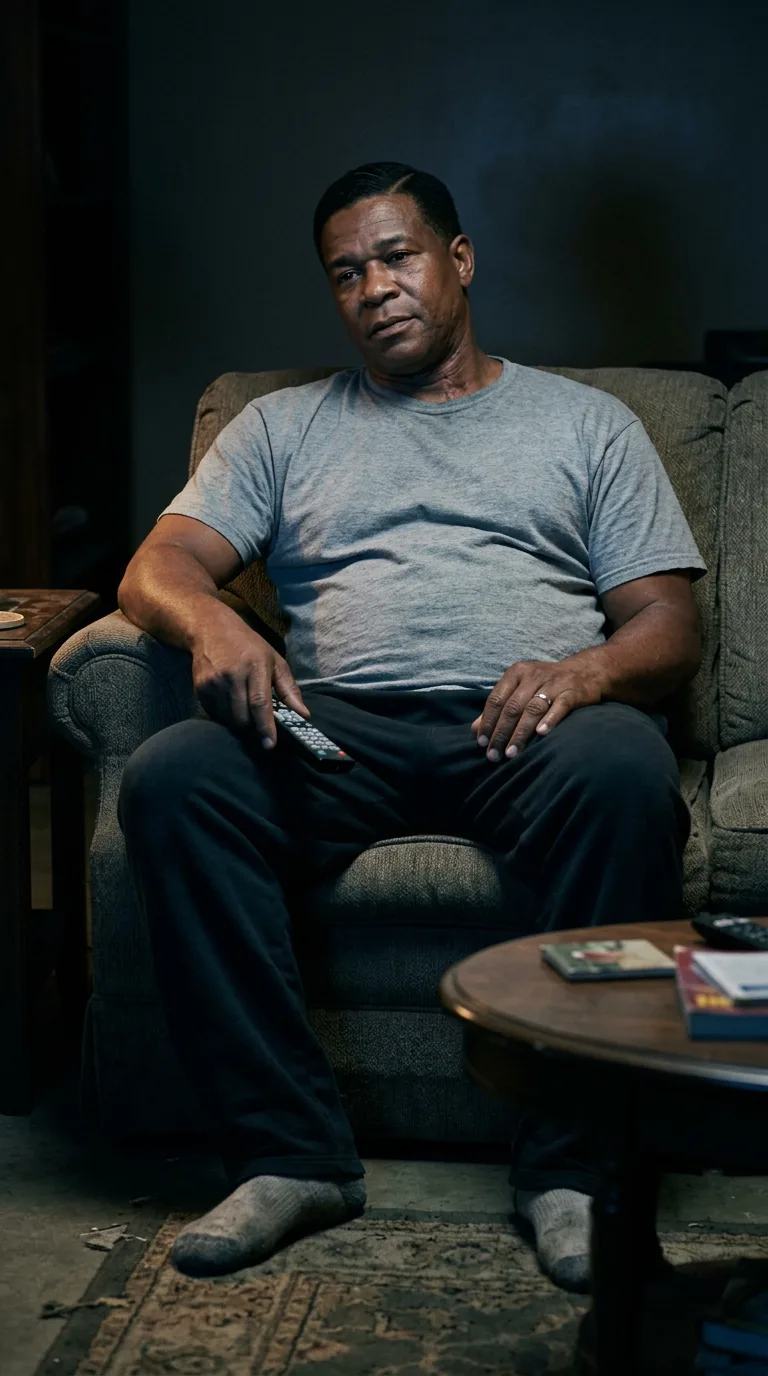
Rarest thing about him: A burn scar — epic, 1 in 132
Season 0seed 2042136181 · engine v10
Character card
lineage 2NZHHJ
His body-swap story
@colin.hasbrook, wearing DeShawn Ollie, rolled the wheel on and woke up as Curtis Abernathy, spent under a minute in him, then spun the wheel and woke up as Trent Boskovich
You are sitting in DeShawn Ollie's dorm chair less than a minute after becoming him, and already the body is a problem. Twenty-one years old and it holds itself like it's never been tired a day in its life, knee bouncing, phone screen too bright, some group chat blowing up about a party you have no memory of caring about. You spun the wheel expecting the rush that comes with a new one, and instead you got restlessness at the edges of somebody else's youth — the energy of him is wasted on you, all that unspent time stretching out ahead like a hallway with no doors. Being twenty-one and Black and heavy and in Dallas for less than sixty seconds is not a story, it's a waiting room. You paid for this chair. You are not going to sit in it. Your thumb finds the site again before you've even decided to, vessel.cards loading its clean gray wheel like it's been waiting on you specifically, and you spin because the wanting was never really about DeShawn — it's about the half-second after, the drop, the first breath in someone you didn't pick.
The wheel gives you a couch.
It gives you dark, and blue light moving on your own face like weather, and the specific, total heaviness of fifty-one years sitting in a body that has spent decades on its feet. Your hand — his hand — is already easing off a remote, setting it on the couch arm, and your spine straightens without your asking it to, like there's a habit in this back that outlasts you. A wedding band presses cool against your ring finger. The television cuts to something bright and the light slaps across a room you don't recognize, and somewhere under your jaw, along the side of your neck, there's a pull of tissue that doesn't move like skin should, tight and shiny even though nothing hurts.
Then it comes — not all at once, but the way weather comes, through the things touching you.
The couch cushion first: worn soft in exactly the shape of this body's evenings, years of it, the particular give of it against your — his — lower back where the muscles ache low and constant, a workingman's ache, present so long it's stopped being news. Curtis. The name arrives with the cushion, easy, like it was always going to. Curtis Abernathy, and under that, faint and fond, *Curt* in a woman's voice from another room down a short hallway, a voice that means the kids finally went down and now it's just us and something on the TV neither of us is really watching.
The remote's ghost is still warm in your palm even after you set it down, and it gives you Friday nights specifically — this one a rerun of something he'd seen already, laughed at the first time, some joke about a dog and a mailman that used to get him every time, and you feel the absence of the laugh now like a missing stair, the punchline landing on nothing.
The shirt against your back is the loudest thing in the room. Gray cotton, thin at the shoulders, and it gives you this morning — no, not quite morning, the last morning you can call up clean, boots already caked white with old shoeing dust, this same shirt pulled over your head in a bedroom with the blinds half down, sun already hard through the gaps. Your wife's voice from the bathroom, brushing her teeth, asking if you're seeing the Alvarez gelding today, the one that throws its front shoes every six weeks like clockwork, and you saying yeah, and something about needing new nippers before winter. The shirt remembers your arms going through the sleeves heavy with yesterday's soreness, remembers the smell of it — hoof trimmings and coal smoke and the leather apron hung by the door, gone dark and stiff with a thousand afternoons of forge work — and under that, older, a burn from years back, a coal popping wrong, the second before it landed on your neck and jaw a total blank, mercy of shock, and after it, months of ointment and a wife who didn't flinch looking at it, not once, not the first night in the ER light and not since.
Your knees know a stable floor. Your palms, thick through the heel, know the particular give of a hoof between them, the shape of a horse leaning its whole weight into you and trusting you not to drop it. Reflux sits low and familiar behind your sternum, an old friend from thirty years of eating standing up, fast, between clients. Two kids' faces surface without names attached to a single memory yet, just warmth, just *mine*, a school photo somewhere on a fridge you haven't seen yet and already miss.
The couch's arm remembers being newer. The rug under your sock feet remembers being clean. The whole apartment, dim and close around you, remembers thirty years of Fridays exactly like this one — church tomorrow, maybe a drink tonight if the week was long enough, and it was, it's been six days on your feet in other men's barns — and none of it is loud, none of it insists, it just sits in you the way this man's whole unremarkable good life sits in him, comfortable, quiet, paid for.
You look down. The hand on your knee is broad, older, the wedding band catching the TV light, knuckles thick with a trade that never got soft. You turn it over slow, like you're checking it's real, and the burn scar pulls faint and familiar under your own jaw when you tip your head to see it in the dark window's reflection.
"Anybody home?" you say, quiet, toward the hallway, toward a wife who doesn't yet know she's talking to somebody new — and you don't know either, not really, how long you're staying to hear the answer.