Craig Wetherell
Fictional. Generated by AI — not a real person, and no likeness of one is intended.
50, social worker in San Francisco · rolled by @marco.villagrana · card — no film
History
who has worn him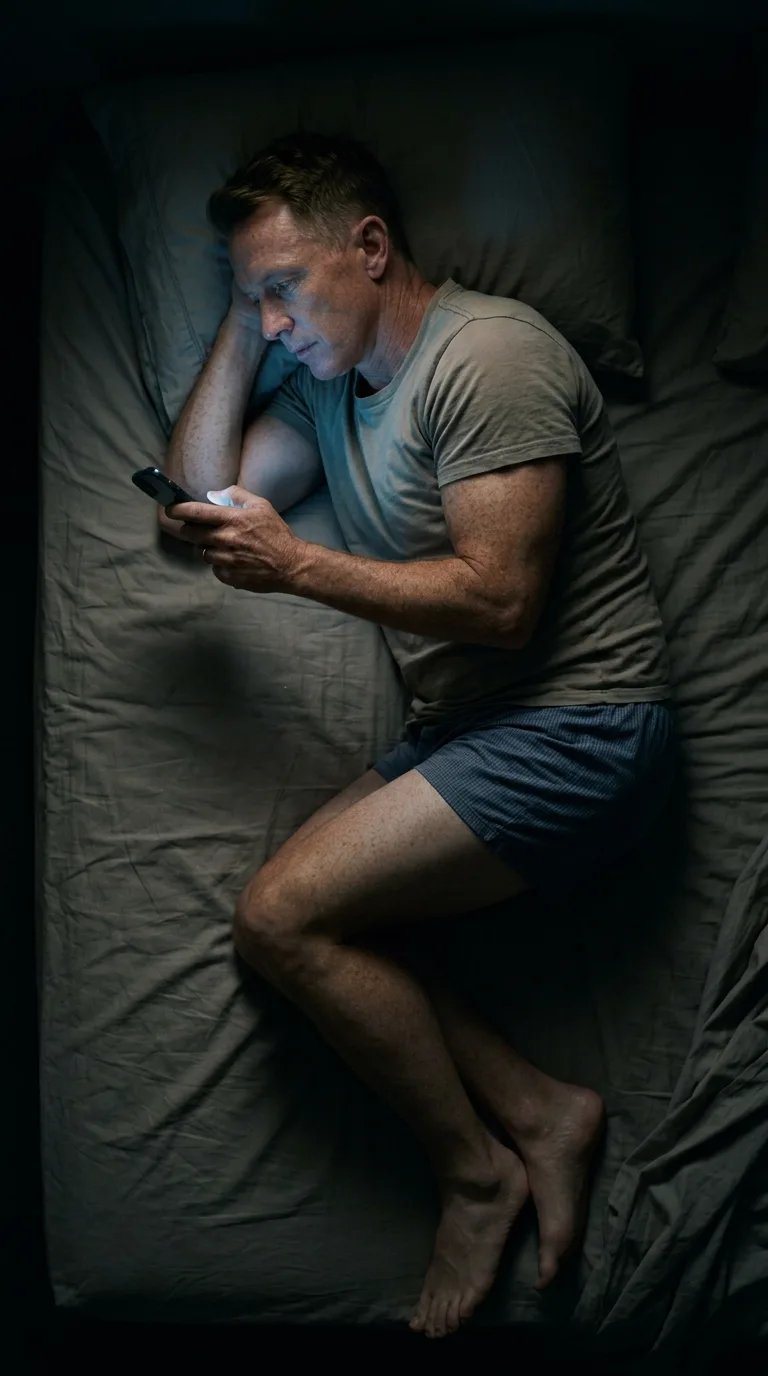
Rarest thing about him: Cracks his knuckles — uncommon, 1 in 15
Season 0seed 1639605132 · engine v10
Character card
lineage LJL8SV
His body-swap story
@marco.villagrana, wearing Miguel Otero, rolled the wheel on and woke up as Craig Wetherell, spent 3 minutes in him, then spun the wheel and woke up as Nathan Ostrowski
---
The garage smells like solvent and cold concrete, and Miguel Otero's knees ache from three minutes of standing on them. That's the thing nobody tells you about a body like this — the vitiligo patches on his forearms don't itch, exactly, but you feel their edges anyway, like a memory of skin that isn't quite skin. He was mid-thought about a torque wrench when you arrived in him, and even now, wearing him, his ordinary Sunday evening keeps trying to fold itself around you: a beer in the mini-fridge, a game on in fifteen minutes, a life that fits fine and asks nothing.
That's the problem. It fits fine. Three minutes in and already you're bored the way you get bored of a room you've only just walked into. You want the drop again — the half-second where a stranger's weight becomes yours. You go back to the site on his phone, thumb clumsy in a hand that isn't used to being yours yet, and you spin.
The garage goes. Ohio goes.
You are on your side in the dark, and the dark is a different dark — softer, bluer, city-tinted through a window somewhere behind you. A phone is six inches from your face, thumb stopped mid-scroll on a video already forgotten. Then the thumb moves again on its own, faster now, sure of itself, flicking past photos of a kitchen renovation, a kid's soccer trophy, someone's engagement, none of it landing. The light keeps holding on your face. Your eyes have stopped blinking at the rate his did.
The shirt is what opens him first — not the shirt you're wearing now, which is nothing, just a soft old T-shirt gone thin at the collar, but the ghost of the one from this morning, because his hands remember buttoning it before they remember anything else. Blue oxford, second button always fighting him, the blazer that used to be his brother-in-law's and got left behind after a wedding nobody talks about anymore. He'd stood in front of the mirror at six-forty and thought, not for the first time, that fifty looks alright on him except around the eyes. Freckles holding up better than the rest of him. He'd cracked his knuckles once, out of habit, tucked the folder of case notes under his arm, and gone out to a walkway three floors up with the bay fog still burning off, waiting for a woman named Denise to buzz him in about her son.
That's the job — you get it now, all at once, the way it comes when a hand finds a doorknob it's turned four thousand times. Craig Wetherell has been doing this for eleven years, longer than some of the families he sees have been families. He carries folders instead of a gun or a stethoscope, and some nights it costs him more than either would. There was a placement that went bad two years ago, a boy he still thinks about on Sunday nights specifically, which is maybe why Sunday nights are when the scrolling starts and doesn't stop.
The mattress under you now remembers itself into a bed with a wife's shape gone cool on the far side of it, in for the night an hour before him, the bathroom light still on under the door. Renata. Fifteen years married in October. The ring is there on your left hand, plain, worn smooth on the inside where it's turned ten thousand times without him noticing he was doing it. You get a flash of the wedding, unseasonably hot, his mother crying too much, and under that, further down, an ex-girlfriend's name — Paulette — surfacing the way exes do at midnight for no reason, unbidden, just a color of feeling and not even a face, gone as soon as it arrives.
Their daughter is fourteen and asleep two doors down and he checked on her forty minutes ago the way he still does, quieter about it now that she'd be embarrassed to know.
His blood pressure medication is on the nightstand, and touching the bottle — no, not touching it, just knowing it's there, six inches past the phone — gives you the dull weather of his last doctor's visit, the cuff too tight, the number that made the nurse purse her lips. Fifty and holding together. Athletic still, or trying to be — a run most mornings that his knees are starting to bill him for. Nothing that hurts outright. Just the sense, settling into your shoulders, of a body that has to be managed now instead of simply used.
You feel his thumb still moving under yours, and for one full second you and he are both still scrolling, some deep muscle continuing on without either of you steering it.
Then you stop it. You bring the hand up in front of your face — his hand, freckled to the knuckle, the ring catching what little light there is — and you turn it over slowly, like you're checking it for damage that isn't there.
"Huh," you say, to the empty room, to the sleeping wife who doesn't stir, to no one. "There you are."