Craig Ostrander
Fictional. Generated by AI — not a real person, and no likeness of one is intended.
30, assembly line worker in Boston · rolled by @colin.hasbrook · card — no film
History
who has worn him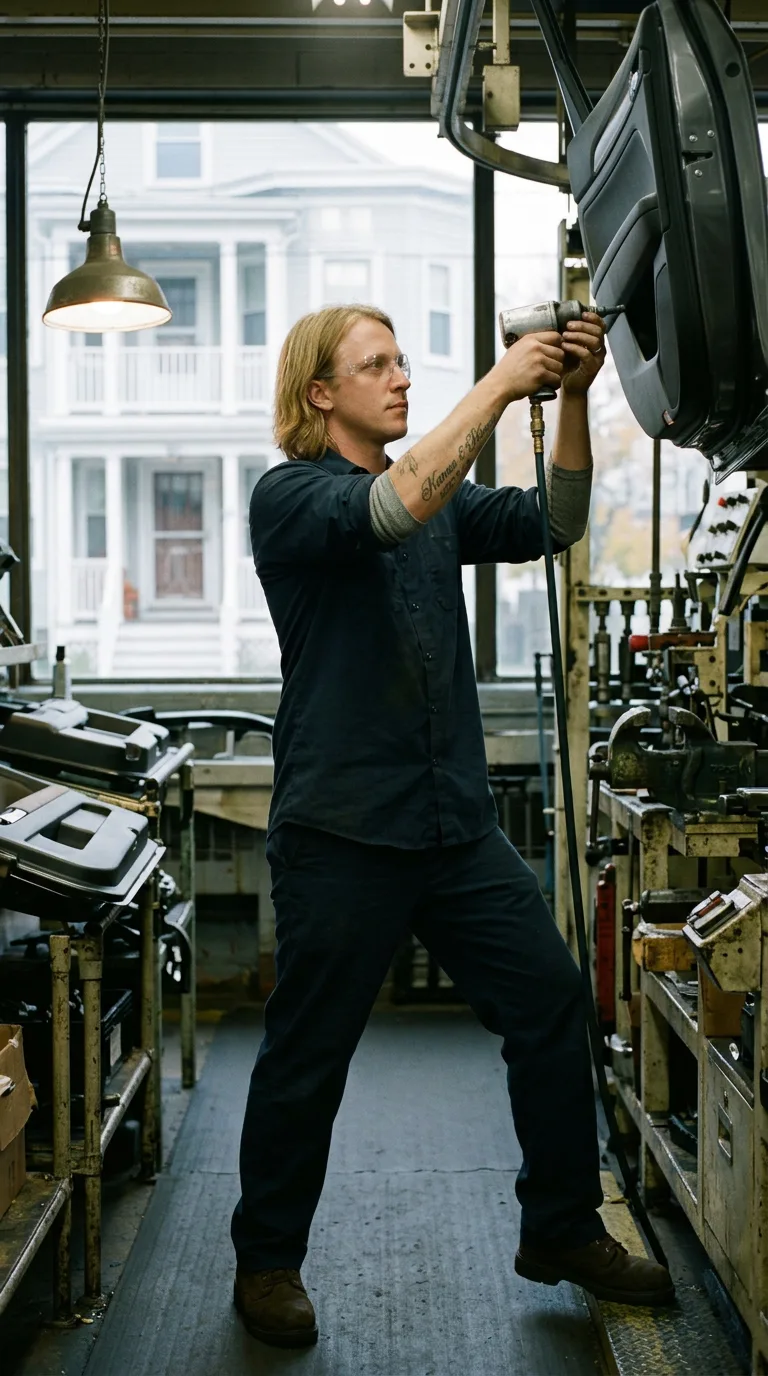
Rarest thing about him: Flips a lighter — common, 1 in 37
Season 1seed 160078286 · engine v11
Character card
lineage 2NZHHJ
His body-swap story
@colin.hasbrook, wearing Dominic Fabre, rolled the wheel on and woke up as Craig Ostrander, spent under a minute in him, then spun the wheel and woke up as Gerald Truscott
The carpenter's kitchen smells like sawdust and old coffee, and you are standing in it in Dominic Fabre's body, forty years old, a nose that healed crooked, stubble coming in rough under your palm when you rub your jaw out of a habit that isn't yours. You have been him less than a minute and already you know the shape of this feeling: the job is finished. The cabinet you spent three days on is hung and square and true, and there is nothing left to fix, and that is the whole problem with a body like this — it runs out. You have had eight hundred and nine men run out on you this way, the good work done and nothing after it but Thursday. Somewhere behind Dominic's ribs there's a woman he loves and a life that isn't yours to keep living for him. You go to the site instead. You always go to the site instead.
The wheel spins on a phone propped against a paint can, and the half-second before it stops is the only part of this you have never gotten used to.
Your head is already tipped back before you know it is your head, light pouring out of your eyes and your open mouth for one long beat over the noise of an impact wrench, and then it cuts and you are just a man again, standing, slack, a door panel swinging gently on its rig above you.
The gun is warm in your hand. Your hand — his hand, script letters inked into the meat of the forearm just visible where the sleeve is shoved up, gray thermal cuff riding under navy twill. You look down at the tool like you've never seen one, and for half a second you haven't; then the weight of it remembers itself into your grip, decades of a stranger's practice arriving all at once, and the next motion comes out wrong, overcorrected, checked twice, on a job his hands have done ten thousand times without once looking.
The shirt is what opens first. Cotton gone soft at the elbows, snap at the collar still smelling faintly of the dryer sheet his wife buys in bulk, and through it comes this morning — his morning, hours behind the one you left — him standing in a doorway on a triple-decker porch, storm door propped with his boot, pulling this exact shirt on sleeve by sleeve while she hands him coffee in a travel mug and tells him to grab milk on the way home. Overcast light. A porch swing needing paint. Ordinary as a held breath.
Then the safety glasses on his face — cheap, scratched at one corner — and through the bridge of them a whole stretch of years: him at nineteen, hired on because his uncle vouched for him, learning the rhythm of the line the way you learn a hymn you don't believe in, by repetition until belief isn't required. Twenty-two, meeting a woman at a cousin's wedding who left before the season turned cold enough to matter, who he still thinks about on nights he can't explain to his wife, who he has never told anyone got away, not fully, not the way you're supposed to let someone go. The tattoo pulses under your notice next — a name, a date, his daughter's, inked the week she was born, and it arrives with a feeling so specific and so entire that for a moment you almost put the gun down: her small weight, once, asleep on this exact chest.
The wedding band on the left hand carries its own room — a courthouse, not a church, because neither of them wanted one, her laughing at something the clerk said, him not listening because he was watching her mouth.
His body underneath all of it is thirty and unremarkable in the way healthy things are — a low ache starting in the right shoulder from the angle the gun wants, forearms that know this weight without asking permission, feet planted wide on the diamond-plate floor out of ten years of habit rather than balance. No nicotine ever, a taste in the mouth like he had a beer last night and nothing stronger. Hands that, in the seconds when nothing needs them, would already be reaching for a lighter he doesn't smoke with, just to have something turning between his fingers.
You turn it between yours now instead, once, an unconscious inheritance, and look at the hand doing it — his hand, wearing his ring, holding nothing but air and a habit that isn't going anywhere.
Then you look up, past the hanging door panel, toward the window and the gray porch beyond it that isn't yours and wasn't his mother's either, not that it matters now, and you say, to nobody on the line, in his voice coming out slightly wrong the way a borrowed coat sits wrong on new shoulders:
"Anyone catch what I just did there?"
Nobody has. You go back to the door panel. You don't know yet how long you'll stay in it.