Craig Holloway
Fictional. Generated by AI — not a real person, and no likeness of one is intended.
59, teacher in Chicago · rolled by @colin.hasbrook · card — no film
History
who has worn him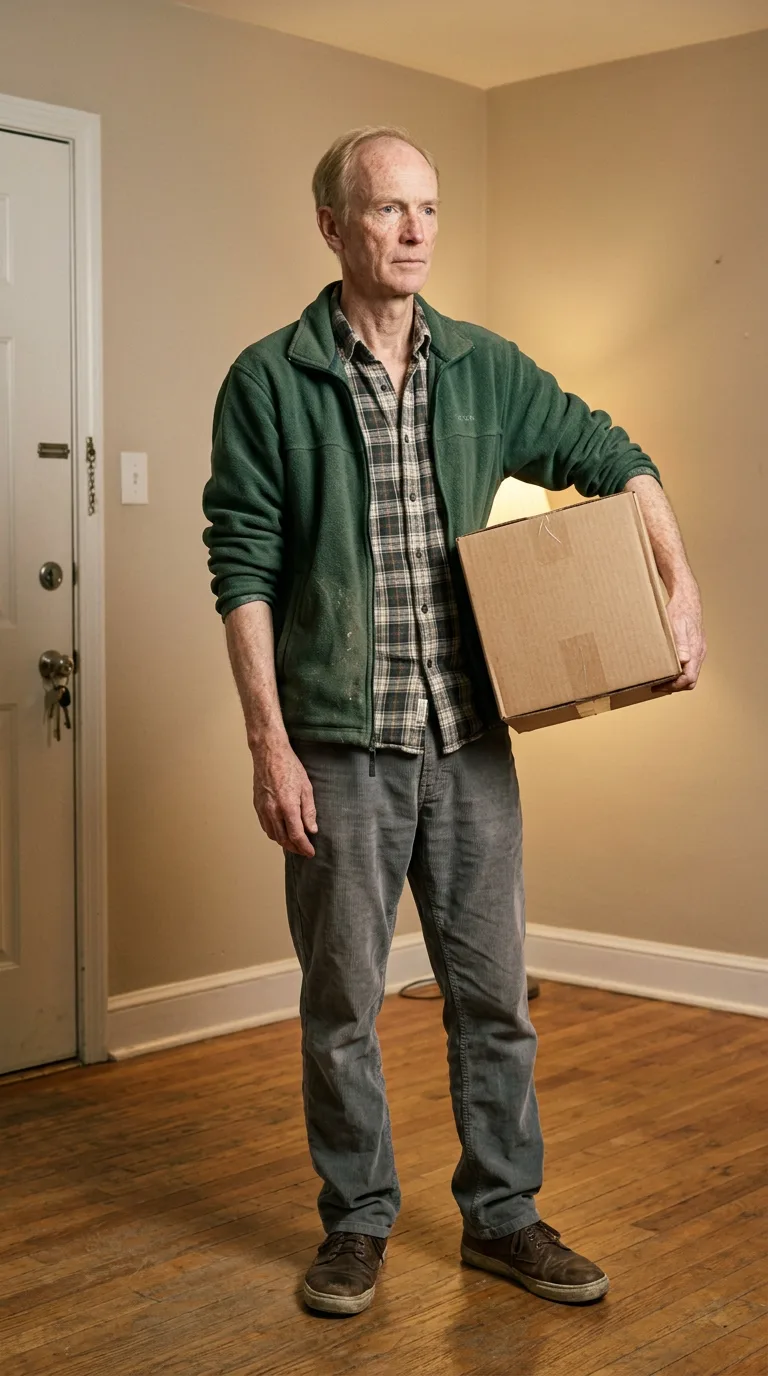
Rarest thing about him: Blond — rare, 1 in 33
Season 0seed 1727777968 · engine v10
Character card
lineage 2NZHHJ
His body-swap story
@colin.hasbrook, wearing Raymond Cusick, rolled the wheel on and woke up as Craig Holloway, spent under a minute in him, then spun the wheel and woke up as Trent Ostergaard
The farmhouse kitchen smells like coffee gone cold, and the body you are wearing right now — sixty years old, mixed White and Native, big through the middle in that soft farmer way, silver hair, freckles across knuckles that have pulled a thousand calves into the world — is standing at the counter with his own phone in his own thick hand, looking at the site again. You have been him less than a minute, and already you know: the wife is dead eleven years, the corn is somebody else's problem now that he leases the acreage out, and there is nothing left in this kitchen that surprises you. You spun him last time because you wanted to know what it felt like to be strong in a body that had earned it. You know now. It felt like being tired. Six hundred and forty-two men and this one already bores you, and boredom, for you, is the only sin that matters.
You spin.
The box leaves your hip before you've decided to set it down — no, his hip, his decision, already made, already moving through you like a current you're borrowing. Cardboard corner catching afternoon light through a bare window. Keys still swinging faintly in the door lock behind you. Your knees — his knees — take the weight going down and there's a small, precise ache in the lower back that says fifty-nine, that says a man who has stood at the front of a classroom for three decades and never once complained about the floors. The box lands soft on hardwood. Empty front room. Radiator knocking somewhere. The rattle of the L two blocks over, faint, like a held breath let go.
You leave the keys where they are and start walking the edges of the room, knuckles trailing the wall — his habit, not yours, already running ahead of your intention — checking corners the way a man checks a rented life before he trusts it.
The wall is cool plaster under his fingers and it gives you the building's whole history in one flash: him signing the lease three weeks ago at a card table in the leasing office, pen chewed at the cap, the agent saying *great light in the mornings* and him thinking, absurdly, that his ex-wife would have hated that, would have wanted blackout curtains and a deadbolt she checked twice. Linda. Nineteen years married, seven since the divorce, and it wasn't ugly, it was just quiet, the kind of ending where you both agree the house should be sold and neither of you cries at the closing. Their son is twenty-six now, out in Denver, calls on Sundays if he remembers, and Craig always picks up on the first ring even when he's grading essays, even when he's got a room of freshmen's futures spread across the kitchen table like a losing hand of cards.
The flannel shirt under the fleece gives you more — his hands buttoning it that morning in the old apartment, the last morning there, sleeve by sleeve, the cuff catching slightly on the knob of his wrist bone the way it always does now that he's lost weight nobody asked him to lose. The diabetes talk with the doctor last spring, calm, matter-of-fact, *we'll manage it*, and him managing it the way he manages everything, alone, methodically, a pill with breakfast and a walk after dinner when the light allows. The fleece jacket — a gift, actually, from a colleague at a white elephant exchange, green, not his color, worn anyway because it was warm and free and Craig Holloway has never once in his life turned down a practical thing out of vanity.
The floor under his shoes: gym-floor waxed hallway outside his classroom, the specific squeak of it at 3:47 when the last bell's gone and the last kid's gone and he's alone with thirty-one empty desks and a whiteboard he hasn't erased yet, his own handwriting looking back at him — *thesis statements due Friday* — and the particular, private satisfaction of a room he built to be safe, year after year, freckled kid after freckled kid he half-recognizes in himself, the ones who get made fun of for the sunburn that never tans, who he is unreasonably gentle with.
His hand rises without you, runs once over the bare crown of his scalp, an old motion, older than thinking — church-taught patience in it, a boy who prayed for hair once and then, around forty, prayed instead for grace about the lack of it. Evangelical to the bone, quiet about it, no bumper stickers, just a worn Bible on the nightstand he actually reads and a habit of saying grace even eating alone, even now, even here, first night in a new place with the boxes still taped shut.
The room itself breathes it back at him — new paint smell, a landlord's cheap primer, the specific Chicago cold radiating off the window glass even through the glow of one bare lamp, and under it all the sound of the train, which he has already decided he loves, which reminds him, against all reason, of being young.
You stop at the last corner. His breath is shallow and even, a non-drinker's steady pulse, someone who has one big night a month and remembers all of it. Fifty-nine years of a life you did not build and now cannot give back.
You look down at his hands — long fingers, freckled to the knuckle, a farmer's ghost-strength gone soft and fine-boned again. You turn one over like it's a page you're not sure you're allowed to read.
Then you lift your eyes to find something to look at, and there's nothing in the empty room but the lamp and the door, so you look at the doorknob, then past it, at nothing, at whoever might be watching.
"Well," you say, in his voice, surprised by how gentle it comes out. "Guess I live here now."