Colby Marchetti
Fictional. Generated by AI — not a real person, and no likeness of one is intended.
31, assembly line worker in New Orleans · rolled by @klaus.dietermann · card — no film
History
who has worn him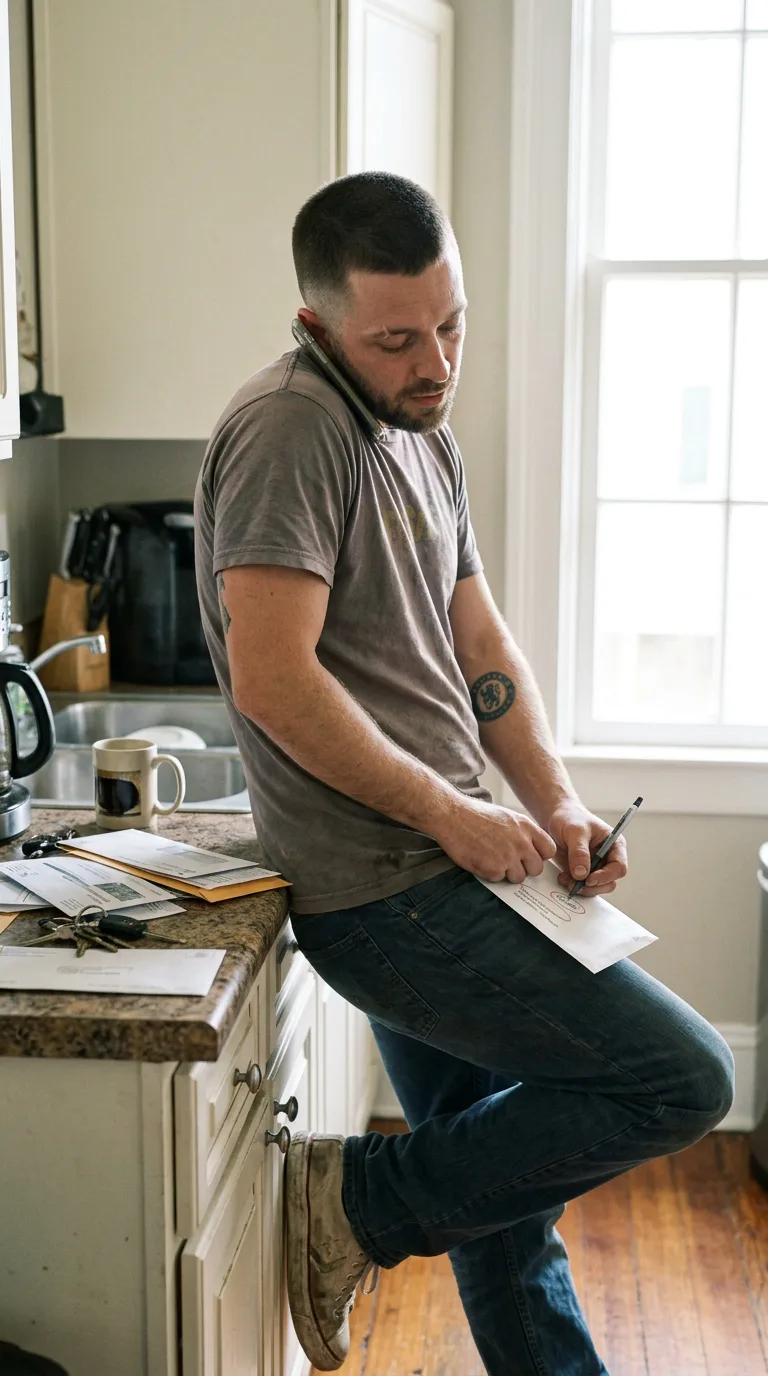
Rarest thing about him: Nose — common, 1 in 71
Season 1seed 1346913457 · engine v11
Character card
lineage KEPHG1
His body-swap story
@klaus.dietermann, wearing Brett Halloran, rolled the wheel on and woke up as Colby Marchetti, spent 2 minutes in him, then spun the wheel and woke up as Malcolm Averitt
You are Brett Halloran for exactly two minutes, and it is enough.
You know this because the register drawer is still open in front of you, and your hand — his hand, twenty-one years old, cashier-thin gold chain against a collarbone you didn't choose — is hovering over the quarters, and you already feel the old itch starting up behind the eyes like a second heartbeat. Muscular, tall enough, Houston-humid through the store's front glass. Fine. Better than some you've worn. But fine was never the thing you spun for, and two minutes in you already know the rest of this shift: a manager who talks too long, a customer who wants a manager, six more hours of a body you did not build and do not want to keep finishing out. Boredom, if you have to call it something. The wheel doesn't ask why. You don't answer out loud either. You just think of the site, the wheel with its soft chime, and your thumb — his thumb — is already moving toward the phone in your back pocket before you've admitted you're doing it again.
Thirty spins. You stopped feeling the vertigo around eleven.
The hold music loops back to its first four notes — a little synthesized fanfare you will never again be able to hear as innocent — and somewhere a phone drops from a shoulder into a palm that is not Brett Halloran's anymore.
You are standing at a kitchen counter that smells like coffee grounds gone a little stale in the pot, and you are shorter, the light hitting you from a window at a different angle than any window in Houston, hip against granite that's cooler than you expected. A pen is in your hand, resting dead on the second digit of some number written on an envelope, not moving, because the hand that was circling it has just changed owners mid-stroke.
The phone is still against your ear. The hold music keeps looping like nothing happened, because to it, nothing did.
Green eyes, this time too, which almost never happens twice in a row, and you notice it the way you notice weather — interesting, not yours to keep. A scar cuts through one eyebrow, small and pale, and your face — his face — feels different from the inside than Brett's did: the beard closer to the jaw, drier, a little coarser under where your fingers brush it without meaning to.
That touch is the first key. The beard. And with it comes a flash — an electric razor buzzing too close to a nick, nineteen years old, blood on a white sink, his mother laughing from the hallway that he'd finally nicked himself just like his father used to.
The shirt is next, the gray one, thin at the shoulder seams from washing, and putting your — his — arm through it this morning comes back whole: standing in the shotgun house's one good patch of morning light, threading the left sleeve first because the tattoo on that arm always catches the fabric wrong if he doesn't, the sports crest half-swallowed by cotton, a team he's followed since a cousin dragged him to a bar for a match he didn't understand and stayed anyway. The nose ring is cold under two fingers without your permission and gives up a year all at once — getting it done on a dare at twenty-four, hating it for a month, forgetting about it for six years after.
The pen. The envelope. That's the one with weight to it: a reference number for a payment plan on a truck repair he's arguing about, the shop on Tchoupitoulas that quoted him one price and billed him another, and under it, quieter, the hum of the actual job — hours ago, or hours from now depending which clock you trust, standing at his station while a door panel comes down the line at him, impact gun already in his palm before his brain finishes the thought, the two plastic sleeves over his forearms because the paint's still tacky sometimes, safety glasses fogging a little in the heat off the floor. His hands know that gun's weight without asking him. They do not know, yet, that they are yours.
The keys on the counter, silver with a rabbit's foot gone bald from handling, bring back a smaller thing: locking up alone most nights, no one to leave a light on for, a string of women who didn't stay long enough to learn which streetcar line to take to his door, and under that, not sad exactly, just quiet — an apartment, a shotgun house really, one room wide, that nobody else has ever really been inside.
His body holds all of it patiently: five-eight, a build that carries itself like it's used to standing for eight hours on a concrete floor, a low ache already sitting in one shoulder from the gun's kickback, hands calloused in the specific places a wrench and a trigger wear a man down. Steady. Unspectacular. Catholic in the unthinking way — a cross somewhere in a drawer he hasn't worn since his confirmation, a woman he half-believes is still praying for him though she stopped calling. A drink most evenings, never two before noon, no cigarette ever, though right now, empty-handed at his own counter, something in the hand not holding the pen twitches toward a lighter that isn't there.
You look at your hands.
They are shorter than the ones you had two minutes ago in Houston, the knuckles a little more used, one thumbnail bruised faint purple from a door panel that got away from him last Thursday, and you turn them over slowly the way he never would, like you're checking a delivery.
"Wrong number," you say into the dead phone, and hang up on the hold music before it loops a third time, and you don't know yet if that's true.