Cody Deschamps
Fictional. Generated by AI — not a real person, and no likeness of one is intended.
31, trucker in New Orleans · rolled by @marco.villagrana · card — no film
History
who has worn him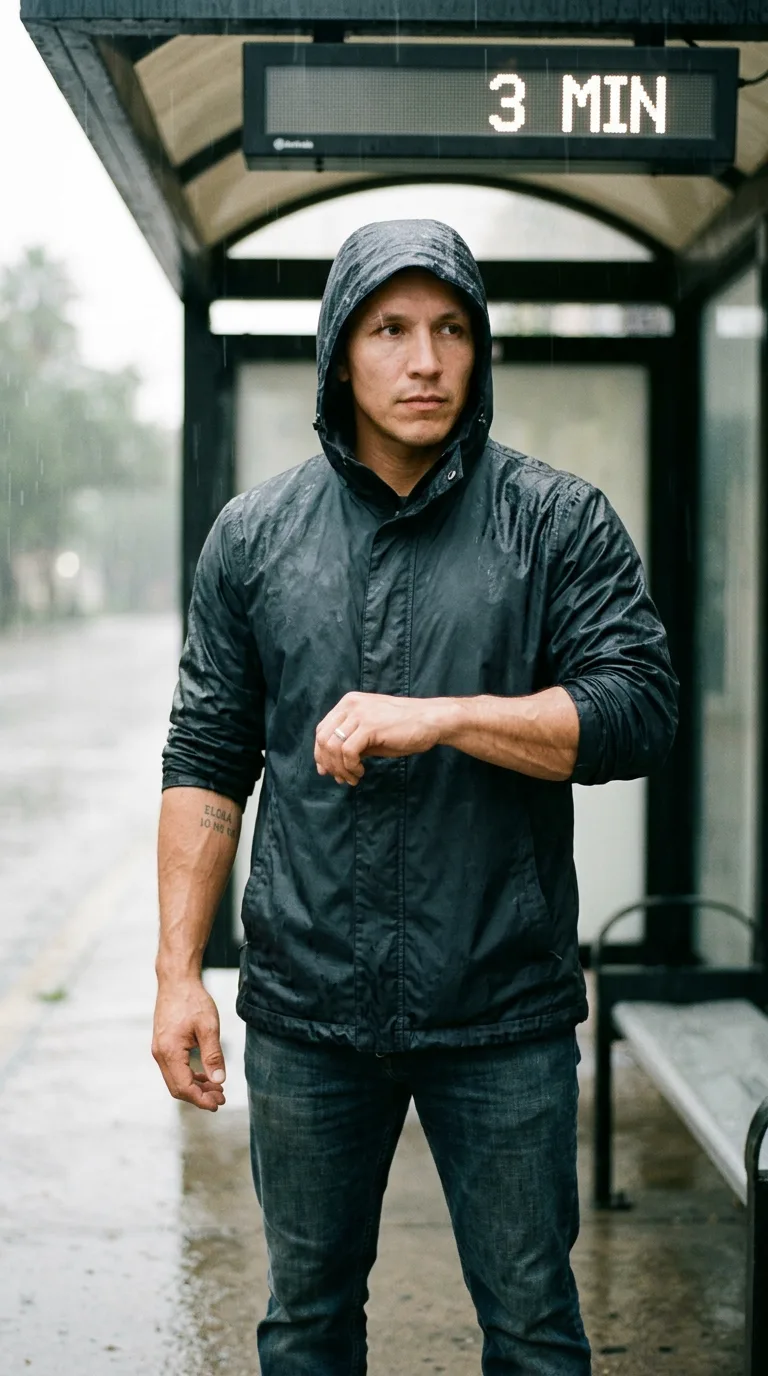
Rarest thing about him: Ear cartilage — epic, 1 in 46
Season 0seed 2035716878 · engine v10
Character card
lineage LJL8SV
His body-swap story
@marco.villagrana, wearing Ruben Castellanos, rolled the wheel on and woke up as Cody Deschamps, spent 4 minutes in him, then spun the wheel and woke up as Danny Truong
---
The dig site outside Vegas is nothing you care about — some Anasazi granary, a grid of string and stakes in the heat — but Ruben Castellanos cares about it, or did, right up until three minutes ago when you became the thing wearing his sunburn and his bad knee. You crouch at the screen table sifting spoil, and his hands, silver-haired and spotted, move like a man's who has done this ten thousand times, patient with dust. You are not patient. You have never been patient in any of the sixty-five bodies before this one, and this one is old and slow and his knee sends up a small flare of pain every time he shifts his weight, and somewhere under the brim of his hat the desert light is giving you a headache that isn't yours to keep. Boredom is not quite the word. It is more that you can feel, already, the exact shape of the rest of Ruben's afternoon — the brush, the tray, the notebook, a beer he won't drink because his liver's shot — and it is not enough, it was never going to be enough, sixty-six is just a number you tell yourself so it sounds like counting toward something instead of away from everything. You stand, your knee screams, you don't care, you walk to the truck where the laptop is charging in the shade and you open the site the way another man might open a bar tab. vessel.cards. The wheel is already spinning before you've finished deciding, the way it always is, because the deciding and the spinning stopped being two different things a long time ago.
The wheel stops.
You are standing under a bus shelter in rain that has been falling long enough to soak through canvas, and the sign above you says 3 MIN, and you are not old anymore — you are thirty-one and solid and there is a hood plastered to the sides of your face and a hand at the end of your arm that you have not yet looked at. Your body steps forward before you tell it to. It pushes the hood back on its own, the way a man does a thing he's done a hundred times in a hundred rains, and tips its face up into the runoff coming off the shelter's edge, and does not flinch from the cold of it, because apparently this man was never cold in his life the way you were cold in Ruben's joints. Water runs into your open eyes. You stand in it.
Then it comes, the way it always comes — not given, arriving. The jacket is the first door: nylon slick under your palms where they've dropped to your sides, and through it, a smell of cigarettes and diesel and something like Sunday incense, and a name surfaces without asking permission — Cody — and you understand, the way you understand things that aren't facts so much as weather, that this is his name and he has just clocked out and the bus is for a shift he picked up because the money was short this month, again.
The tattoo on your forearm is warm under the wet sleeve and it opens like a door left ajar: Elora, and a date under it, and the memory that comes with it is not gentle, it is a hospital room at four in the morning eleven years ago, a girl he loved before his wife who he does not love any less now for having stopped loving her then, and a daughter neither of them kept full custody of but both of them show up for, every second Saturday, a park by the river, her small hand finding his without being asked. The date is her birthday. He got it done a week later, in Metairie, sober, crying a little, and the tattoo artist didn't say anything about that, just worked.
The ring is next — plain gold, cold from the rain, and it brings a kitchen that smells like red beans left on low all afternoon, his wife Danielle's laugh over the sound of the window unit, and their second kid, a boy, four years old, riding on his shoulders down Magazine Street on a Sunday with a sno-ball dripping blue down both their wrists. The love in it is not dramatic. It is Tuesday-shaped, worn-in, the kind that survives because nobody's asking it to be anything else.
The boots on your feet remember the catwalk of a flatbed at five a.m., frost on the rails, the particular grunt of chain binders giving way. The cap you're not wearing right now but that lives in the cab remembers ten thousand miles of I-10, the CB radio's static company, a load of shrimp boat parts once that stank up the cab for a week. Your back, against the wet shelter post, remembers the sleeper bunk, too short for a man his height, and how he's learned to fold himself into it anyway. The scar through your eyebrow — your fingers find it without meaning to — came off a chain that snapped loose in Tulsa, and Danielle kissed it for a month like kissing it might undo it.
This morning: the shirt on your back, plaid over the gray tee, sleeve going down the tattooed arm first because that's the arm that always goes first, an old habit from some job before this one, some rule his body kept without asking him why. Danielle handed him the thermos without a word because there weren't words needed after eight years. He kissed the top of the boy's head, still asleep. He did not wake his daughter, who wasn't there that week, and felt the absence of her the particular way a man feels the absence of a kid who is his and isn't, both, forever.
A pack in his jacket pocket, three left. He hasn't had a drink in six years and doesn't miss it except at funerals. His body is thirty-one and strong in a way that has never once had to think about being strong — shoulders that load a truck without complaint, a knee that still works, a back that will start complaining in another decade but hasn't started yet. It is, you understand somewhere under all the rest of it, a good body to be given. Underwater as a price and worth as a man, both true, neither canceling the other.
The bus is one minute out now, unseen, and you are still standing in the runoff with your face tipped up, rain going into your open eyes, a stranger in a stranger's marriage, a stranger's fatherhood, a stranger's whole soaked Wednesday.
You bring your hand up out of the rain and look at it — the same hand, but not, not anymore — turn it, watch water run off the tattoo's dark lettering, off the ring.
"Elora," you say, out loud, to no one, testing the shape of a name that isn't yours in a voice that now is, and then you lift your eyes to whatever's watching and hold there, dripping, thirty-one years old and new to it.