Brian Okafor-Lynch
Fictional. Generated by AI — not a real person, and no likeness of one is intended.
29, groundskeeper in Small-town Ohio · rolled by @brian.okafor.lynch · card — no film
History
who has worn him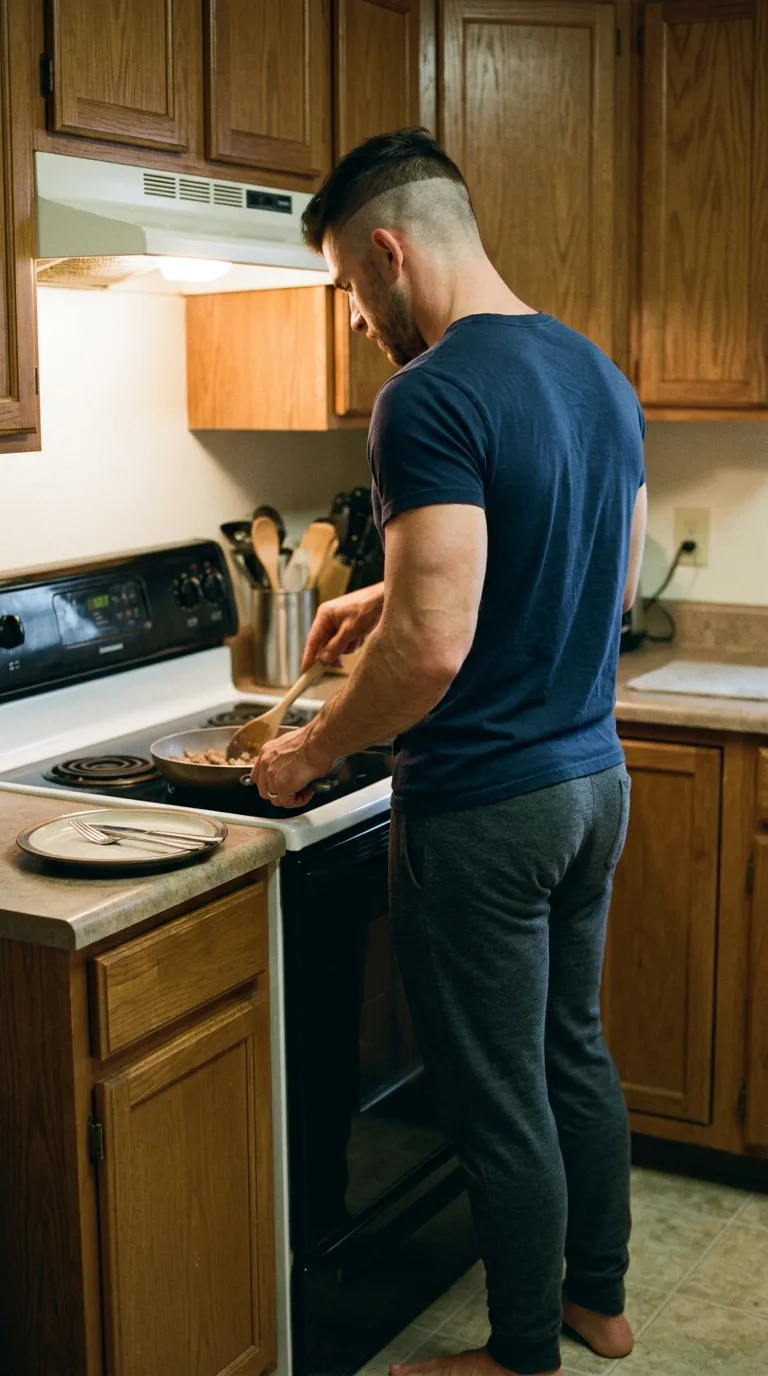
Rarest thing about him: Can't stand still — rare, 1 in 50
Season 0seed 365681857 · engine v10
Character card
lineage 79CGDV
His body-swap story
@brian.okafor.lynch, wearing Gary Vantrease, rolled the wheel on and woke up as Brian Okafor-Lynch, spent under a minute in him, then spun the wheel and woke up as Roger Passalino
---
Gary Vantrease's hands smell like brake cleaner no matter how long he scrubs them, and that is the last thing you notice about him before you stop noticing anything about him at all. It's the middle of the night in Nashville, everyone in the house asleep except you, and you've been him fifty-one years short of a minute — gray hair, hazel eyes, a body that aches in the shoulders when it rains, which it is not doing, which is not the point. The point is he's fine. He's a perfectly good body. You just don't want him tonight. You want to know what else there is. You always want to know what else there is, and the wanting came back fast this time, faster than usual, and you don't examine that too closely because examining it never once made it smaller. You open the laptop at the kitchen table in his dark house, the site already bookmarked, the wheel already loaded, and you spin it the way you've spun it twenty-five times before — not for him, whoever he turns out to be, but for the half-second after, when you don't know yet who you'll be.
You are stirring something in a pan.
The weight of you drops six inches and forty pounds younger, into a back that doesn't complain, into a kitchen that smells like garlic and butter instead of solvent. Your hand — his hand — is mid-turn on the spoon, going clockwise, and it stops, and it starts again the other way, counter-clockwise, like something upstream corrected course. You salt the pan without tasting it. Then you reach up into the cabinet, take down a second plate, and set it next to the first one already on the counter, and you don't know why you did that yet, only that the body wanted to.
It's a small kitchen, oak cabinets gone dark with age, a window over the sink still black with pre-dawn. Early morning, Ohio, a Monday, and the body under your borrowed hands is up and cooking before the sun, which strikes you as wrong until his own memory answers it before you even finish wondering: the field. The ball field. Somebody has to drag the infield and paint the lines before anyone else is awake, and that somebody is him, six days out of seven, which is why he's standing at a stove in the dark instead of in a bed.
The shirt gives it to you first — a soft, thin t-shirt, slept in, and through it comes a whole closet: the flannel he wears for real work, green plaid gone soft at the elbows, grass-stained khakis with a permanent map of infield dirt worked into the knees no wash has ever gotten out. He put that flannel on a thousand mornings the same way, left arm first, always left, a habit from some football coach twenty years dead who told him dress your weak side first so your strong side can fix your mistakes, and it never left him. You feel the roll of the sleeve, the two buttons left undone at the collar because a shirt buttoned to the throat makes him feel choked, feel something he doesn't have a word for and never asked one of the two priests he's confessed to about.
The spoon in your hand knows a decade of infield lips and warning tracks, chalk lines laid so straight they look drawn with a ruler, mower stripes cut into grass at four in the morning with nobody watching and no one to tell him they're beautiful, so he tells himself. He loves the empty stands before a game more than the game. He has never said that out loud to anyone, not his wife, not the ex before her, nobody. It sits underneath everything else like the foundation of the field itself.
The wife arrives through the second plate — Carla, and you didn't know her name a second ago and now it is just there, whole, the way names are when they belong to someone you've loved fourteen years. She's two rooms away asleep with their younger one wedged sideways in the bed the way he always ends up, and the older one down the hall who used to climb in with them and doesn't anymore, which broke something small and permanent in him the first morning it stopped happening. He cooks for her before she wakes because it's the only time in the day that's just theirs, before the kids, before the field, before the bills that have been red for longer than he'll admit to her — the loan on the truck, the roof, a number in his head so far underwater he stopped adding it up two years ago and started just not looking. He is Catholic in the tired, load-bearing way, the kind that doesn't go to Mass every week anymore but still crosses himself in the truck before pulling out of the driveway.
The ex comes in sideways too, uninvited, the way exes do — Renata, who he still thinks about more than he'd like on mornings the marriage feels like a chore instead of a covenant, who he ran into at the hardware store eight months ago and said too much to, nothing that crossed a line exactly, but enough that he stood in his own driveway afterward with his hands shaking for no reason he could name, hands that can never sit still even now, tapping the spoon twice against the pan rim out of nothing but habit.
He quit drinking four years back — not a story, not a rock bottom, just a slow drift away from it after his blood pressure numbers came back bad and a doctor with kind eyes said words like stroke and forty, and never drink to celebrate it either, no ceremony, it just stopped mattering. Never smoked. His body is clean of both and strong from the field and the mower and the push mower before that, shoulders that carry weight without asking, a mole high on his cheek he's had since childhood that his youngest likes to touch and call his freckle, though it isn't one.
You feel all of it land in a body that is not yours, in a kitchen not yours, at an hour that would be the middle of your own night and is the first gray light of his — and you understand, only now, stirring a pan for a woman still asleep down the hall, that the wanting that sent you here had no shape at all until this exact moment, and the shape it has now is a man in debt and in love and in trouble he hasn't told anyone about, cooking breakfast in the dark because it's the only kindness he has left to give that costs him nothing.
You look down at your hand on the spoon. Turn it over. The wedding band catches what little light there is.
"Morning already," you say, to no one, to the empty second chair, and you don't know yet if you mean it as him or as the twenty-sixth thing you've been.