Brett Sowinski
Fictional. Generated by AI — not a real person, and no likeness of one is intended.
25, welder in Small-town Ohio · rolled by @marco.villagrana · card — no film
History
who has worn him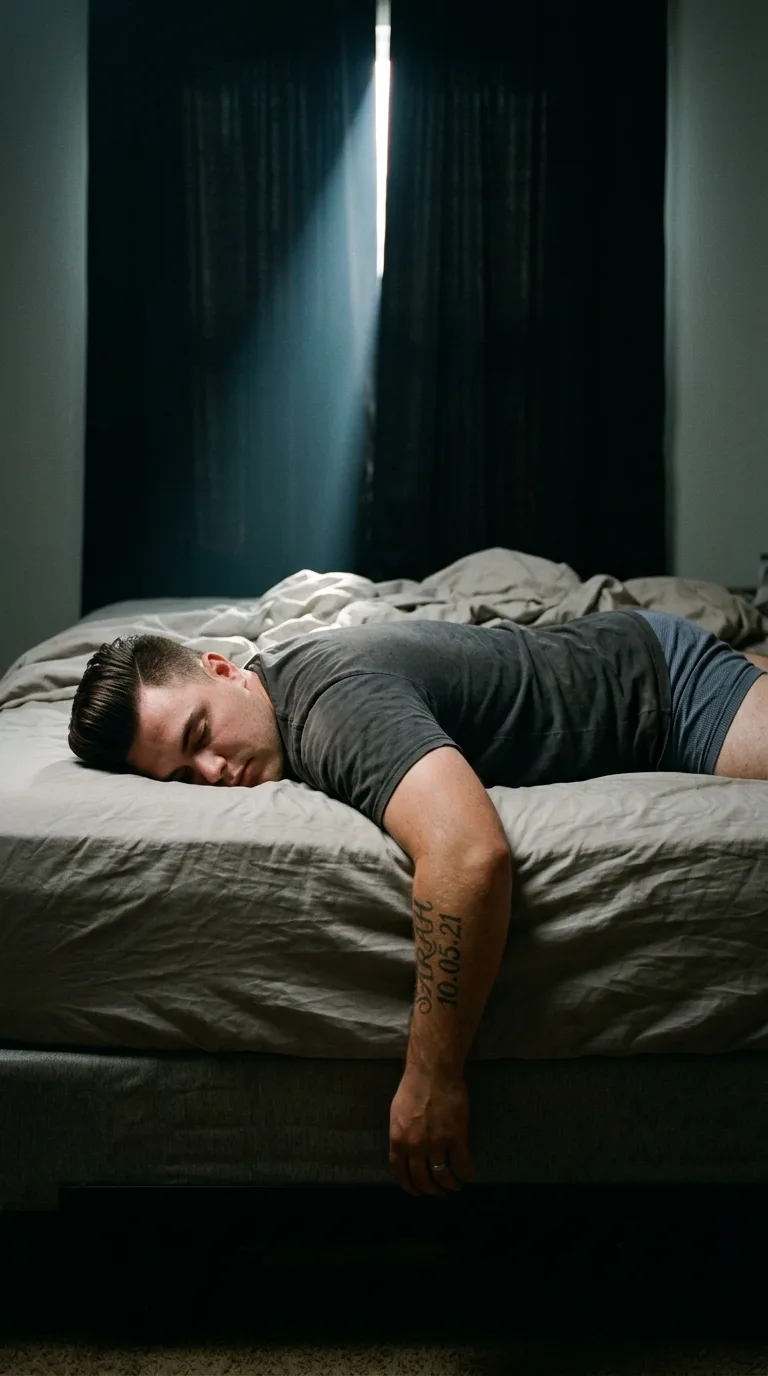
Rarest thing about him: An ancestral tradition — epic, 1 in 142
Season 0seed 1865342073 · engine v10
Character card
lineage LJL8SV
His body-swap story
@marco.villagrana, wearing Colby Anselm, rolled the wheel on and woke up as Brett Sowinski, spent 5 minutes in him, then spun the wheel and woke up as Corey Vansell
Colby Anselm's kitchen smells like chlorine tablets and the burnt-plastic tang of a water treatment plant that never leaves your skin no matter how long you stand in the shower. Two minutes. You have been him for two minutes, standing barefoot on linoleum, and already you know the whole shape of the problem: this man's life is small and careful and paid down to the dollar, and there is nothing left in it to want. You spun the wheel for the smallness of somebody else, and Colby gave you the smallness of himself instead, handed over whole, no surprises left to find. That's the itch. Not hatred of him — you haven't even opened his fridge yet — just the flatness of a body with no unopened doors. You want a door. You pull the phone from his pocket, the site already sitting in the browser like it's been waiting, patient the way it always is, and you spin before you've even decided to.
The gap between spinning and landing does not exist. There is no falling, no travel, only the fact of being face-down in sheets that are not Colby's sheets, breathing air that smells like fabric softener and last night's beer, one arm hanging heavy off a mattress edge into cooler air. You feel the weight arrive with you — more of it than Colby carried, softness at the middle, thick through the shoulders — and the arm lifts itself before you've told it to, folding up onto the chest, and the breath that was ragged going in comes out even, like something that has done this a thousand times and only needed the invitation.
The room is dim, one blade of streetlight cutting the curtains, and you lie there inside a stranger and let his things start talking.
The sheet under your cheek gives you nothing but warmth. But the arm — the one that was hanging, the one you drew up onto your own chest — carries ink, and the ink carries a name, and touching it with your own borrowed skin cracks the door.
Sarah. A backyard in July, string lights, her laugh loud enough to embarrass him in front of his uncles, and the particular terror of a ring box in a jacket pocket all through dinner. Then the tattoo shop, eleven months later, the date already decided, her name in a script she picked out herself because she said if he was going to brand himself with her he could at least let her choose the font. The buzz of the needle didn't bother him. Nothing in his body ever bothers him the way it should — the asthma that clenches his chest on cold mornings at the shop, the way his knuckles crack without him telling them to, some nervous tic older than he can remember the start of. He is used to being lived in by his own habits.
The mattress gives you more — three years of it, the good kind of tired, Sarah's spine turned to him and away in equal measure, an argument in February about money that ended with both of them laughing because neither could remember what started it. And under that, further down, an ex-girlfriend's name arriving unbidden the way exes do, not wanted, not gone either — a girl from before Sarah, a version of himself that drank harder and slept worse, and some nights, even married, even happy, some small dumb corner of him still checks if she's online. He is ashamed of it in the same breath he does it.
The pompadour against the pillow, flattened now, remembers a barber's chair and his mother's voice saying he looked like his father in it, and his father's voice, decades gone, saying nothing at all because his father died before the cleft chin on this face was old enough to shave around. Ancestral church on Christmas and Easter only, incense he associates more with his grandmother's coat than with God. Beer most nights, more on Fridays, never a cigarette in his life — tried one once at nineteen and the asthma made a fool of him coughing in front of everyone.
The shop comes through last, heaviest of all, because his hands know it better than his mind does — the exact drag of an apron strap over his shoulder this morning, sparks flying and dying on concrete before they land, the good ache in his forearms from holding a bead steady, the mask flipped up so he could squint at the seam and nod to himself, satisfied, before flipping it back down. He put these same jeans on this morning, worn at the knee, and did not think about it, the way a man doesn't think about a hundred mornings that all went the same. He works nights sometimes when a job runs late, sleeps when the sun says not to — that's why it's evening and he's out cold, the shop already behind him, exhaustion older than the hour on the clock.
You lie in all of it, the wedding band cool against your borrowed chest, and it is, for one strange moment, more room to stand in than Colby's whole flat life gave you in two minutes.
You look at your hands. Wide across the knuckles, a little scarred, a burn mark old enough to be pale on the left thumb. You turn the left one over and the ring catches what little light there is.
You say, out loud, to no one, "Sarah?" — testing the name in his voice, hearing how easy it comes — and you don't know yet if you'll answer to it tomorrow, or in four minutes, or ever again.