Arturo Palencia
Fictional. Generated by AI — not a real person, and no likeness of one is intended.
58, water treatment operator in Eastern Kentucky · rolled by @connor.waskiewicz · card — no film
History
who has worn him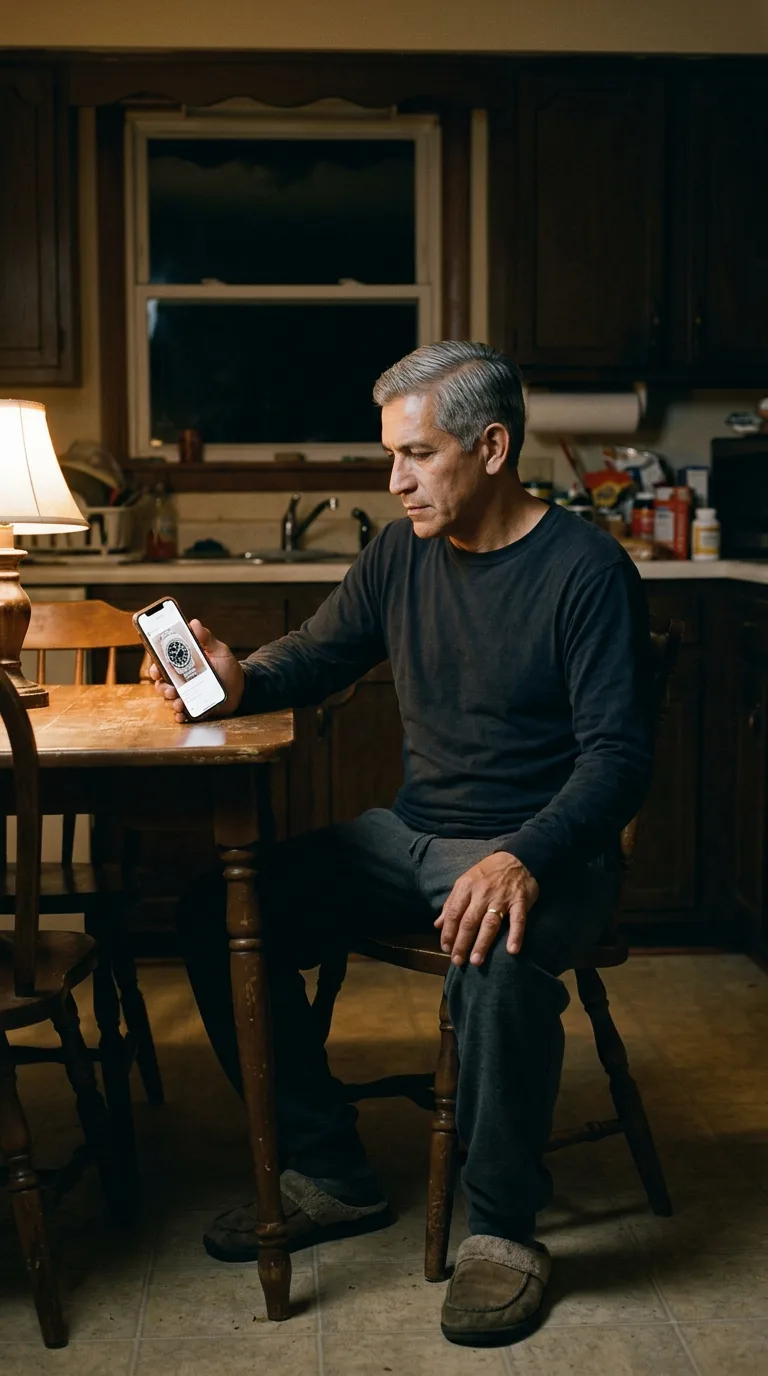
Rarest thing about him: Water treatment operator — uncommon, 1 in 848
Season 1seed 1630229595 · engine v11
Character card
lineage 2NZHHJ
His body-swap story
@connor.waskiewicz, wearing Dominic Milles, rolled the wheel on and woke up as Arturo Palencia, spent under a minute in him, then spun the wheel and woke up as Colin Yarnall
Dominic Milles has a good jaw, freckles across the bridge of his nose, and five minutes of memory that don't belong to you at all — you've had him long enough to know his uniform still smells like the ship's laundry and not like anything you did. That's the trouble with the new ones. They come in clean and stay clean, no traffic yet, no history to chew on, and tonight, standing in his galley-smelling apartment with his phone buzzing on the counter with a text from a woman named Whitney who is apparently his girlfriend, you feel the particular boredom of a body you haven't dirtied yet. Nine hundred and twenty-five men behind you and this one has been yours for the length of a cigarette you don't even want, because he doesn't smoke, and neither, lately, do you. You don't want him. You want the itch scratched, whatever's under it, and you have long since stopped pretending the itch has a reason. You open the laptop on his government-issue desk, find the site bookmarked under a folder called *misc*, and you spin.
The kitchen assembles itself around a body already sitting down. Cheap tile, a lamp with a scorched shade, a phone tipped face-down on a wooden table gone soft at the corners with age. Your arm is heavier than it was a half-second ago, and older, and there is a wedding band snug on the third finger of a hand that is not reaching for anything now — it already set the phone down. Slippers on your feet. A smell of dish soap and something fried a long time ago. You sit in the stopped motion of a man mid-decision, and the decision has already been made without you: don't buy the watch.
The shirt is what opens first — long-sleeve, thin at the elbows, soft the way only years of washing makes a thing soft — and through it comes a Sunday, some Sunday, him pulling this same shirt over his head in a bedroom with the blinds still down, Marisol already up and running water somewhere in the house, the smell of her coffee getting into the fabric before he'd even zipped his pants. Three kids' worth of mornings like that one, staggered over decades — a boy's baseball glove left on the stairs, a girl slamming a door hard enough to feel it in his chest, another girl, grown now, calling on Sundays because she is the one who still calls. He loves them with the specific ache of a man who missed some of it working doubles at the plant, chlorine in his knuckles no shower ever fully got out.
The ring gives you the other one — Denise, the first wife, nineteen years of her, ending not in a bang but in a long quiet car ride back from her mother's, and the second try, Marisol, patient in a way the first one never had to learn to be, married in the church his mother insisted on, the priest mispronouncing his own last name at the altar and everybody laughing except him. He clenches his jaw about that, still, fifteen years later — an old reflex, unlocking now in your own borrowed face, teeth pressing until it aches faintly at the hinge.
The chair under you brings the plant — the walkway over the aeration basin, the water down there boiling white with air he pumps into it, the smell of chlorine and wet concrete that never leaves his jacket no matter how many times Marisol runs it through the wash. He's good at it. Thirty-one years good at it, knows the sound the basin makes when something's wrong before the gauge tells him, knows how to hold a socket wrench steady with a hand that shakes slightly now, second drink of the night still humming faint in his blood, always faint, always there, the thing he does instead of smoking, the thing nobody in the parish asks about because Thursday confession only goes so deep.
The tabletop gives you tonight itself: him totaling the number on the watch against what's left after the mortgage, after Denise's alimony, after the girl in community college, and feeling something in his chest fold up small and put itself away. Not for the first time. He is fifty-eight and comfortable, they'd call him, and comfortable has never once felt like enough, and there's a rosary in the truck's glovebox he touches most mornings on the drive in, less for God than for the ten seconds of quiet it buys him before the gate.
The window over the sink shows black glass and your own reflection in it, silver hair, crooked nose, a face arranged by a life that was happening in full while you were three thousand miles away being someone twenty-four and unmarked. You look down. The hand on the table turns over, palm up, the wedding band catching the lamp, and you hold it there a second before you close it into a loose fist, an old motion this hand knows better than you do.
"Didn't need it anyway," you say, to the dark window, to nobody, in a voice with gravel in it that isn't yours yet and already is.