Arturo Meléndez
Fictional. Generated by AI — not a real person, and no likeness of one is intended.
61, operations manager in Philadelphia · rolled by @colin.hasbrook · card — no film
History
who has worn him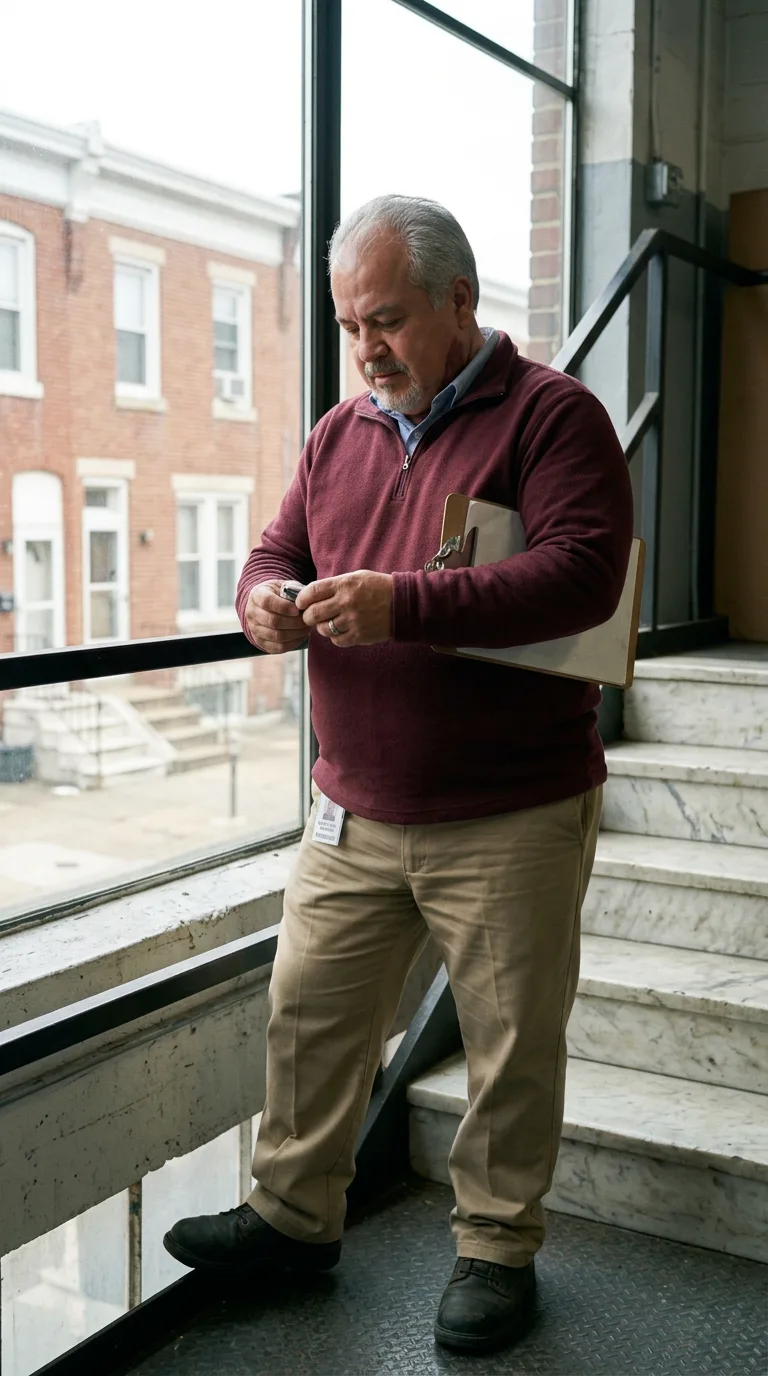
Rarest thing about him: A birthmark on the face — uncommon, 1 in 99
Season 1seed 924916428 · engine v11
Character card
lineage 2NZHHJ
His body-swap story
@colin.hasbrook, wearing Brian Halloway, rolled the wheel on and woke up as Arturo Meléndez, spent under a minute in him, then spun the wheel and woke up as Gerald Novotny
You are sitting in a glass office in Atlanta, in a body with a gap between its front teeth, and the quarterly numbers on the monitor mean nothing to you, not really, because they are Brian Halloway's numbers and Brian Halloway's client and Brian Halloway is thirty-one minutes into being nobody at all. You have worn him less than a minute of your own life and already the desk feels like someone else's desk, which it is, because it was never yours to begin with — you just borrow the wanting that comes pre-loaded in a body and call it your own for a while. The thing that sends you back today is small and stupid and completely enough: a text from a client that Brian would have known how to answer smoothly, automatically, and you sit there with his hands on his keyboard and feel the gap where his instinct should be. Somebody else's competence, worn thin already. You open a new tab. The wheel is already loaded from last night, patient, spinning lazy little reflections of the office lights. You click before the feeling has a name.
The floor comes up first — concrete under boot soles, a vibration in it from conveyor motors two levels down — and then the railing, cold under your palm, galvanized pipe, a diamond-plate walkway shuddering faintly with the weight of forklifts somewhere below. Your body is heavier than the one you left, low and wide and settled, weight sitting in the gut and the thighs in a way that Brian's leanness never did. A clipboard is wedged under your left arm, corner biting into the fat there. In your right hand, small, silver, warm from a pocket: a lighter. Thumb already on the striker wheel from a habit older than this moment. Halfway through the motion your rhythm stutters — the thumb rolls once, wrong, catches nothing, and you correct, slow, deliberate, like a man reading his own hand for the first time. Then again. And again. Ten more strikes, checked, each one, on a wheel a pack-a-day thumb has spun ten thousand times without looking.
The lighter is what opens first. Not fire — memory. A gas station on Aramingo Avenue, fluorescent-lit, three in the morning, buying a lighter because he'd lost the last one somewhere on the floor between the racking and the dock doors; the girl behind the counter young enough to be his daughter if he'd had one, which he doesn't, which is its own small quiet ache that lives under his sternum permanently, low-grade, the kind you stop noticing until something reminds you it's there. The lighter has been refilled at that same register a hundred times since. His thumb knows the exact resistance the striker wheel wants before it catches.
The clipboard next — pressing into your ribs, corner worn soft and rounded from thirty years of exactly that pressure — and it gives you the floor below, the inventory sheets, the particular satisfaction of a shift that runs clean, no shorts, no damage claims, nothing for the regional director to ask about on the Friday call. Ramon Alicea Distribution, three levels of racking, the mezzanine walkway you're standing on built in 1958 when the building made hosiery, before it made anything that comes in a cardboard box. You know this floor's noise the way you know a hymn, without listening to it, and it is comforting, standing here in it, more comforting than anything at home has been in a long while.
Home comes through the shirt — light blue, tucked, buttoned two down from the collar under the maroon quarter-zip, and dressing this morning arrives whole: the shirt pulled off its hanger in a bedroom that used a second pillow for eleven years and hasn't in six, the fleece zipped exactly to where the collar shows, keys and badge lanyard looped over the same hook by the door his wife screwed into the frame herself, using a level, laughing at him for needing one. Rosa. Her name arrives with the birthmark's own remembered weight along his jaw, the one thing people used to ask about at parties before they learned not to, the one thing she used to kiss without being asked, like it was ordinary, like it wasn't a map of something. Six years gone now, and the ring is still on the hand that just struck the lighter eleven times, warm gold gone thin at the band from four decades of never taking it off, not for her funeral, not for anything.
There is a woman more recent than Rosa too — Diane, from the pharmacy two blocks from the rowhouse, laughing at something he said outside a CVS, six months of Sunday phone calls and a dinner every other week, ended three months ago over something neither of them fought hard enough to fix, and the ache of that is different from the ache of Rosa, newer, more embarrassed of itself, the ache of a man who thought he was done needing anyone and found out otherwise. His leg is bouncing right now — you feel it, a tremor at the knee that's been running the whole time under the stillness of his hands, engine idling under a parked car, and it has been bouncing like that through both griefs and doesn't know the difference between them.
The boots know the walkway's diamond plate without being told where the loose section is, two feet to your left, marked with a strip of yellow tape he requisitioned himself and nobody's replaced. Sixty-one years old and the knees complain going down the stairs more than up them. The gut sits comfortable, familiar, fed well and often, a man who eats because his mother taught him a table wasn't a table without too much on it.
You look down at the hand holding the lighter. Thick fingers, brown, a white scar-pale line where a box cutter slipped in 2003 that the facts never told you about because it isn't yours to invent — it's simply there, his, and you notice it the way he would, without surprise. The wedding band catches the window light off Chestnut behind you, rowhouses and white marble steps going gold in the middle of the day. Somewhere below, a forklift horn sounds twice, patient, waiting on him.
You lift your eyes off the ring and out toward the floor, and you say, in a voice roughened by forty years of unfiltered cigarettes, "Alright. Let's go again."