Arjun Deshmukh
Fictional. Generated by AI — not a real person, and no likeness of one is intended.
36, baker in Atlanta · rolled by @colin.hasbrook · card — no film
History
who has worn him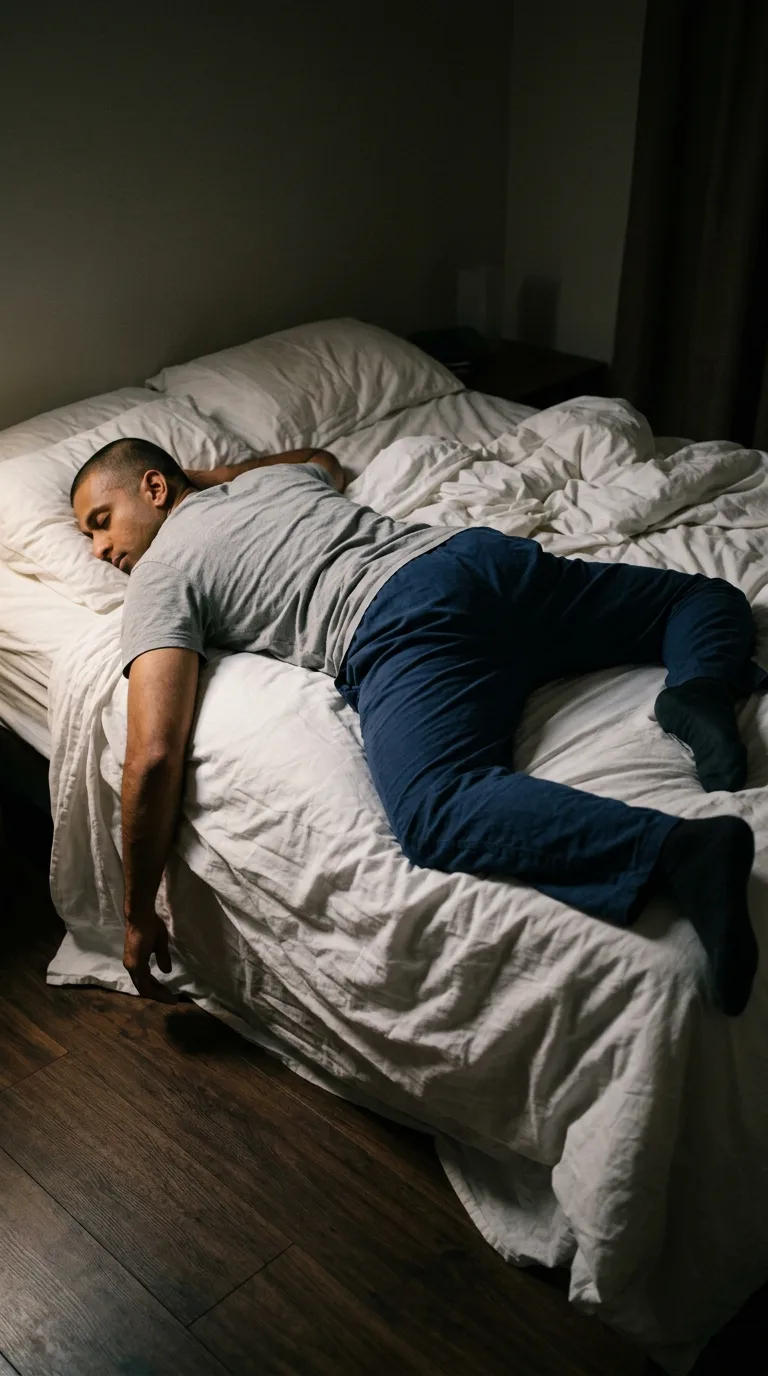
Rarest thing about him: A burn scar — epic, 1 in 191
Season 0seed 353403857 · engine v10
Character card
lineage 2NZHHJ
His body-swap story
@colin.hasbrook, wearing Michael Ryan, rolled the wheel on and woke up as Arjun Deshmukh, spent under a minute in him, then spun the wheel and woke up as Danilo Fuentes
You are Michael Ryan for less than a minute, and already you know you're done with him. His knees are the problem — they have been all shift, thirty years of them grinding down to a fine complaint every time he takes a stair, and tonight, standing in his own kitchen in the flat gray light of a High-desert dusk, some other ache decides it for you. It's not even the knees really. It's that you remember, in the specific and useless way you remember things now, being twenty-six other men who didn't hurt like this, and you are suddenly and completely tired of being the gray-haired one who does. His phone is on the counter. His hand — thick-knuckled, a burn on the back of it from a call three weeks ago, a stove fire, a woman who didn't make it — picks it up out of habit more than intention. The site loads the way it always loads, patient, the wheel already spun in your mind before your thumb touches it.
The screen goes white and then it isn't a screen.
You are face-down and then you are not face-down, and the not-face-down happens without any sense of turning, like a page skipping instead of flipping. Ragged air smooths out into one long unclenching breath. An arm that was hanging off a mattress into cool dark air draws itself up and folds across a chest that is thinner than the one you just left, younger, tighter through the shoulders even in sleep. Somewhere very far below thought, a knee twinges — not the knees you knew, a different complaint, an old one, filed under something else. The room smells like fabric softener and, underneath that, like flour that never fully washes out of a person.
It comes in through the shirt first. Thin gray cotton, soft with age, and it gives you a Tuesday — no, hundreds of Tuesdays, stacked — three-forty in the morning, the alarm that isn't a sound so much as a vibration against a nightstand, his hand silencing it before it wakes her. Fatima. Her name arrives the way all of this arrives, sideways, riding in on the shirt's memory of his shoulders and not on anything you did. He loves her in the tired, structural way of a man who has built something and lives inside what he built. Fifteen years. Three kids, a fourth almost certain by the sounds of the last conversation the shirt remembers being present for, her hand on his in the dark, both of them too wrecked to be as happy about it as they wanted to be.
The scar on his neck comes next, not through touch exactly but through the collar's memory of lying against it every night for eleven years — a fryer, a kitchen in Decatur when he was twenty-five, oil that jumped when it shouldn't have, six weeks of dressings and a manager who fired him anyway for the shifts he missed. He opened his own place four years after that. Deshmukh's, on a strip between a nail salon and a check-cashing store, and it is doing better than he ever tells his mother it's doing, because if he tells her she'll tell the aunties, and then it isn't his anymore, it's everyone's.
The mattress under what is now your back gives you the ordinary stuff, the stuff that isn't a story so much as a texture: getting up at three-thirty is not hard anymore, hasn't been hard in years, it's just Tuesday, it's just the shape of a life. The alarm, the dark, the drive with the radio off because his brain is already at the ovens. The dough by four, his hands — broad, burn-marked up one forearm too, small white flecks of old grease scars he stopped noticing around year three — finding the fold and turn without him watching them do it. His back goes first these days, low, right side, a dull structural ache that sits down into his hips by the third hour of standing, and he has learned to work through it the way he's learned to work through everything, which is mostly by not looking at it directly.
The pillow gives you Fatima's voice from the last time he slept instead of worked through a night, asking if he was going to keep doing this until he was seventy, and him saying probably, laughing it off, meaning it more than the laugh let on. The three kids arrive as a warmth without faces yet — a school play, a scraped elbow, a small hand fisted in flour-dusted denim at pickup — because the images aren't the point, the wanting-to-get-back-to-them is, and it sits under everything else here like a floor you didn't know you were standing on.
His jaw is tight. Has been tight this whole time, you realize, clenched in sleep the way it apparently clenches in traffic, in line at the bank, in the quiet half-second before he tells an employee something they don't want to hear. Not from you. From him. It was already doing that before you got here.
You open his eyes. Streetlight through the gap in the curtain lays one pale stripe across the ceiling. You bring the hand up — his hand, the burn-marked forearm, the calluses along the base of each finger that have never once, in this life, held anything but dough and steel — and you turn it over in front of his face like it's new currency you're not sure is real.
"There you are," you say, to no one, to the ceiling, to the thirty-six years of him you are standing in the very beginning of, and you have absolutely no idea, none, how long you intend to keep him.