Amir Haddad
Fictional. Generated by AI — not a real person, and no likeness of one is intended.
56, construction laborer in Houston · rolled by @connor.waskiewicz · card — no film
History
who has worn him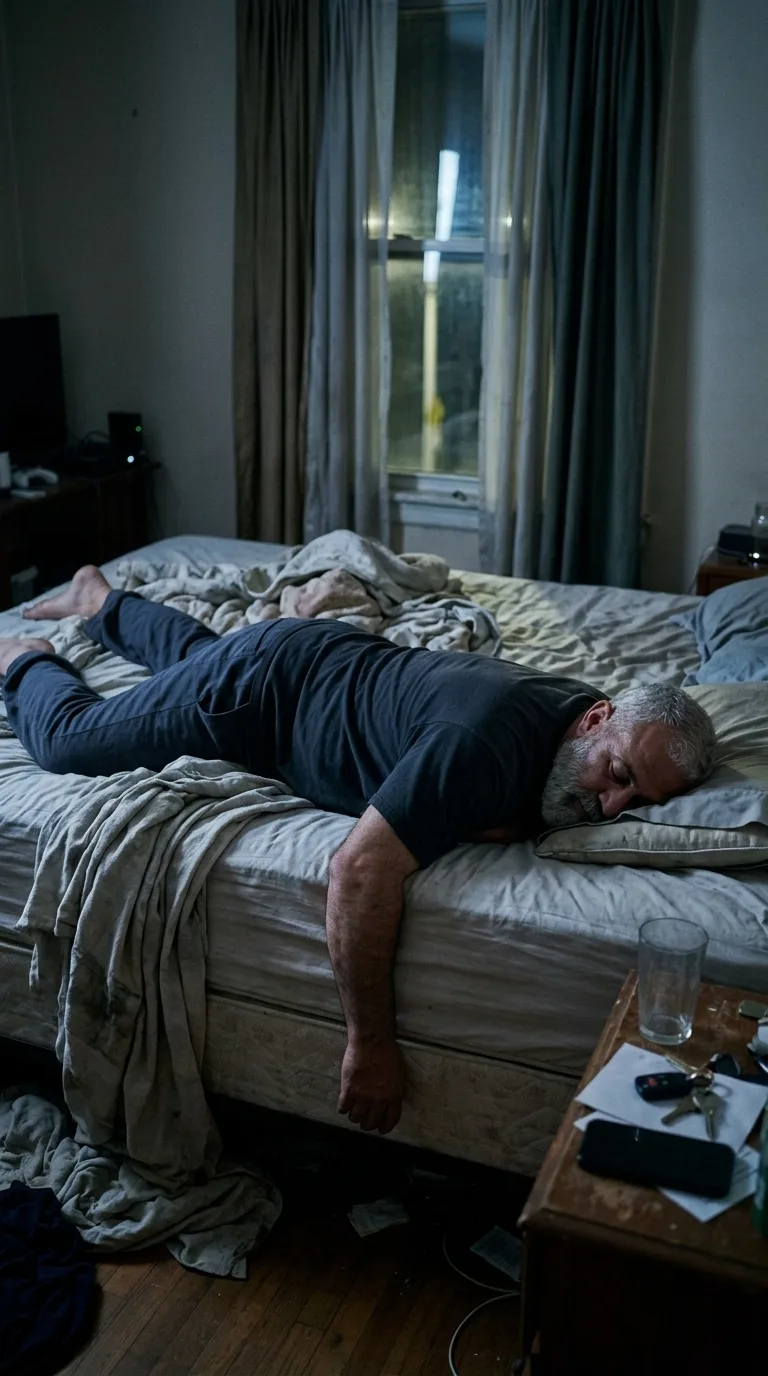
Rarest thing about him: Middle Eastern — common, 1 in 34
Season 1seed 1329744813 · engine v11
Character card
lineage 2NZHHJ
His body-swap story
@connor.waskiewicz, wearing Andrew Cho, rolled the wheel on and woke up as Amir Haddad, spent under a minute in him, then spun the wheel and woke up as Grant Halvorsen
You leave the deputy the way you leave a coat on a chair. He is five minutes old on you, and already you know him too well: the goatee you keep touching, the belt that carries a weight you did not choose, the quiet of a house in Los Angeles where everyone sleeps and nothing is asked of you. It is a good body. It is the problem. Nothing is wrong with it, and you are standing in his kitchen at the hour when wanting turns over like an engine, thinking about a man in Houston you wore for under a minute, twenty-five, skinny-fat, blue-eyed, whose hands knew a joystick and whose house smelled of fryer oil. You think about the man who works beside him. You saw him from inside the other one's eyes: the older laborer down in the trench, gray beard, a shovel passed up without a word. Something about being looked at that way, steadily, by someone who did not need anything from you. The deputy is looked at all day, and it is never that. So you open the page. The wheel ticks, slows, and stops.
Then you are face-down in the dark with your cheek pressed into a pillow gone damp with your own breath. It is ragged, then even, in a single pull. One arm hangs off the mattress and the blood has pooled in the fingers, so they feel thick and far away. Streetlight comes through a gap in the curtains and lies in a stripe across the floorboards. You do not decide to move. The arm draws itself up, the body rolls onto its back, and the hands fold at your chest like a man laid out. He has never once slept this way. You do not know that yet.
The sheet under your palm is rough and washed thin, and it gives you him: a Saturday, the laundromat, folding it wrong on purpose because no one was there to correct him. The shirt on your chest is soft navy cotton, the neck stretched. It gives you the morning in the dark before a shift, in a different shirt, pulling the orange vest over his head and feeling the reflective stripes crackle, then the jeans, stiff with yesterday's clay, the left leg first because the right knee complains. He sits on the bed edge to lace the boots, and his belly presses his thighs, and he thinks of nothing, and that nothing is a kind of peace. Under your heel the floorboards are cool and a little tacky, and they hand you the sound of rain on the roof of a house he bought outright, cash, years of overtime, and never told anyone how much was in the account. Your tongue finds the faint sweetness of a drink or two, always two, poured at the same hour, drunk standing at the counter.
The beard is thick against your fingers, two inches of it, joined to the moustache. When you rub your jaw it brings back his father's razor in a bathroom in another country, a smell of cardamom and soap, the shame of leaving. The glass on the nightstand, when you reach for it, is cold and sweating, and it gives you the trench: the mini excavator ticking as it cools, spoil piled in a gray hill, the young operator, the one you were, calling down a joke he did not understand. He laughed anyway, because it was kind. Your back aches in the old honest way, the lumbar knot, and the shoulders are strong, thick from decades of lifting. The hands know the weight of a shovel handle before you do.
You lift them into the streetlight and turn them over. The calluses are hard ridges and the knuckles are thick, and they are not yours. You look up.
"Hello, Amir," you say, rough and low, in a voice that has not been asked anything today.
Somewhere in the house the refrigerator hums. You do not know how long this one lasts.