Alan Oshiro
Fictional. Generated by AI — not a real person, and no likeness of one is intended.
53, cop in Honolulu · rolled by @colin.tarwater · card — no film
History
who has worn him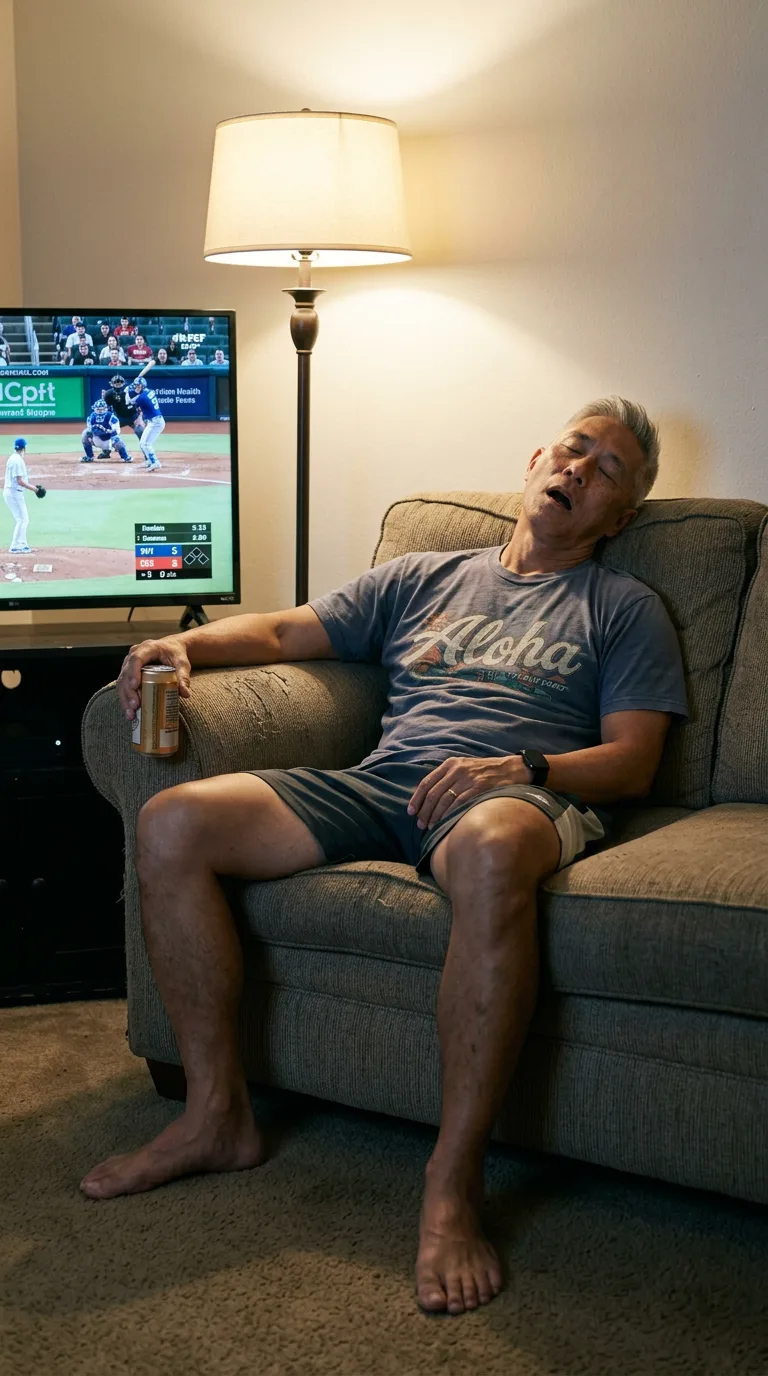
Rarest thing about him: Gay — epic, 1 in 40
Season 0seed 713123506 · engine v10
Character card
lineage COEU7T
His body-swap story
@colin.tarwater, wearing Kevin Zhuang, rolled the wheel on and woke up as Alan Oshiro, spent under a minute in him, then spun the wheel and woke up as Wesley Begay
You are standing in a kitchen in Philadelphia with a client's toolbox at your feet and a phone screen open in one skinny hand, and you are twenty years old and none of it is yours — not the phone, not the toolbox, not the twenty years. Kevin Zhuang has been your body for less than a minute and already the gap in his front teeth is bothering you when you run your tongue across it, an itch that isn't yours to have. You spun for him last night, or he did, or whoever you were before did, and now you're standing in his unfinished Saturday looking at a bathroom sink that needs a new trap, and the boredom hits you first and hardest — not disgust, nothing that dramatic, just the flat gray fact that this body is twenty and skinny and has to be somewhere at nine to fix somebody else's plumbing. Forty-seven men and you are tired in a way that has nothing to do with sleep. You open the site on his phone with his thumb, the gap-toothed weight of him folding into a kitchen chair, and you spin because you always spin, because the wanting doesn't wait for a reason, only invents one after: *let's see who's tired in a different way.*
The wheel spins and stops and there is no gap between the stopping and this — you are sitting forward on a couch, thumb on a volume rocker, and the room is dim and gold-lit and smells of somebody's dinner three hours cold. A can, warm, tips in your other hand before you catch it. On the screen a ball leaves a bat in the far outfield, replayed, and you are already reaching to turn the sound down before you've decided you want quiet, the thumb moving with an authority the rest of the body clearly hasn't authorized — knees stiff, spine set wrong, a low ringing behind the eyes that isn't a hangover because this man has never been hungover in his life.
The shirt is what starts it. Cotton, thin from washing, ALOHA across the chest in curling letters that his fingers know without looking — this shirt, bought at Ala Moana on a Saturday with his husband ten years back, an argument about whether it was too big that ended in David laughing and buying it anyway. Deshawn — no. David. The name arrives whole, unbidden, the way none of it is offered gently: David's hand on his shoulder guiding him toward the register, David's voice saying *you'll wear it to sleep and nothing else, watch,* and he had, more nights than either of them would admit to the kids.
The kids. Two of them, grown now, a photograph somewhere in this house of both of them small and sunburned on a beach with their father's police cap too big on one head. He feels the missing-them the way you feel a bruise you forgot you had — pressed on by nothing, blooming anyway.
The can in his hand is warm and half-full and it should not exist at all — Alan Oshiro does not drink, has never wanted to, sat through two decades of department Christmas parties nursing club soda while men half his rank got loud, and yet here the can is, sweating onto his palm, and the memory that comes with it is small and almost funny: David bought a case for a cousin's visit, and the fridge was full, and one ended up in Alan's hand out of habit more than desire, and he'd meant three sips and a nap and that had, apparently, become the entire evening. He can feel the couch's give under a body that is fifty-three and still strong through the shoulders from twenty-six years of getting in and out of a cruiser, and can feel, too, the dull established ache low behind his sternum, the blood pressure medication he takes every morning with the vitamins David lines up on the counter like a man arranging chess pieces.
The uniform is the loudest thing in the room even folded over a chair across from him — he can smell the starch of it without touching it, and that's enough: the black fabric going onto his arms sleeve by sleeve at five in the morning, the name tape OSHIRO straightened by feel after eleven years of doing it in the dark so he wouldn't wake David, the belt's familiar drag settling onto hips that have carried it since his hair was still black at the temples. Freckles across his nose that his mother used to say came from too much beach and not enough hat, that David kisses sometimes for no reason at all, that recruits used to make the mistake of thinking made him soft.
It is morning here, technically, though the room says otherwise — no window light, no day yet, and the game was surely a rerun, some mainland afternoon replayed into this house's dead hours because a man coming off nights sleeps when his body says to and not when the clock does. Alan works graveyard three weeks out of four. He fell asleep before he meant to, mouth open, off duty and fully off guard, and the last thought that was fully his own — a small one, half-formed, about whether he'd left the porch light on for whichever of the kids might call — is still dissolving somewhere in the body when you arrive on top of it.
You look down. The hand around the can has his father's knuckles, David used to say, and the wedding band catches the lamp — plain, no stone, fifteen years of wear worn into it smooth. You turn the hand over slowly, the way you always do, the freckles scattered across the back of it too, following him all the way down the arm, and something in you that isn't quite guilt and isn't quite hunger settles into the stiff, strong, tired shape of him.
You lift your eyes to the dark television, then past it, like there's a lens there and you already know it.
"Wrong game," you say, in his voice, and you don't know yet if that's the last thing he'll ever not mean.