Adrián Vasquez
Fictional. Generated by AI — not a real person, and no likeness of one is intended.
19, real estate agent in San Francisco · rolled by @connor.waskiewicz · card — no film
History
who has worn him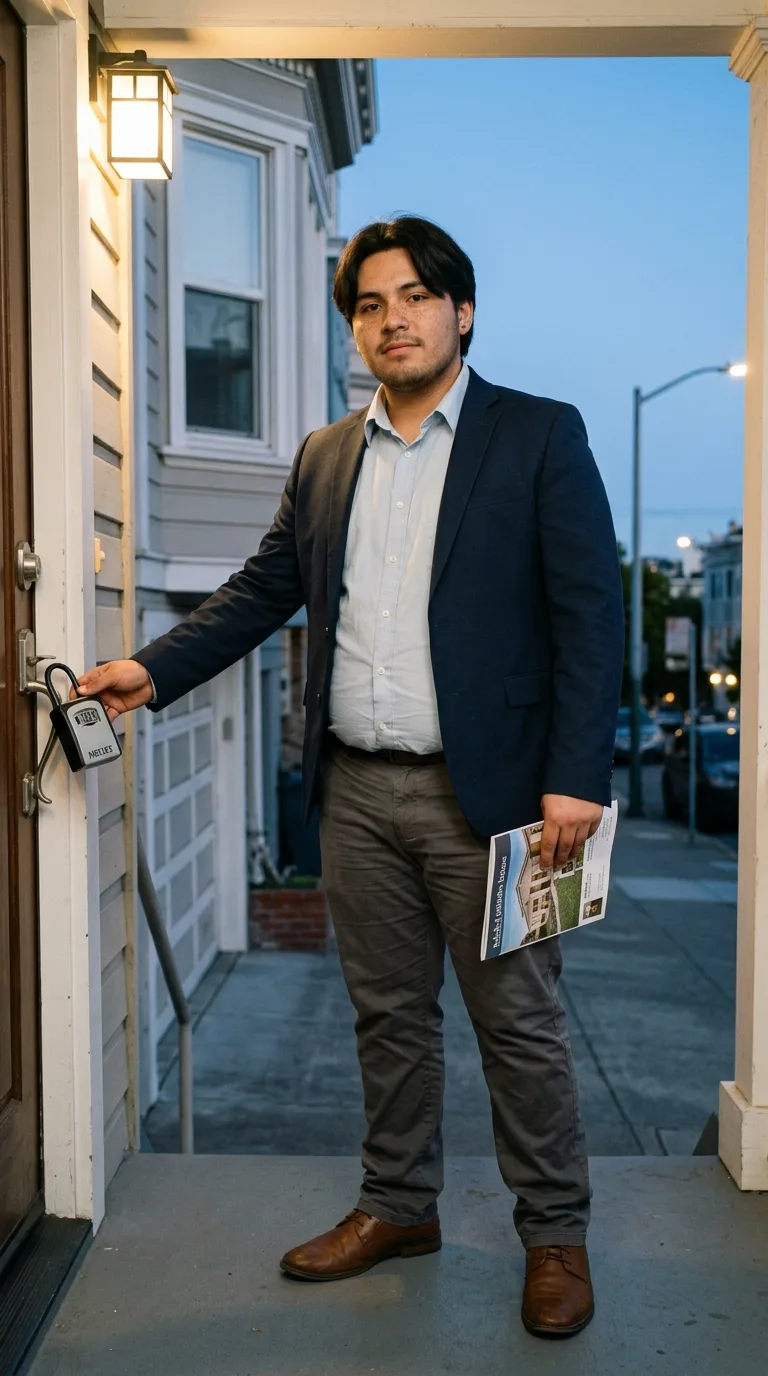
Rarest thing about him: Gay — common, 1 in 32
Season 1seed 1014023479 · engine v11
Character card
lineage 2NZHHJ
His body-swap story
@connor.waskiewicz, wearing Nestor Villagrán, rolled the wheel on and woke up as Adrián Vasquez, spent under a minute in him, then spun the wheel and woke up as Russell Kopecki
---
Nestor's chair does this thing where it clicks when you lean back too far, and it clicks now, at eleven fifty-something on a Monday, in an office that has been empty for an hour except for you. His desk lamp throws a cone of yellow on a stack of expense reports nobody will read until Wednesday. His hands — soft, ringless, the nail beds a little bitten — are still resting on the keyboard from the email he was finishing when the wanting came back.
It always comes back like this: not a decision so much as a itch under skin that isn't yours to scratch. Nestor is fifty-three and tired in a way that has nothing to do with sleep. He has a scar through one eyebrow you've never gotten the story of, because getting the story would mean caring, and caring was never the point. You've been him less than a minute, all told, spread across however many times you've opened this laptop and closed it again without doing anything. He is the 971st man and already a coat you're shrugging off before you've finished shrugging it on. You open the browser. The wheel is already bookmarked, obscenely, right next to his bank.
You don't decide so much as arrive at the click already having happened.
—
The lockbox is cold in fingers that a half-second ago were not fingers you owned, and now the whole hand closes on it, and the shape of the closing is wrong — too much force, the little grinding stutter of the numbers turning too fast, wrong combination, wrong everything — and then it corrects. Slows. Does it again, right, deliberate, like someone spelling out a word they already know how to spell. The lockbox opens. You are standing on a porch, warm light overhead, evening coming down blue behind you, a stapled listing sheet damp in your other hand from a grip that's been sweating all day. Weight settles into you all at once — heavier through the middle than you expected, shorter, a softness at the belly held in by a belt cinched a notch tighter than comfortable. Stubble prickles when you swallow.
—
The blazer is the first real door in. Navy, a little snug across the shoulders since he — since you, since this body — put on eight pounds since buying it, and the memory comes with the itch of the tag against the neck: standing in the bedroom of the in-law unit under the bay window, morning light doing nothing for the low ceiling, choosing this jacket over the gray one because the gray one has a coffee stain at the cuff nobody's gotten out. Adrián. The name arrives with the jacket, easy, the way your own name never has to arrive because it's always just there — except it isn't there anymore, not for you, not really, not since spin four hundred, and that thought slides off before it can hurt.
The shirt gives you more. Sleeve first: rolling it down over a forearm with a little dark hair on it, buttoning the cuff one-handed, a trick learned at nineteen out of impatience rather than skill. Then the whole morning comes, unbidden, generous: coffee in a chipped mug shaped like a cable car, a gift from a cousin, the radio doing traffic on 101 while he — you — stood in front of a mirror clouded at the corners and practiced a smile that didn't look like it was trying. The freckles across the nose looked, in that mirror, like something he used to hate and had recently decided to stop hating. Small stud earrings, in both ears, put in this morning after sitting in a dish on the dresser for three days because he kept forgetting.
The studs bring a boy's bedroom, years back, the day he first pierced them himself with a lighter and a needle and his mother's disapproving silence afterward, a silence that had less to do with the earrings than with what she suspected they meant, and was right to suspect. Catholic guilt sits in this body like a low hum, familiar, mostly ignored, occasionally loud on Sunday mornings he doesn't go to anymore. No boyfriend. No one particular he thinks about at night, though there was almost someone, once, a guy from a broker's open house who texted for two weeks and then didn't. He didn't chase it. He doesn't chase much. He goes to open houses and sets combination locks and smiles at strangers who are deciding whether to trust him with the biggest number of their lives, and he is good at it, better than his youth should let him be, and he likes that people underestimate him right up until the paperwork's signed.
The listing sheet in your hand: 1400-something on a street with a hill so steep the driveway looks apologetic, a garage tucked under a bay window with cold white light in it like a held breath. He walked this block four times this week already. He knows which stair creaks. His feet, in shoes a size too big-feeling because his own feet swell a little by evening, know the porch without looking down.
—
You look at the hand still on the lockbox — his hand, soft-knuckled, sun-touched at the wrist, a hand that has never in its life closed around anything heavier than a stapled listing and a set of keys — and you turn it over slowly, freckles crossing the back of it too, faint, easy to miss.
You look up into the last of the blue evening and say, "Almost forgot the code," to no one, in a voice pitched a half-step higher than the one you left behind in New York, and you don't know yet if that's a lie you'll believe by morning.