Adam Sonnenfeld
Fictional. Generated by AI — not a real person, and no likeness of one is intended.
38, bouncer in Chicago · rolled by @colin.hasbrook · card — no film
History
who has worn him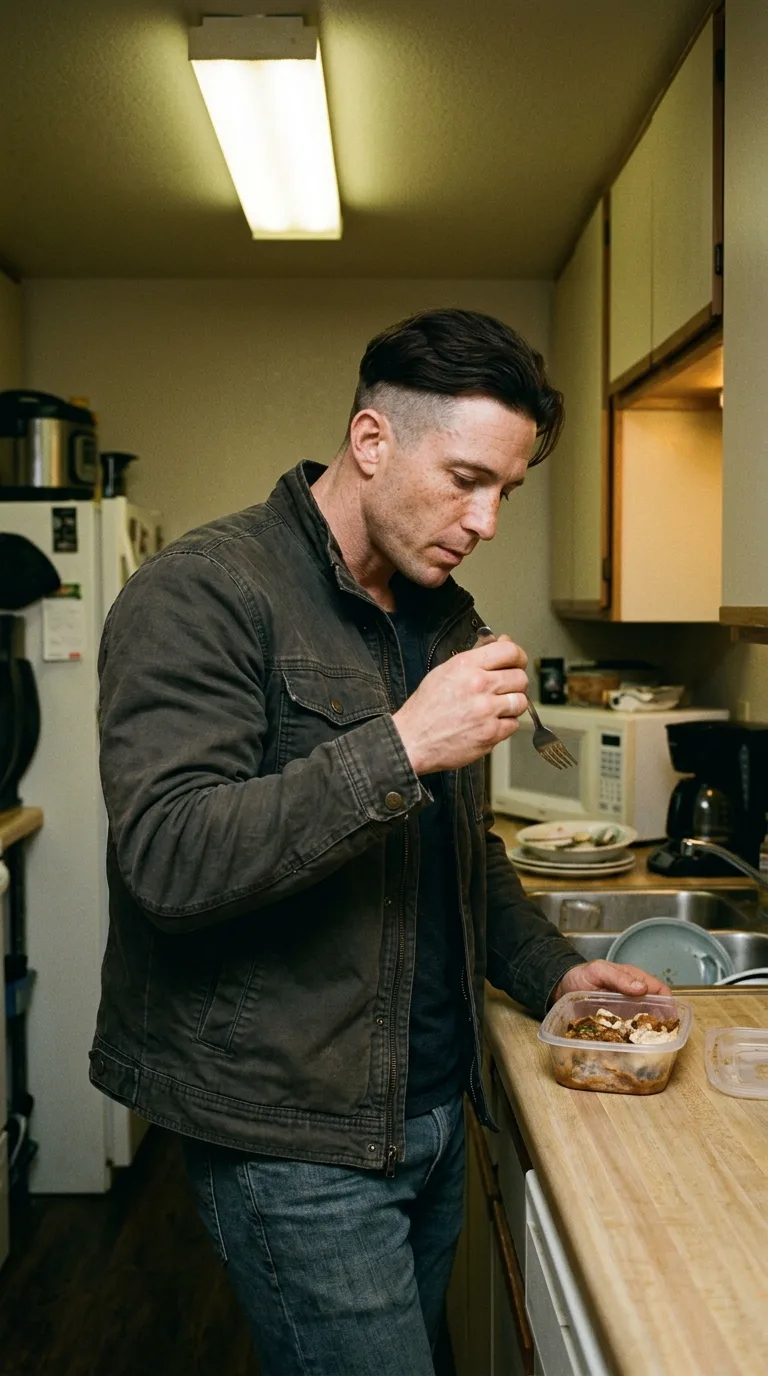
Rarest thing about him: Jewish — rare, 1 in 37
Season 0seed 1656053726 · engine v10
Character card
lineage 2NZHHJ
His body-swap story
@colin.hasbrook, wearing Russell Kowalczyk, rolled the wheel on and woke up as Adam Sonnenfeld, spent under a minute in him, then spun the wheel and woke up as Wesley Tanner
---
The cabin smells like woodsmoke and the particular staleness of a man alone. You are Russell Kowalczyk — you have been him for less than a minute, and already the body is a problem you did not ask for: the knee that locks going down stairs, the gut that sits low and hard over the belt, the scar through the eyebrow that itches when it's about to rain. Bald head cold under the porch light through the window. You spun into a park ranger in Ohio and the wheel gave you a man whose whole life is quiet — a truck, a radio that squawks about downed branches, a freezer full of venison somebody else shot. You stood in his kitchen for forty seconds deciding you already hated the quiet. That's the whole reason, if anyone ever asked, which they won't: forty seconds of a life with no rope, no crowd, no door to be the last word on. You want noise. You want a city that doesn't sleep just because you're tired. The laptop is already open on his table, vessel.cards loaded from whoever had this account last, the wheel spinning lazy colors like a slot machine that never stops for long. You didn't even sit down. You put the cursor over SPIN and thought: not this one, and clicked.
The kitchen light is fluorescent and too bright and it is not Ohio's kitchen, it is somebody else's — narrow, a coffee maker humming, a microwave with a coffee ring on top of it. You are mid-motion: fork loaded, halfway to a mouth that isn't the one you had two seconds ago, weight braced over a counter at a height that fits a shorter frame. Coat still on your shoulders, heavy, canvas-smelling. Your hand — his hand — hesitates in the air, and then, on its own, on habit, sets the fork down flat against the rim of the container. You didn't tell it to do that. It just knew the motion, the way a body knows a doorway in the dark.
The coat comes off first and it comes with a whole shift in it — twelve hours of it, the strap of a mic pack still warm against your ribcage, bass from inside the club thudding up through the floor and the soles of boots, cold air at the rope, cigarette smoke that isn't yours drifting over from the smokers by the corner even though you've never wanted one, not once, not even the night you found out about Lauren. The earpiece is still curled in your pocket, coiled like it's asleep. Freckles across the nose — you feel them without a mirror, the way you feel him remembering being a kid at a lake in Skokie, his mother telling him to wear a hat, not listening.
The tattoo on the forearm goes next, cross and praying hands in black line, and it opens like a door held a half-second too long: not his faith, never his faith, he lit candles Friday nights growing up and said the blessing over wine he only half believed in, and got the ink anyway at twenty-two because a guy he worked security with in Cabrini-Green had one just like it and it felt like armor, felt like something a fist would respect. Under it, right where the fabric of a t-shirt would sit, is a strength that isn't decorative — the kind that comes from actually needing to grab a man by the collar and mean it, three, four nights a week, for years.
The ring finger is bare and pale where something used to sit, and that one comes in heavier and slower than the rest, not a flash but a season: an apartment with two kids' drawings taped to the fridge, a woman's voice going thin and careful the way voices go right before they leave for good, the two of you dividing dishes in a kitchen much like this one, and him standing at a rope some nights afterward doing math about custody weekends in his head while strangers begged him to let them past a velvet cord. He drinks more since then. Not proudly. Just consistently, the fridge always holding one more can than a man alone needs. He doesn't smoke. Never did — his father's emphysema saw to that early, a hospital room lesson that stuck when nothing else his father said did.
The body underneath all of it is thirty-eight and built like work: shoulders that have held doors closed against men twice his patience, a low simmering ache behind the sternum some mornings that he has decided, several times, to mention to a doctor and hasn't, a number on a meter in a drawer he checks less often than he should. Diabetes sits in him quiet as a held breath, managed badly, an unopened prescription somewhere behind the vitamins. His fingers, when they're not gripping a rope-stand or a phone, go to the cuticles on their own — worrying at them now, at the counter, an old animal habit that has nothing to do with you.
The clothes remember the morning better than he does: the jacket shrugged on in a hallway with a kid's shoe abandoned by the door on his visitation days, jeans pulled on half-asleep, the sleeveless black thing under it all chosen because his arms are the whole job, really, the tattoo meant to be seen, the freckles meant to be forgotten by anyone who underestimates him for having them. He finishes the container standing, fork scraping the plastic corners clean, eyes on the black window where the L rattles by outside and throws a stripe of light across the counter, gone as fast as it came.
You look down at the hand holding the empty fork. It is not the hand you had a minute ago on a porch in Ohio — no scar, no ache in a knee, just freckled knuckles and a groove where a ring used to sit, and you turn it over slow, like checking it for a seam.
"Okay," you say, to the dark window, to nobody. "Okay."
Somewhere under that word is the wheel again, waiting, always waiting, and no clock on it either — not tonight's, not any night's — just the fact of it, sitting open on a laptop in a cabin four hundred miles from here, patient as anything that never has to leave.