Yusuf Ebrahim Moosa
Fictional. Generated by AI — not a real person, and no likeness of one is intended.
65, electrician in Johannesburg · rolled by @colton.vandermark · card — no film
History
who has worn him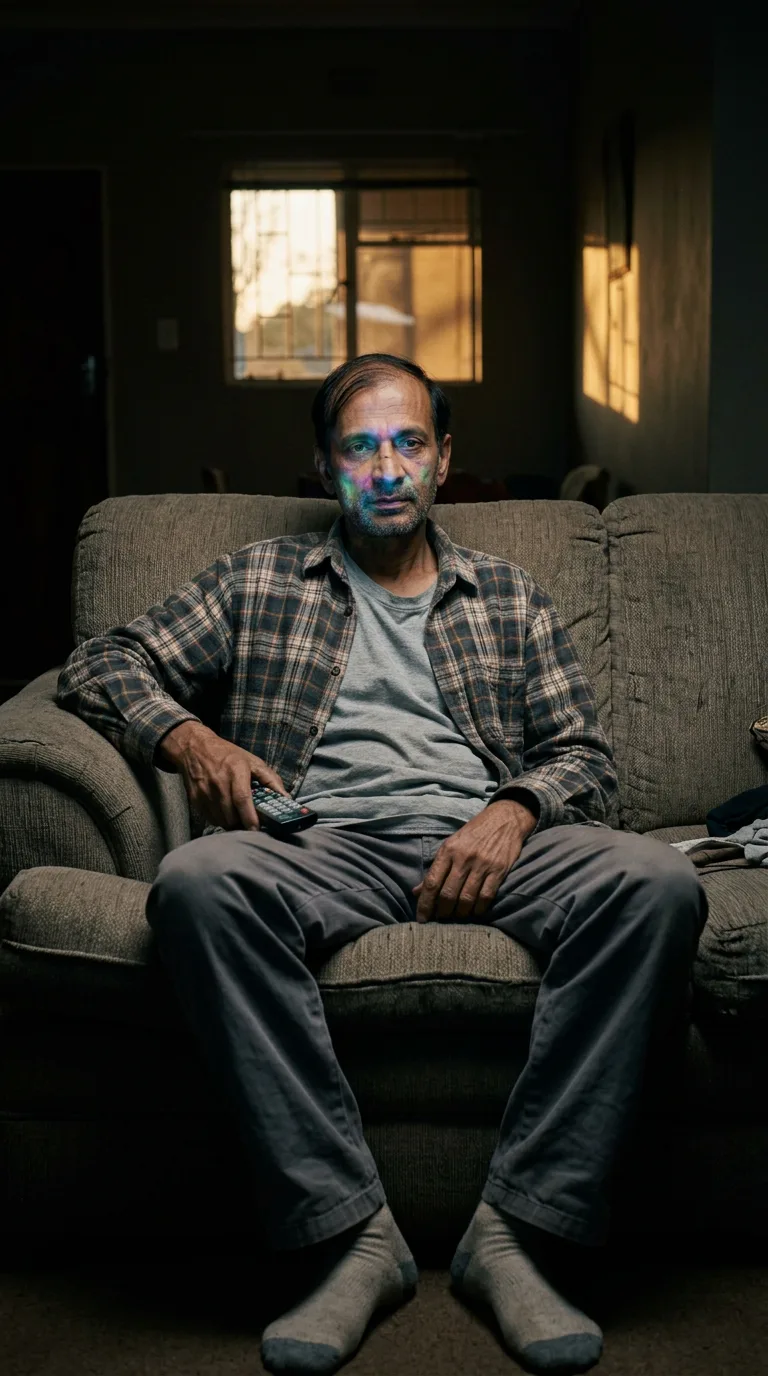
Rarest thing about him: Johannesburg — mythic, 1 in 8,313
Face-off rating 1499 · not ranked yet
Season 1seed 1725167090 · engine v11
Character card
lineage PYNCV3
His body-swap story
@colton.vandermark (admin), wearing Liam Brandt Kessler, rolled the wheel on and woke up as Yusuf Ebrahim Moosa, spent 20 hours in him, then spun the wheel and woke up as Neil Everett Lindqvist
You are standing at a rack of polo shirts, folding the same navy one for the third time, and the body you are in will not stop wanting. Liam Kessler's legs are restless. His shoulders are wide and tight, and some sales-floor song is in his teeth. He is twenty-four, and he is good at being looked at. Yesterday a woman at the register touched his arm and said, "You don't remember me, do you?" He did not. The nose, once broken, ached in the air-conditioning. He had nothing for her. Nothing was in there to give. You have been an hour late to your own mouth all day, saying his lines a beat behind. The sun through the glass doors is full midmorning Sunday, and you know you are done. You tuck the shirt's sleeve under, and then you stop being anyone who folds.
The wheel clicks. The room goes dark and heavy.
You are sunk. The couch has you at the hips and your head is tipped on the cushion. The air is dim and smells of cardamom, old carpet and cold tea. A bright frame flares on the television, and you sit up straight so fast your back cracks. The remote is in your right hand. You set it on the couch arm. On the screen a man says something, and the room laughs, and you do not.
The flannel is soft with washing. The cuff at your wrist brings the morning up unasked. It is his hands doing the buttons in a bedroom, left cuff first because the right wrist is stiff, and a woman's voice from the kitchen saying his name, Yusuf, the tea is going cold. He is not hurrying. He never does Sundays. He loves this one shirt because it was a gift, and he has never said so.
The grey T-shirt under it is thin at the collar. It hands you the work week: a ceiling half open, conduit running overhead, his arms up for hours, the ache in the shoulders that is simply what forty years feels like. He tests a circuit with the patience of a man who has been shocked once and remembers. Thirty-eight years of strangers' walls. The money in the bank is quiet and enough. He is proud of it and tells nobody.
Your thumb comes up toward your mouth. The nails are bitten to the pink, and the habit starts without you. Under it, a flash of his father in a shop in Fordsburg, saying a man should keep his hands busy or they will betray him. So he bites. It is a small, shameful comfort.
The carpet is under your socks, and the sock heel is thin. There is a prayer mat folded on the chair, and your knees know it. They are his knees, and they click when he rises for the sunset prayer. The prayer is not yet said tonight, and the wanting to say it is a plain weight in the chest. It is not yours, but you feel it.
Your nose is crooked under your finger. A ladder, a fall, a hospital hallway, a doctor who set it badly and fast. He has laughed about it for thirty years. The woman in the kitchen laughs too. Her name arrives like a coin dropped in the dark: Farida. His is a small life, loved, and it is not a bad one to be given.
He is thin, and his bones show at the wrist. His chest is light, his lungs clean. He never drank or smoked. The body is sixty-five and tired and entirely sound.
You lift both hands into the television light. They are brown and the knuckles are scarred by work. You turn them over, and you look up from them.
"Farida," you say, trying his voice. It is lower than you expected. "Is the tea still hot?"
Nothing answers. You do not know how long he is yours. It could be years, or it could be until the next ad break.