Yusuf Bandari
Fictional. Generated by AI — not a real person, and no likeness of one is intended.
27, software engineer in Denver · rolled by @colin.hasbrook · card — no film
History
who has worn him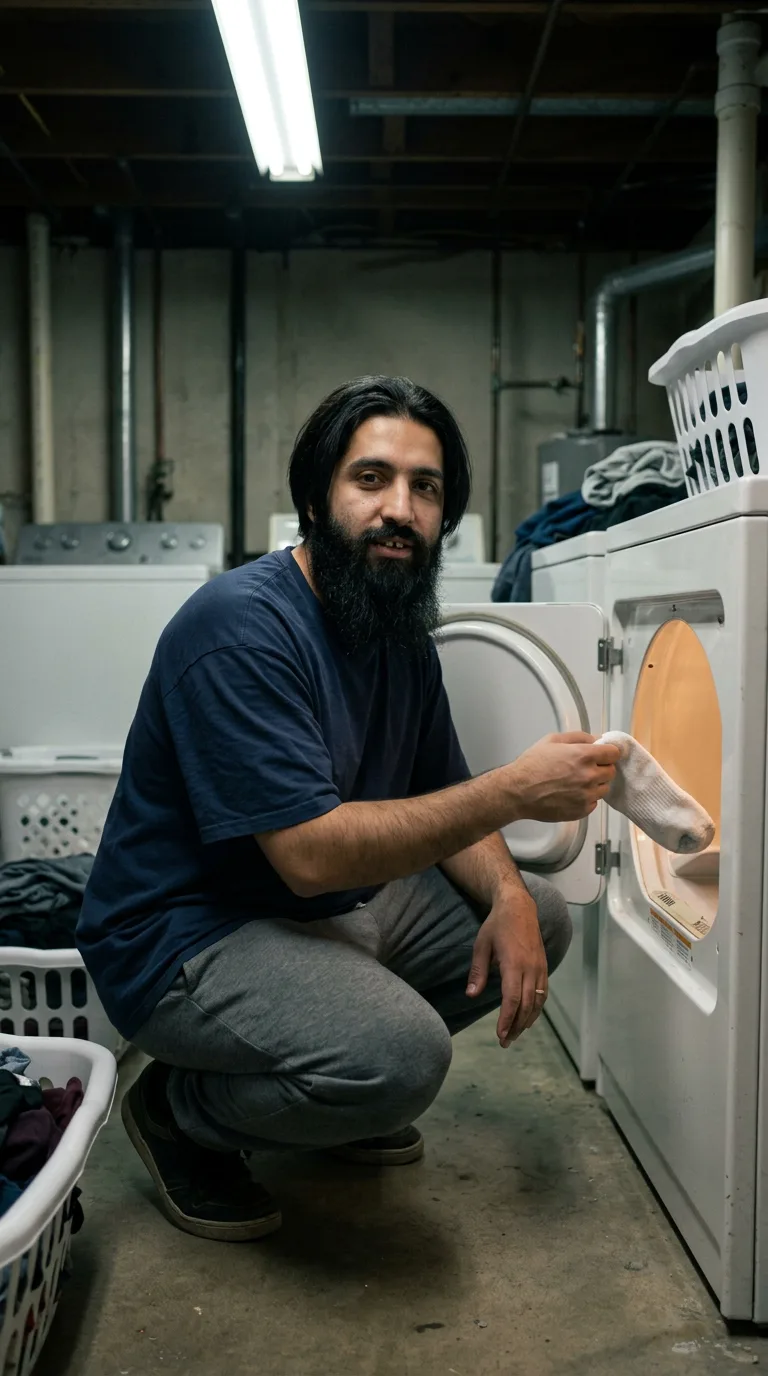
Rarest thing about him: Long beard — common, 1 in 76
Season 1seed 435464355 · engine v11
Character card
lineage 2NZHHJ
His body-swap story
@colin.hasbrook, wearing Denny Osterhaus, rolled the wheel on and woke up as Yusuf Bandari, spent 4 minutes in him, then spun the wheel and woke up as Marco Villanueva
Denny Osterhaus's clerk cubicle smells like microwave popcorn from three hours ago, and you have been him for less than a minute when you decide he was a mistake. It's the shave — patchy, ridiculous, a man who cannot even grow a beard properly — and the birthmark under his left eye that people's gazes keep sliding off of like it embarrasses them to notice. Skinny fat, soft in a way that isn't comfortable, just soft. You haven't even sat down in his chair yet. The break room clock over the vending machine says early afternoon. You already know: not this one, not for long. You open the laptop, thumb the trackpad with fingers that don't yet feel like yours, and there's the wheel again, spinning-colored and patient, vessel.cards loaded in a tab Denny apparently left open himself, like some part of him wanted it too.
You pay. You spin.
You are crouched. That is the first thing — knees bent, weight low, a warmth on your face that isn't Pittsburgh's stale office air but a wet mineral heat, dryer breath, and a fluorescent tube somewhere above buzzing at a pitch that gets into your teeth. There's a sock in your hand, damp-warm, ribbed cotton, and your other hand is braced on the dryer door's rubber seal. Your knees ache in a way Denny's never did — a working ache, muscle not padding. You pull the load free in both arms, an avalanche of warm cloth, and drop it into the basket in one motion so practiced it isn't a decision at all.
The folding starts before you've caught up to whose hands are doing it. Corners find corners. A shirt becomes a rectangle in four moves. You are matching socks by heel-shape before your mind has caught up to the fact that you have a mind here, again, new, in someone else.
The sweatshirt is what opens first — gray zip-up, soft with wear, hood flattened from being slept against on a couch. The moment your shoulders settle inside it fully, it comes: a porch. Him — Yusuf — pulling this same hoodie on over a navy T-shirt at seven in the morning, sun not yet over the front range, breath visible, coffee going cold on the rail because he keeps forgetting it while he watches his daughter's window for the blind to go up. She's two. She wakes when she wakes. He has learned to love that instead of resent it, mostly.
The headphones are gone from around his neck now — must be upstairs by the monitors — but their absence is a memory too, a phantom weight, and with it comes the standing desk, two screens, a git diff he was frowning at eleven minutes before he told his wife he'd throw a load in while she showered. Cold coffee up there too, a twin to the one on the porch rail, because he makes coffee and abandons it like a compulsive habit, like punctuation.
The wedding band is the deepest one. Left hand, plain, a little loose from weight he lost two winters ago and never gained back. Touching it — just the metal warming against your palm as you fold — gives you a wedding in a backyard in Aurora, his mother crying not from sadness, his best friend's toast running four minutes too long, Alia in cream-colored silk laughing at something only the two of them heard. It gives you the fight eight months ago about his mother visiting too often, resolved with take-out on the kitchen floor because the table was covered in bills. It gives you three years of a marriage that is, underneath its ordinary friction, the best thing that has ever happened to him, and he knows it, thinks it consciously sometimes, which is rarer than people admit.
The beard is not a memory so much as a fact your new jaw already knows — the weight of it, the way it catches on a hoodie zipper if you're not careful, the gap in his front teeth that his tongue finds without being told to, an old comfort worn smooth. Twenty-seven years in this body and it has never once needed anything from a machine, a drink, a cigarette to get through a day. It runs on sleep, on her, on the kid, on code that either compiles or doesn't.
You finish the shirt in your hands. Squared, corners aligned, better than anything Denny's drawer upstairs — in a city eight hundred miles and one whole self away — has ever managed. Your knees pop when you stand. Somewhere above you, through the floor joists, you can hear small footsteps, a woman's voice saying his daughter's name twice, patient, amused.
You look down at your own hand — his hand — the sock still hooked over two fingers, the band catching fluorescent light.
You turn it over once, like checking it's real, then look up into the empty laundry room as if someone's watching, and say, to no one, quietly, "Okay."
Upstairs, the code is still broken and the coffee is still cold and none of that is your problem yet. It might be tonight's. It might be someone else's by then.