Wyatt Dunmore
Fictional. Generated by AI — not a real person, and no likeness of one is intended.
41, park ranger in Phoenix · rolled by @colin.hasbrook · card — no film
History
who has worn him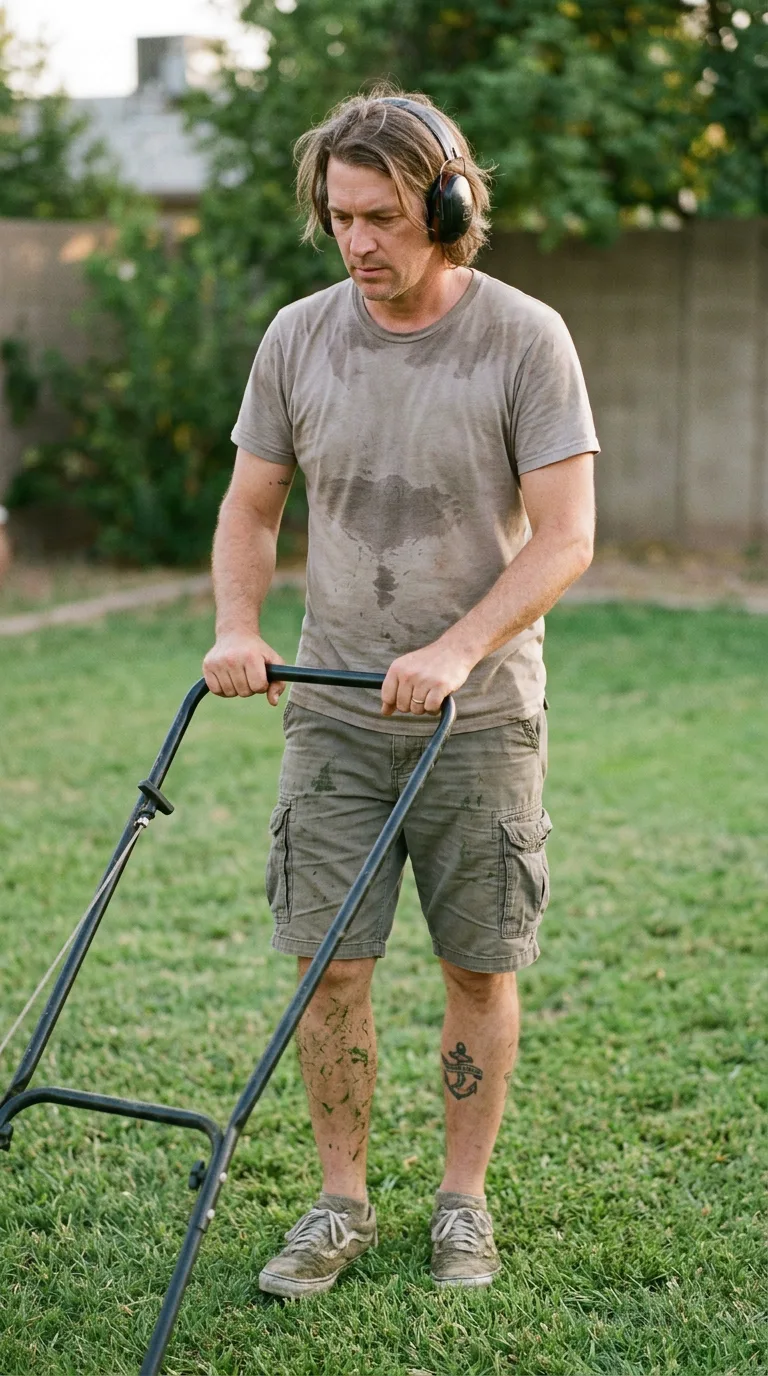
Rarest thing about him: Leg — epic, 1 in 43
Season 0seed 62553739 · engine v10
Character card
lineage 2NZHHJ
His body-swap story
@colin.hasbrook, wearing Todd Amaral, rolled the wheel on and woke up as Wyatt Dunmore, spent 10 minutes in him, then spun the wheel and woke up as Peter Nagarkar
You'd been Todd for exactly three minutes and you already hated the way his knees announced themselves when he shifted his weight, hated the pharmacy smell still clinging to the inside of his nose, hated most of all that you'd paid for a big man and gotten someone who felt, from the inside, like standing inside a walk-in freezer with the door shut — cold-fingered, slow, a heaviness that wasn't strength so much as a kind of geological patience. Three minutes was long enough to know the fit was wrong. You didn't even sit down. You stood there in his condo with the morning light coming in flat and Hawaiian and generous, and you found the site again on his phone, thumb clumsy with someone else's calluses, and you spun.
The wheel doesn't ask why. But you know why: it was the hands. Todd's hands were soft, uncracked, a man who touched nothing rougher than pill bottles all day, and you wanted, badly and without examining it, hands that had done something.
The mower engine drops a note under you, coughs, catches again, and you are the one holding the bar when it steadies. Grass clippings stick wet to a stranger's shins. Sweat has soaked a dark continent down the front of a gray shirt that is not yours yet. Your left ear is bare to the noise and heat; you reach up, unhurried because the body already knows the gesture, and settle the earmuff back down over it, and the world goes muffled and green and enormous. The next pass runs dead straight beside all the crooked ones that came before you.
The bar under your palms is aluminum gone warm, vibrating, and it opens first — not a memory exactly, just a hum of familiarity, the specific give of this particular mower's push, bought secondhand, a wheel that pulls left if you don't correct for it. Then more: a Saturday two years back, buying it off a guy in Sunnyslope for sixty dollars, Wyatt Dunmore counting out three twenties in a Circle K parking lot because his wife had said the old one finally died for good this time, Marisol, laughing at him for haggling over a lawnmower like it mattered.
The shirt against your back gives you this morning — his morning, six hours behind wherever you were standing before, already burned through and gone for him but freshly remembered now, arriving backward and sideways the way his memories do: pulling this shirt over his head in the bedroom, the ceiling fan turning too slow to do anything against the heat already building at seven a.m., his daughter's cereal bowl clinking somewhere down the hall, Marisol's voice saying something about the Kowalskis' fence line, half a joke, half not. He'd tugged the shirt down, felt the collar catch on two days of not shaving, thought nothing of it, because dressing is not a thing men like him think about, it is just a thing that happens on the way to the yard.
The tattoo on his calf comes up through the itch of grass stuck to leg hair — an anchor, bold-lined, inked at twenty-two in a shop near a base he can't picture clearly anymore, before the ranger job, before Phoenix, before any of it, a version of himself that wanted to go somewhere and then didn't, not really, just went to a different kind of open ground. The wedding band on his left hand is warm from his own skin, and it opens wide and generous: eleven years, a courthouse afternoon, her hand shaking a little because her mother wasn't there and she'd wanted her to be. The trailhead sign he stands under most days, pines at his back, tourists asking him questions he's answered four hundred times and still answers gently because that's the job and because his own body has never quite let him be anything but gentle — the disease that lives under his skin some days flares hot in his knuckles and knees for no reason at all, and he has learned to move like a man twenty years older some mornings and not say why.
You feel that now, faint, a low ambient ache in the joints that isn't pain exactly, just a debt his body carries and pays in small currency. You feel how strong he still is regardless — forty-one, average build, but the mower bar under your hands moves like nothing, like he does this every week and it costs him nothing but time. His hands want to crack their knuckles; you let them, one small pop that feels like punctuation, like something he does between thoughts without knowing he's doing it.
There's a boy somewhere behind the house — you catch it thin, at the edge, a kid's voice, a name you don't have yet — and an old feeling underneath the marriage, someone before Marisol, a girl from a summer he doesn't visit often but who is still in there, filed and closed and occasionally, quietly, missed in the specific way you only miss the people you were young next to.
No drink in him for years now, no want of it. No cigarette ever. Church on Sundays that he doesn't perform so much as need, some low steady current of it running under everything else you've found. Nothing in his bank account worth mentioning. Nothing remarkable about him at all, and that is somehow the most vivid thing you've learned — a man built entirely of small good habits and one bad joint and a shirt he put on six hours ago without thinking twice.
You look down at the hand on the bar — his hand, your hand now, the band catching the light — and turn it over once, like checking it's real.
"There you are," you say, to no one, and push the mower forward into the next straight row.