Wesley Corrigan
Fictional. Generated by AI — not a real person, and no likeness of one is intended.
47, freight handler in Small-town Ohio · rolled by @wesley.corrigan · card — no film
History
who has worn him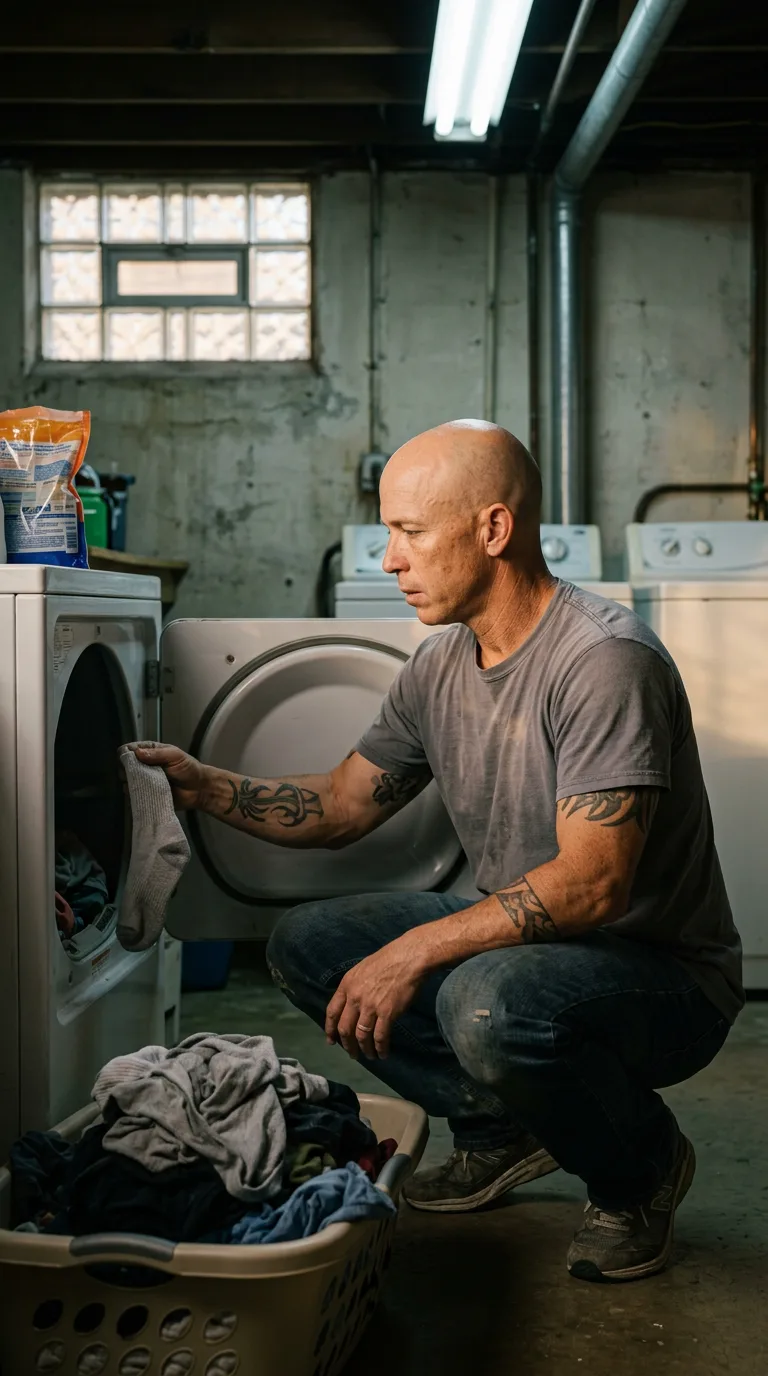
Rarest thing about him: It's a problem and it shows — common, 1 in 37
Season 1seed 200117849 · engine v11
Character card
lineage U918L3
His body-swap story
@wesley.corrigan rolled the wheel on and woke up as Wesley Corrigan — their first
The page loaded slower than it should have, like it wanted you to sit with the wanting a while longer before it let you spend anything. You had been circling it for a week — vessel.cards, a name that sounded like a joke until you saw the wheel itself, spinning slow and silent behind a paywall, promising nothing in words and everything in the way it refused to explain itself. Thursday night, nothing on, the kind of evening that exists only to be gotten through. You had wanted this for longer than you could date — every story where someone wakes up behind a different face, every thread at two in the morning where people argued about whether it would feel like sleep or like drowning. Never for sale. Now it was. You paid. You spun.
There is no sense of falling, no tunnel, no in-between. There is a sock in your hand, damp-warm, ribbed cotton going soft between fingers that are not the fingers you expected and are, in this second, the only fingers there have ever been. You are crouched. Fluorescent light hums white and flat overhead. A dryer door hangs open in front of you, drum still turning down from its last cycle, ticking as it slows. Your knees are bent low, your weight is on the balls of your feet, and the body under you is compact and dense with muscle, shorter than you pictured yourself ever being, low to the ground in a way that makes the crouch feel natural instead of strained.
The sock is the first thing that opens.
It is a work sock, gray, and it comes with the memory of a hundred mornings pulling its twin on over the same worn heel — steel-toe boots laced tight after, the particular ache of an arch that has stood on concrete for twenty-six years. Then the shirt against your back, still on you, gives you more: this morning, this exact gray T-shirt pulled over your head in a room with the blinds still down, sleeve by sleeve, the fabric soft from a hundred washes, and under it the memory of a chest that used to be someone's to touch and hasn't been in three years. Divorced. The word arrives with no drama attached, just weight, the way a fact sits when you've stopped being surprised by it. Her name comes back sideways, through the ring finger — you feel the tan line before you see it, a pale stripe on a hand that has otherwise gone brown and freckled and rough, and with it comes an afternoon on a porch that isn't there anymore, a woman laughing at something you said, easy, before it stopped being easy. She's the one who got away, and some part of him — you — still measures every quiet evening against how loud that porch used to be.
There's a kid somewhere in this too, arriving thin and fast, a school photo taped inside a locker at the warehouse, a phone call every other Sunday. You don't get more than that. The memory doesn't linger where it hurts most.
Your hands know the dryer without asking you. Fingers find the lint trap and clear it without a thought, muscle doing what muscle has done a thousand Thursdays before this one. The forearms carry black tribal ink, faded at the edges, put on at twenty-something for reasons that come back only as a feeling — wanting to look like you belonged to something. The tattoos remember a version of you that drank harder than this version does, though this version still drinks harder than it should; that arrives too, unglamorous, just a fact sitting next to the others, a bottle under the sink upstairs that nobody talks about.
The basement smells like detergent and old concrete and machine oil, and that smell alone drags up the warehouse — the loading dock, the pallet jack's handle worn smooth in your palm, the particular ache between shoulder blades at the end of a double shift, the small mean satisfaction of a trailer stacked square to the ceiling. Freight handler, twenty years of it, good at it in a way nobody outside the dock would ever clock as a skill. Sundays, church, a pew three rows back, hands folded, asking for something he never says out loud even to God.
You pull the load out warm. It smells like him — like this — like a life you didn't live and are, for these seconds, entirely inside of. You drop it in the basket and your hands go to work folding, and they are fast, precise, corners squared, nothing like whatever mess waits in a drawer somewhere. Some discipline learned on a dock floor, applied here where nobody's watching, where nobody ever has to know how careful he is with a t-shirt.
You look down at your own hands doing it — his hands, freckled across the backs, a tattoo curling up one forearm, knuckles that ache faintly, out of habit, to be cracked.
You crack them, one hand, then the other, without deciding to.
Then you look up, into the flat fluorescent light, and you say, out loud, to no one, in his voice:
"Whose towels are these?"