Wesley Brightwater
Fictional. Generated by AI — not a real person, and no likeness of one is intended.
62, retired in Chicago · rolled by @colin.hasbrook · card — no film
History
who has worn him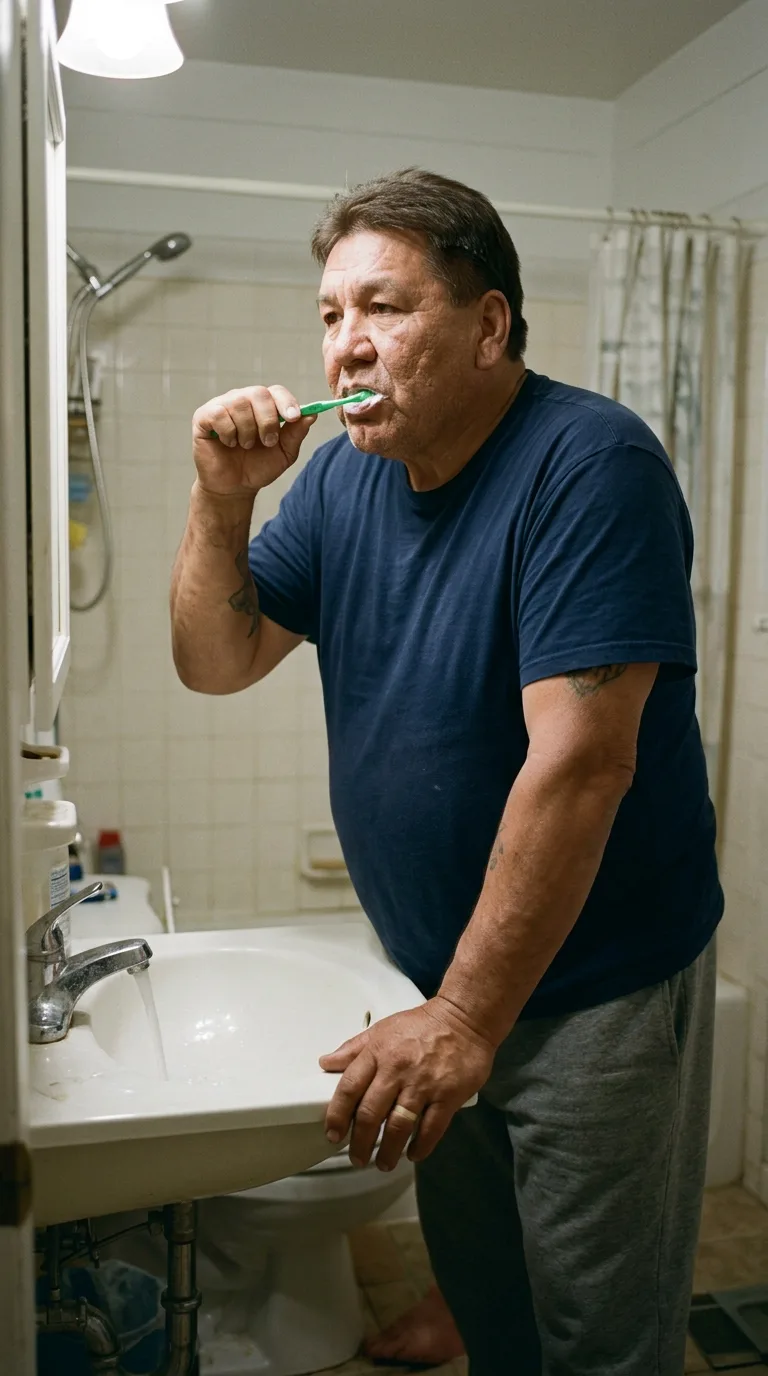
Rarest thing about him: Native American — rare, 1 in 41
Season 0seed 392842211 · engine v10
Character card
lineage 2NZHHJ
His body-swap story
@colin.hasbrook, wearing Peter Kaminski, rolled the wheel on and woke up as Wesley Brightwater, spent under a minute in him, then spun the wheel and woke up as Owen Rhoades
You are sitting cross-legged on somebody else's bed, in somebody else's twenty-year-old body, and the boredom arrives before the decision does. Peter Kaminski's laptop is open on his desk, some econ reading half-scrolled, and his phone keeps lighting up with a name you don't recognize and don't care to. Twenty-eight minutes of being a broke sophomore with a strong back and a weak GPA, and already the appeal has drained out of it the way it always does — the wheel is better than the prize, every time, and you know that about yourself by now, spin three hundred and twenty-eight deep. His roommate's music is coming through the wall. There's a bruise on his shin from something you don't remember doing because you weren't the one who did it. You open the site on his phone with his thumb, feel his heartbeat pick up a little at the cost, and you don't let that stop you. You never do.
The wheel turns. It does not ask you where you want to go, and you have stopped expecting it to.
You are standing at a sink with your mouth full of foam and the tap running and a green-handled toothbrush between your fingers, and the fingers are thick and short-nailed and not the ones you had a second ago. The stroke you were mid-way through — his, not yours, but yours now — finishes on its own, brush moving side to side against the molars on the left, and something in you takes over before you've caught up, shifts the brush to the other side, slows down, works the back teeth like it's done ten thousand mornings before this one. You rinse. You rinse again. You stand the brush up bristles-first in the same cloudy inch of water it has apparently always stood in, and your reflection is a heavyset man with silver-brown hair and a chin split so deep it looks like it was made with a chisel.
The shirt is what opens first — worn cotton, navy, a little tight across a belly that was never flat and stopped pretending to be twenty years ago — and through it comes an afternoon: a warehouse floor, forklift beeping somewhere behind him, his hands (thick, sure, callused along the pads) guiding a pallet jack loaded wrong, correcting it without thinking. Decades of that. Retired now, but the shoulders don't know it yet, still braced like there's a shift coming.
The sweatpants against his legs give you nothing sharp, just comfort, just Sunday, just a man who stopped dressing for anyone's eyes but his own a long time ago.
It's the ring line that does it. Bare skin on the fourth finger, a paler band where twenty-six years of gold used to sit, and touching it — just brushing his thumb across it, which you do without meaning to, his habit and not yours — brings back a kitchen in Uptown, a woman named Carol laughing at something their younger son said, the smell of frybread on a Sunday that wasn't even a special occasion, just a good one. Then the same kitchen four years later with the laughing gone out of it, papers on the table, her voice gentler than the situation, which somehow made it worse. Two kids grown and gone to their own kitchens now, calling on Sundays, mostly.
The mirror gives you the face — not vanity, just recognition, sixty-two years of it, the cleft chin his mother used to say came down from her father, the tan going permanent at the collar from porch mornings, coffee, the L train rattling two blocks off like weather. High blood pressure, a pill he takes with breakfast most days and forgets some. A church he still goes to, not every week, not never. A body that carries its weight low and solid and strong in a way that surprises people who look at him once and file him as just old.
You rinse the brush a third time out of some habit that isn't yours yet, and set it down, and look at your hand — his hand — turning it palm-up under the bathroom light, the tan line pale as a scar that isn't one.
You lift your eyes to the mirror instead of a lens, because there's no one else in the room, and you say it to the glass, low, almost amused at yourself: "Well. Let's see how long you last, Wes."