Wes Bialecki
Fictional. Generated by AI — not a real person, and no likeness of one is intended.
33, pro athlete in Pittsburgh · rolled by @colby.marsh · card — no film
History
who has worn him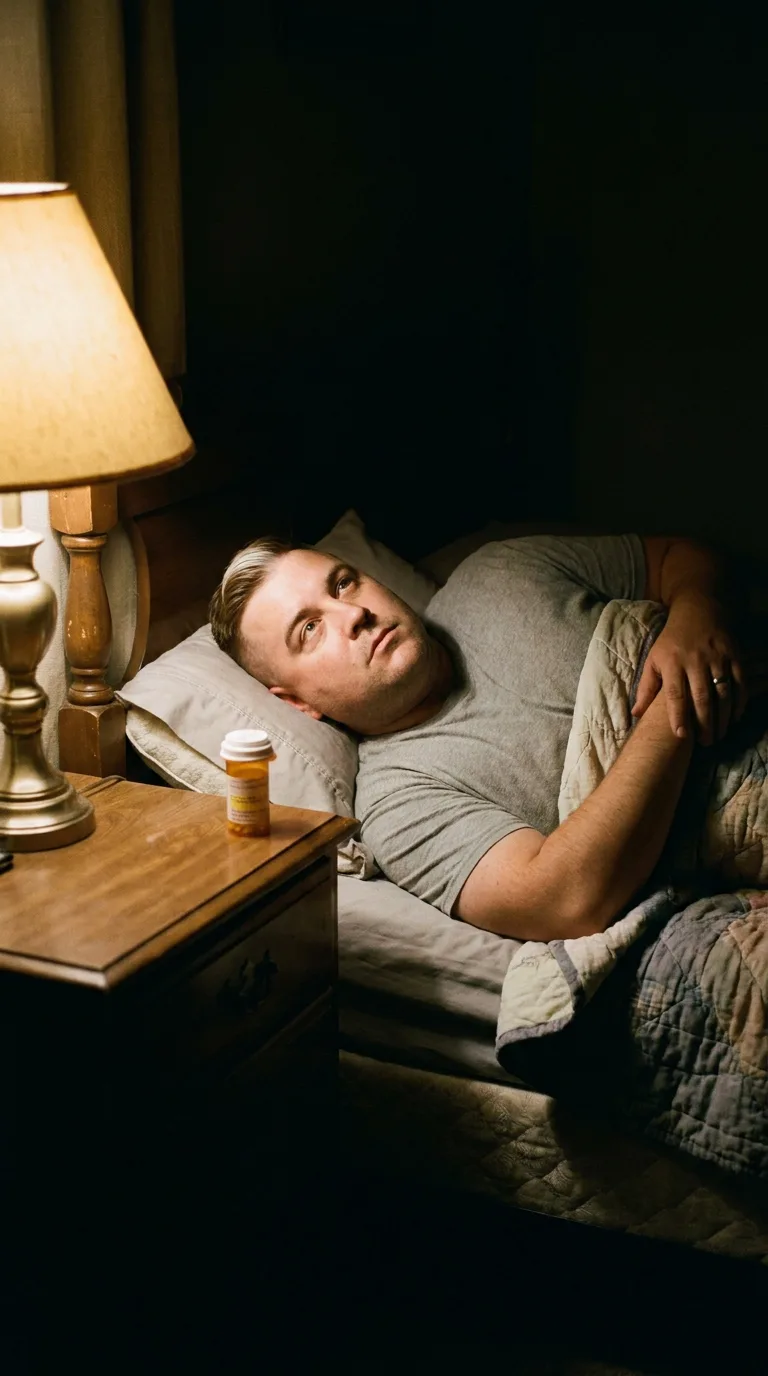
Rarest thing about him: A white streak in the hair — epic, 1 in 95
Legacyseed 2047507775 · engine v7
Character card
His body-swap story
---
You watched him for eleven nights before you took him, and in all eleven he did the same thing: lay on his side with the lamp on, one arm over the quilt, looking up at the corner where the ceiling meets the wall like there was something written there he almost had.
You are a stranger. Understand that this is the point. You had no grudge against Wes Bialecki, no history, nothing to settle. You didn't want *him*. You wanted a life with a shape to it — a house with three kids asleep down the hall, a wife who leaves the lamp on for you, a body that has been used hard enough to be worth something — and his was the one in front of you, breathing, insomniac, medicated, cracked open at the seam.
Here's what you noticed first, and it's a stupid thing: the white streak. Right at the front of the hair, one clean stripe in the light brown, faded tight at the sides and left full on top the way a man does it when a barber has been cutting it the same way for fifteen years. It came in at twenty-six. His wife, Dana, calls it his skunk. His oldest calls it that too now. You noticed it because it made him findable. In a room of thirty men in the same navy warmups you could pick him out from the door, and that mattered, because you had to be sure.
You know his life to the bone by now. Second-division club, the kind that plays in front of eleven hundred people in the cold and buses to Harrisburg. Thirty-three years old, five foot seven, built like a fire hydrant with a temper, the last man in the league they still call a hard number nine. His whole take last season was less than a decent plumber's. The mortgage on the house off the stairs — you know those stairs, the public concrete ones running down between the backyards, always wet with leaves in October, always going gold about five o'clock — is a hundred and eleven thousand and change. He has a card he doesn't tell Dana about. He carries that quietly. He would not bring it up.
He does not believe in anything. That was the other reason. Eleven nights and never once a prayer, never a *please*, never a bargain with the dark. He isn't spiritual and he isn't scared and there was no locked door in him, only a tired man who couldn't sleep. When the doctor gave him the new one, he read the leaflet, put the leaflet in the drawer, took the pill with a mouthful of flat water, and lay down.
That last night his fingers were going on the quilt. He does that — drums them, four fingers, thumb tucked, a little galloping figure he learned off some song and never knew he'd kept. It's what his hands do when he isn't watching them. He drummed them in the tunnel before kickoff. He drummed them at his daughter's parent-teacher conference. He drummed them on the quilt at 11:40 p.m. with the lamp still burning and his eyes wide open on that corner of the ceiling, and I want you to know that you loved him a little, right then. Not the way a person loves a person. The way you love a coat in a window.
Eyes open in the dark. Eyes open. Eyes open.
Then closed.
And the light went from lamp-amber to grey-blue in one beat, like a cut, no dawn in between — and you opened them.
Ceiling. Not his ceiling; you'd never seen it from inside. A water stain shaped like Ohio. A smoke detector with a green blink. Somewhere below, the furnace coming on, and a kid's feet on the stairs going down too fast, three at a time, and Dana in the kitchen saying *shoes* to someone, twice.
You were not worried. That's the part you'd never have guessed about arriving — that there'd be no panic in it at all, only a warmth spreading out from the middle of you like whiskey. You lay there and inventoried. The bad left ankle, thick as a fist. The weight of the chest. The wedding band, tight, seated in its own groove, a band of skin under it paler than the rest. You turned the hand over and looked at the palm and it was a working palm, calloused at the base of the fingers, and you thought: *mine*.
Nobody came for it. There's no term on this. No way back and nowhere to go back to.
You got up. You made it to practice because the body knew the way. You learned the room in a morning: the tape guy, the two brothers who play left side, the smell of embrocation and wet grass and Lysol, the metal bench under a locker with BIALECKI on the tape. You learned that when a man in that room says *skunk* he means you and he means it kindly. You sat in the sweat-cooling quiet after training with the shirt off and the shoulders down, and someone made a joke about your legs, and you laughed with his laugh, and it came out right.
The hands gave you away for a while. You'd catch them drumming — that gallop, four fingers, thumb tucked — and you had to work out whether that was him still leaking through or just meat with a habit worn into it. You decided it was meat. You decided that on purpose, because the alternative was a room you couldn't afford to open.
Come home at four. Wet concrete, leaves gone slick and dark, the stairs between the backyards climbing up through everyone's chain-link and tomato cages, and the late light coming in flat and yellow across the hillside so the whole city looks like it's been dipped in something. Three kids in the yard. The middle one shouts *Dad* before she sees your face, just at the sound of the sneakers on the steps, and you answer.
You answer.
That's the theft. Not the body — anybody can have a body. It's that you answer, and it works, and nobody in the world knows there was a man who lay awake eleven nights with a lamp on and a bottle beside him, and stopped.