Wendell Toji
Fictional. Generated by AI — not a real person, and no likeness of one is intended.
61, delivery driver in Western Kansas · rolled by @everett.dabney · card — no film
History
who has worn him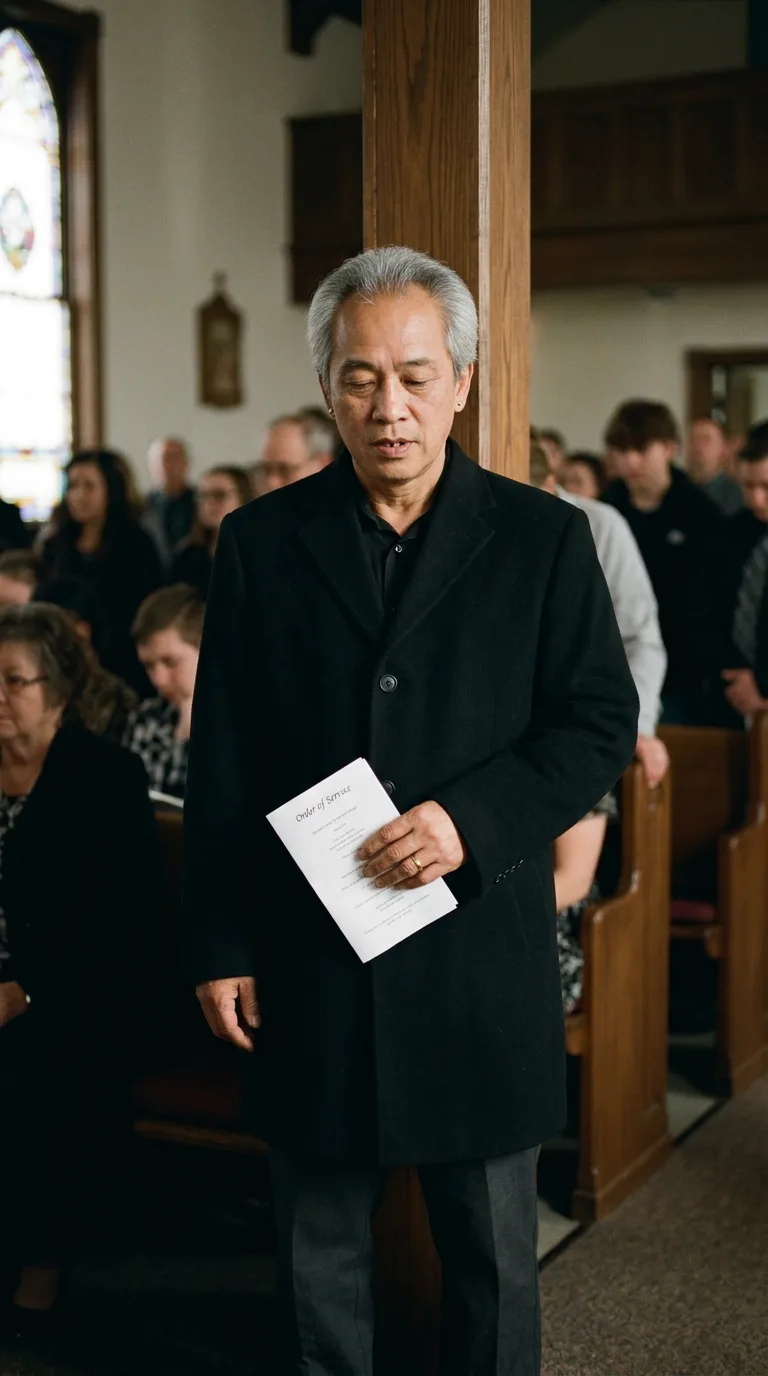
Rarest thing about him: Both earlobes — epic, 1 in 80
Season 0seed 626041149 · engine v10
Character card
lineage 79CGDV
His body-swap story
@everett.dabney rolled the wheel on and woke up as Wendell Toji — their first, spent 8 days in him, then spun the wheel and woke up as an unnamed body
The site loads slow on a phone propped against a mug, the way everything loads slow near midnight when nothing else is happening. Monday bleeding into Tuesday and nothing on, nothing worth the scroll, just the old itch working under the skin — the one that's been there since some forgotten movie, some story at 2 a.m. about waking up in somebody else's life. Always a rumor. Always fiction. Vessel.cards doesn't look like much. A wheel, a price, a button that says SPIN like it's a slot machine and not a door. The card gets charged before the doubt finishes forming. The wheel turns and doesn't feel like anything at all, and then it stops.
The room arrives before you do — wood-paneled, hushed, thick with the smell of old varnish and lilies going brown at the edges. An organ note dying into silence. Bodies rising around you in a wave, pews groaning, and you are half a beat behind them, rising too, because the legs already know to do it before you've caught up to owning them. A folded paper in the right hand. A black coat, buttons pulling faintly at a belly that isn't starved but isn't soft either. Short. Solid through the shoulders. The knees announce themselves first — a low, familiar ache, arthritic, old-man weather written into the joints — and then the tongue finds a piece of gum gone flat and tasteless, worked without thinking, over and over, teeth catching faintly on each other where there's a gap that whistles a little on certain words.
Nobody turns around. Nobody looks back at the man in the borrowed coat at the very rear of the chapel. That's the mercy of standing at the back.
The coat isn't his — the shoulders are too loose, and touching the lapel gives up a fast little flash: a closet, a wife's voice saying *just wear Harlan's, yours has the stain on the cuff*, laughing not unkindly. Under that, deeper, the coat's owner: a cousin, dead of something quiet and unglamorous, and grief comes up not sharp but tired, a duty grief, a drive-four-hours-and-sit-in-the-back grief. The order of service in the hand gives more — a name printed there, Harlan Yoshida, and a date, and under the fingers a whole spool of years unspools: barbecues, a boat that never ran right, an argument over a fence line that got smoothed over by beer eventually.
The shirt against the back — no, not this shirt, this is dress clothes, but the memory jumps sideways to another shirt entirely, brown, short-sleeved, a gold shield patch over the heart, and suddenly it's four in the afternoon two weeks ago and the body is easing that uniform on in a bedroom with the blinds still down, wife already gone to her shift, and the reason the light through those blinds is wrong, is backward, is because the shift starts at midnight — that's the job, has been for six years, nights on the truck because the seniority runs that way and somebody has to drive the rural routes in the dark when the roads are empty and a man can find the mile markers without slowing. Diabetic feet not loving the boots by the tenth hour. A glucose meter in the truck's console, forgotten more than remembered. A pack of cigarettes on the dash, one after another between stops, the wife saying *you'll quit when the doctor tells you twice* and the answer always being *he already told me twice.*
Three kids, grown now, scattered — a daughter's voice on speakerphone driving night roads, a son who calls only about trucks and weather, another who doesn't call much at all but sends money at Christmas like an apology. A wedding band, thirty-some years on the same hand, worn thin at the bottom from work gloves. Studs in both ears that a daughter talked him into getting in his fifties, laughing at him in the mirror. A drink most nights, just one, sometimes two, on the back step watching the thunderheads stack up black over the stubble fields, the sky doing that thing it does before a Kansas storm, going the color of a bruise, going yellow underneath like something about to be sick.
The knees ache. The gum has gone to nothing between the molars. Somewhere behind the sternum there's the specific tiredness of a body that has been awake for the wrong twelve hours, running on the fumes of a graveyard shift and grief and a coat that smells like somebody else's cedar closet.
The hand comes up on its own — his hand, five-four's worth of reach, the knuckles a little swollen, the ring catching low afternoon light that shouldn't exist inside a chapel with the storm shut out. It turns over once. Twice. Like it's never seen the backs of its own fingers before.
The mouth moves before the mind agrees to it, low, just for the pew behind him, just for whoever isn't listening:
"Whose hands are these."
Nobody answers. Nobody ever spins knowing when they'll spin again — not tonight, not next week, maybe not for years — but the wheel is still sitting open on a screen somewhere in an hour that has nothing to do with this one, and the wanting that brought you here hasn't gone anywhere at all.