Wendell Teague
Fictional. Generated by AI — not a real person, and no likeness of one is intended.
56, warehouse picker in Nashville · rolled by @connor.waskiewicz · card — no film
History
who has worn him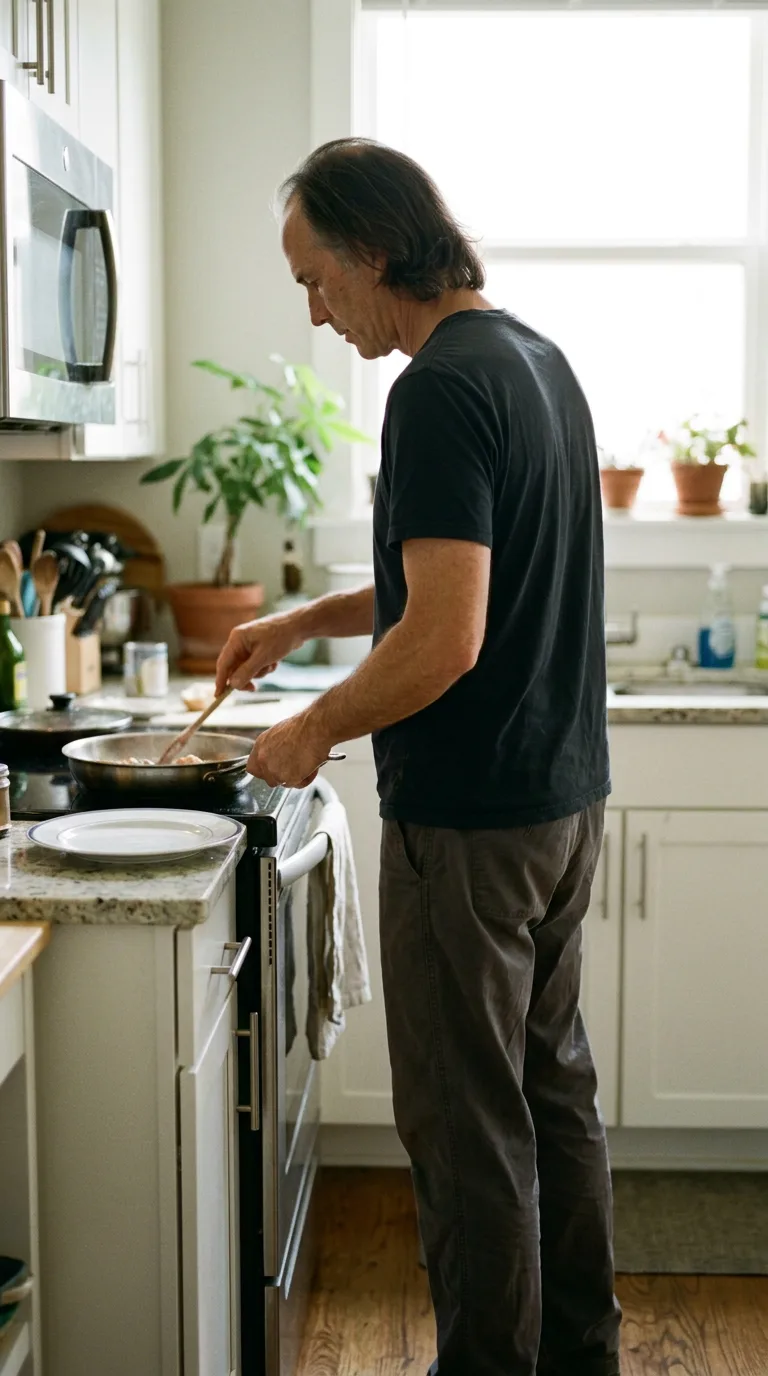
Rarest thing about him: 6'4" — uncommon, 1 in 103
Season 1seed 1303832401 · engine v11
Character card
lineage 2NZHHJ
His body-swap story
@connor.waskiewicz, wearing Omar Whitfield, rolled the wheel on and woke up as Wendell Teague, spent under a minute in him, then spun the wheel and woke up as Dustin Kramer
You leave Omar Whitfield standing in a Phoenix kitchen with the blinds half open and the morning already hot on the glass. His gold tooth keeps finding the inside of your lip. You have worn him for less than a minute, and it is long enough to know the trouble. He is thirty and he is fine, and he has a spreadsheet open on the table that he cannot stop wanting to understand. You understood it in four seconds. You have been a hundred men who understood things in four seconds.
Something on the table sent you back. It was a wedding invitation, thick cream card with a deckled edge, addressed to him in a hand that hoped. Nothing about it was yours. You wanted to want it. You wanted it the way you want a coat to fit, and it didn't, and you opened the page with the wheel on it. The wheel turns and clicks, and Omar's pulse goes on in his wrist without you.
You are in a kitchen.
The spoon is in your right hand and it is halfway through a circle. Something is warm and spitting under it. The window is white with midday. The light lands on a plate on the granite, one plate, and your thumb is already moving the spoon the other way, as if the hand had a better idea.
You salt the pan. You don't taste it. You reach up and take down a second plate and set it beside the first, and the two of them make a small clean sound against the stone. You don't know why you did that.
The shirt comes first. It is a black cotton tee, washed thin, and it lies across your shoulder blades like a hand. The memory is his and not yours. A dresser drawer sticks, and he shoulders it open with his hip. He pulls the shirt over his head in the dark of a bedroom, so as not to wake someone, and he is careful with the hem at the back of his neck, where the long hair catches. He is fifty-six and he thinks, as he does every morning, that the hair is the last argument he is still winning. He dyed it Sunday. The dye is flat and dark and nobody has said a word.
The pants are soft, loose in the knee, and they give you the next one. A parking lot. A warehouse, a sky the color of dishwater, and a scanner strapped to his wrist that chirps when he finds a pallet. Somewhere out of sight a forklift is backing up and beeping, and he has long since stopped hearing it. His body knows the aisles like a hymn. Reach, bend, lift, scan. Thirty-one years of cardboard have made the calluses on his palms, and they catch on the spoon's wooden handle now, little ridges of ownership.
You flex your fingers. Long fingers, dry knuckles. At six foot four he has spent his life ducking light fixtures, and the counter sits low against your hip. Your lower back aches in one narrow place, a rope pulled tight, the cost of every box he ever bent for. The ache is old and he forgave it years ago. Your knees are good. Your breath goes down deep. He is strong in the way of men who never once paid to be.
The spoon again, and the smell comes up from the pan, onions and butter and something with garlic. It opens a door. A woman's voice in a back alley behind the honky-tonks, neon laid across wet pavement in red and blue, a Friday, a guitar leaking through a steel door. She is laughing and holding her shoes. This is not the girlfriend he has now. This is the other one, the one who got away. He loved her before he knew how to say it and learned the words after, in the wrong rooms. He walks that alley still some nights on the way home, past the bins and the smoke, and does not tell anyone why.
The second plate is for the girlfriend. You know this because the plate is cool in your memory and her name is warm. It is eleven in the morning where you were, and here it is the middle of the day, and he is cooking at an hour when a man on a day shift should be eating at a table in a break room. He traded, you gather. A day off, a promise. She is coming. She will knock twice and then let herself in, because he gave her a key and nearly didn't.
There is a rosary in the drawer by the stove. You don't touch it. You feel it anyway, a small cold weight he reaches past every morning, and he has never once explained that to anybody.
The pan hisses. Your heart goes on. You turn the stove down with a wrist that knows the knob.
You lift your hands and look at them. The freckles run down past the wrist. You turn them over, palms up, the calluses pale and hard, and the skin is his. Nothing in them is yours, and they are holding.
"Well," you say, and his voice comes out low, a Tennessee grain in it, "hello."
The plates sit side by side. Somewhere a key is waiting to turn. You wonder how long this lasts, an hour, a winter, until the wanting comes back to the door like weather. You hold the spoon and listen.