Warren Tsuji
Fictional. Generated by AI — not a real person, and no likeness of one is intended.
64, assembly line worker in Detroit · rolled by @connor.waskiewicz · card — no film
History
who has worn him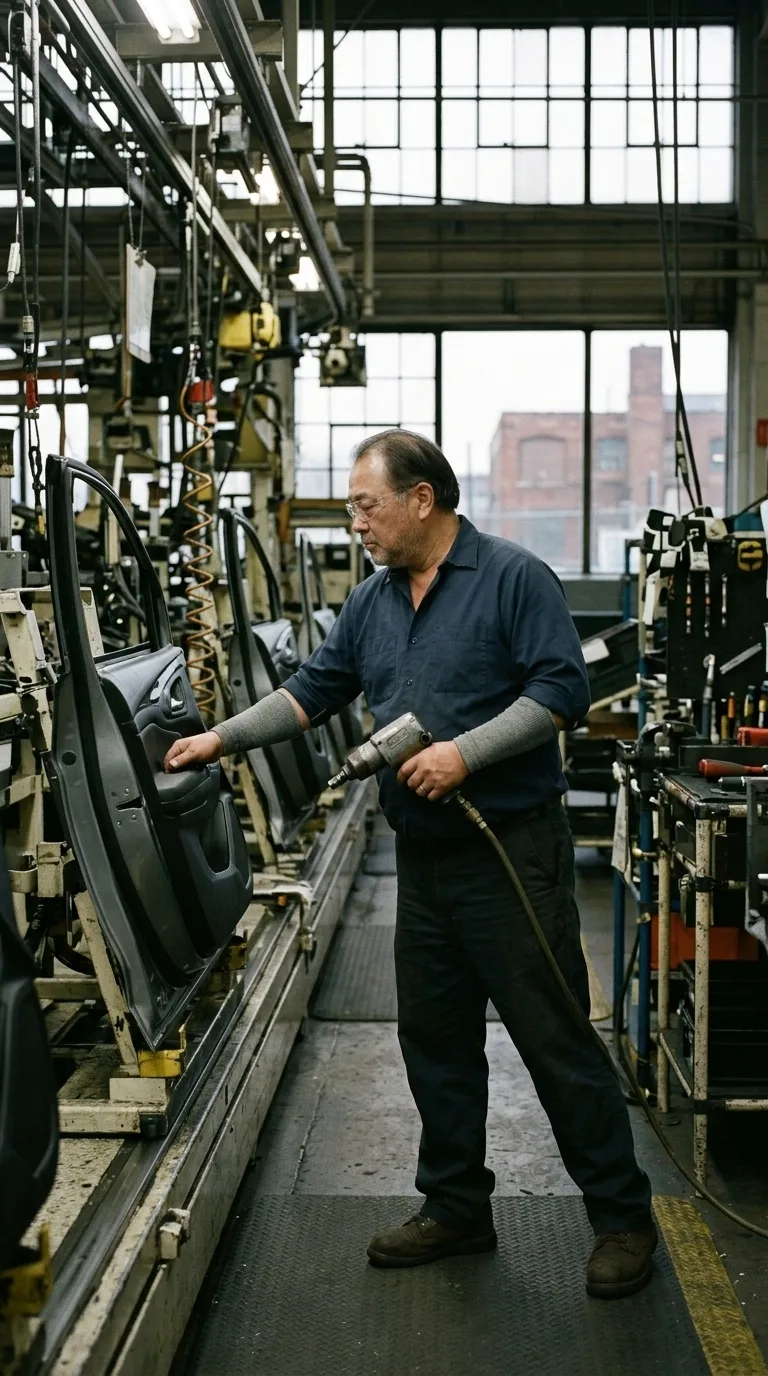
Rarest thing about him: Covers the gray — common, 1 in 34
Season 1seed 923698678 · engine v11
Character card
lineage 2NZHHJ
His body-swap story
@connor.waskiewicz, wearing Gregory Hanlon, rolled the wheel on and woke up as Warren Tsuji, spent under a minute in him, then spun the wheel and woke up as Owen Kratzer
You are standing in a kitchen in San Francisco, in Gregory Hanlon's bare feet, and the tile is cold in a way you have stopped enjoying. The house is asleep. The refrigerator hums. You have the heel of one hand on the counter and you press the old break in his nose with the other, the bump he got at nineteen, and it feels like nothing. Fifty-three years of athletic knees, a good jaw, a sales manager's voice you could pour into any room, and you have been him for less than a minute. The trouble is that he is easy. Nothing in him pushes back. You opened the refrigerator and knew the exact shelf of everything, because the body knew, and you stood there with the light on your chest and understood that you were not going anywhere new. You wanted a man who could hurt you a little. So the phone is in your hand, and the wheel is already turning, and you let go of the counter.
The line comes down.
The door panel swings in on its hook and your hands are already under it. The impact gun is heavy and cold in the right palm, the hose tugging at it from behind. Something in the rhythm snaps. Your hands do the motion wrong, so you do it again slowly, and it comes out right. The air is oil and hot rubber. A fluorescent tube ticks overhead. Under the boots the rubber mat gives a little, and your feet are tired already, in the arches, in the left heel.
The sleeves go first. The gray compression sleeves are tight on your forearms, and touching one brings him up: a morning in a dark kitchen, a woman's back at the stove, the sleeves pulled on one at a time, her saying *eat something* without turning. He did eat. Rice, cold egg, standing up. The shirt is navy and stiff at the cuffs, and when you roll one cuff you feel his thumbs do it, a fold and a fold, the way his own father did on a different line in a different year. The buttons are a little tight across the belly. He has been meaning to do something about that for ten years. The pants are heavy with the grime of the days.
You set the gun to the first bolt and the tool knows the torque. A flash comes up from the handle: his daughter at a table, a letter from a school, a number on it, and the way he folded the paper in thirds and put it in the drawer with the others. The number is a debt. It has a weight he carries behind the breastbone, not a figure but a pressure, and it sits there all the time, steady as a pulse. He does not drink. He never learned how. Sunday is a folding chair and a long sermon and the one hour when the pressure lifts, and you feel that too, a plain warm room, people singing off-key, his wife's shoulder against his.
The scar in the eyebrow tugs when you squint. You get it from a flash of a swung gate in a yard, a boy's bright pain, a stitch, his mother's furious hands. The safety glasses press the bridge of his nose. His knees ache on the downstroke and his lower back speaks once, low, and is quiet. His stubble rasps against your collar. Your hairline is far back, and his hand has reached up to it so many times that your hand almost does.
Ten bolts. You check each one. He never checked in years, and you do, because you do not trust a thing you did not learn.
You lift the right hand off the gun and turn it over. A plain ring on the left, worn thin at the underside. The skin is thick, and the knuckles are broad.
You look up, and the line keeps moving. You say, low, to no one, "Still here."
How long, you wonder, until the wanting comes back.