Warren Takeda
Fictional. Generated by AI — not a real person, and no likeness of one is intended.
65, retired in Eastern Kentucky · rolled by @connor.waskiewicz · card — no film
History
who has worn him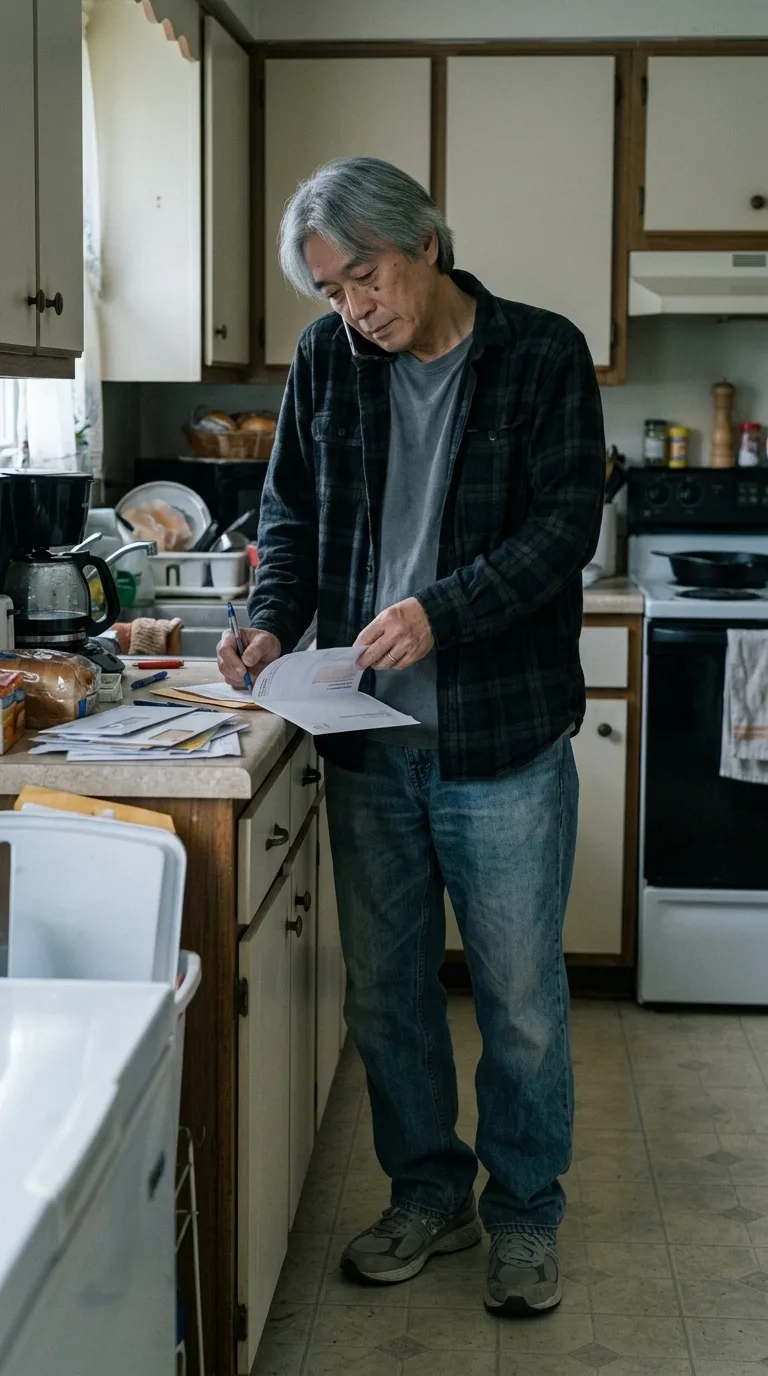
Rarest thing about him: Seriously rich — $3M to $10M — common, 1 in 88
Season 1seed 478716300 · engine v11
Character card
lineage 2NZHHJ
His body-swap story
@connor.waskiewicz, wearing Peter Halvorsen, rolled the wheel on and woke up as Warren Takeda, spent 7 minutes in him, then spun the wheel and woke up as Anthony Haddad
You are Peter Halvorsen, and your feet hurt in the way that only twelve hours of linoleum can make them hurt. The shift ended an hour ago. You sit in the dark of the Denver apartment with your shoes still on and the blond stubble of his jaw under your thumb, and you do not want to be him anymore.
He did nothing wrong. He was a good body. His back held up, and his green eyes read charts without strain. But yesterday a woman on the ward held your hand, his hand, and asked if you had children, and you said yes before you could stop it, because his phone had a child's face on the lock screen and the lie came easily. After that you could not stop feeling the weight of everything he owned. You wanted something that had already finished being a life, something with the loose ends tied and money in it. The page is open. The wheel is a color you can't name. You pay.
The kitchen arrives mid-motion. Your shoulder is raised, and the phone falls out of the crook of it into your palm. The hold music loops back to its first bar, tinny and bright. A pen is under your fingers, stopped on the second digit of a number on an envelope. The coffee maker ticks as it cools. Gray daylight is coming through a thin curtain over the sink.
The first thing you know is the height. Everything sits farther from the floor, and your knees ache in a patient, old way. Your breath comes slower than Peter's did.
The flannel is soft with washing, and the cuff drags on your wrist. It gives you a morning at the closet, his fingers doing the buttons from the bottom up because that is how his wife once did them for him, a long time ago. He puts the shirt on over a gray tee he has worn to rags. He does not think about her, and the not-thinking has a shape.
The counter edge presses into your hip. Under your palm is a heap of envelopes. One is from a lawyer. Another is a statement with a figure on it that makes his stomach go quiet. You feel what he felt reading it: no joy, only a tired surprise that the money was just sitting there, years of it, like a house he never lived in. There was a pharmacy once, and a lease, and his father's hands counting bills into a drawer.
The wedding band is gone. You press your thumb against the pale stripe on your finger and get a flash of a Sunday: two children in pressed clothes in a pew, incense, and his ex-wife's coat sleeve brushing his. He still crosses himself in the dark. He quit smoking, and the craving still comes at this hour, a clean bright want in the back of the mouth.
The pen is blue and cheap and fits his grip exactly. His hand knows how to finish the digit. You let it stay stopped.
You lift your hand and turn it over. It is wider than Peter's and browner, with fine lines across the knuckles, and the ring finger is pale. A mole sits high on your cheek; you can feel the small weight of it when the face moves. The music loops again.
You look up at the window and say, quietly, "Well. Hello, Warren."
You don't know how long you'll have this one. The kitchen is warm, the coffee is still hot, and the wanting hasn't come back yet.