Walter Nakamura
Fictional. Generated by AI — not a real person, and no likeness of one is intended.
65, retired in El Paso · rolled by @connor.waskiewicz · card — no film
History
who has worn him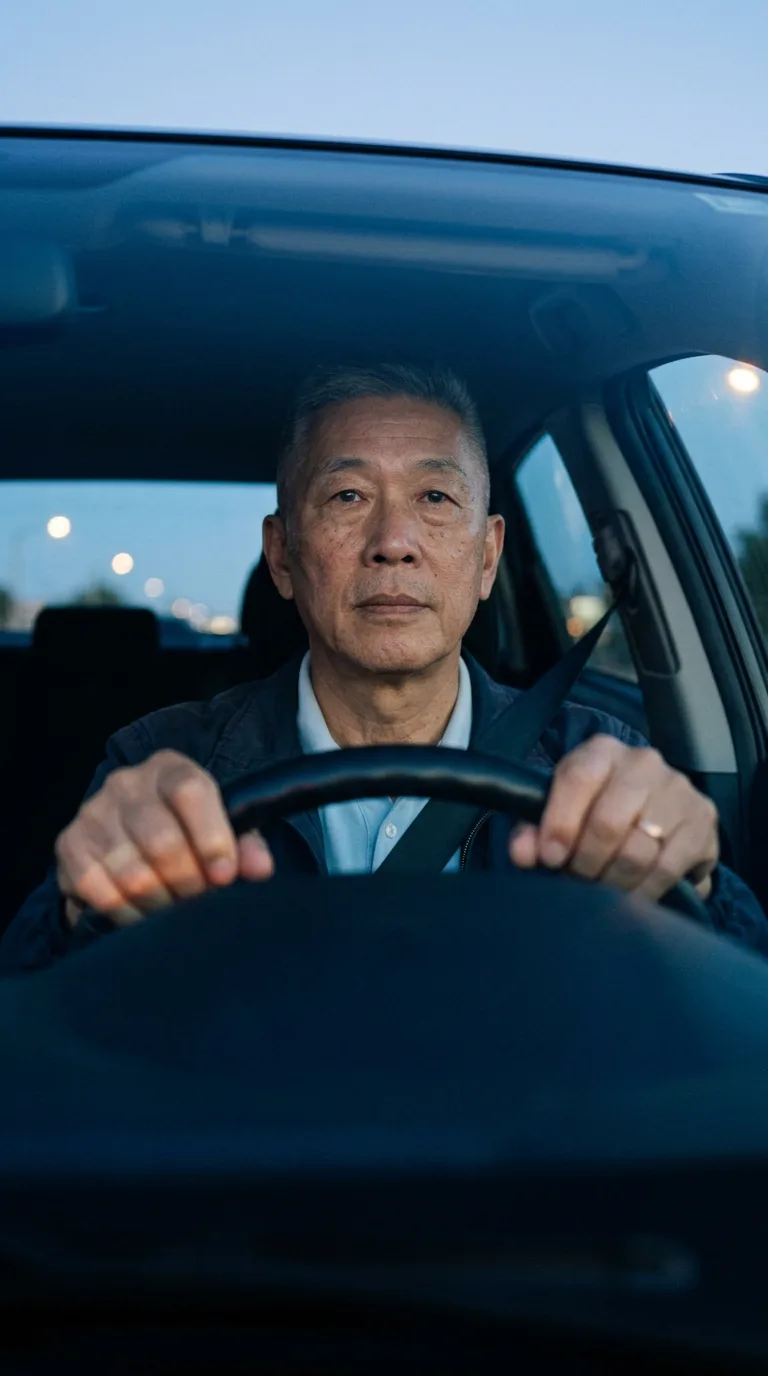
Rarest thing about him: 6'4" — uncommon, 1 in 103
Season 1seed 866655651 · engine v11
Character card
lineage 2NZHHJ
His body-swap story
@connor.waskiewicz, wearing Gerald Blevins, rolled the wheel on and woke up as Walter Nakamura, spent under a minute in him, then spun the wheel and woke up as Michael Reed
You are standing in Gerald Blevins's kitchen with the light off, and the refrigerator is the only thing humming. His knees have been talking to you all evening. A man his size carries a hundred pounds of argument down into the joints, and tonight they won't stop. There is a pot on the stove with a skin on the beans. There is a phone on the counter. You've been him for less than a minute by the clock the wheel keeps, though it feels like longer in a body this tired.
Nothing is wrong with him. That's the trouble. He works, he is warm, he is a man between jobs with a good chair and a quiet road. But you stood in the dark just now and understood you already knew how this one ended: the chair, the road, the knees. You want a different ceiling. You want to see what a body does that doesn't ache before it moves. So you put his thumb to the glass, and the wheel turns, and his kitchen goes out like a pulled plug.
Then a dark highway is rushing at you, and your hands are on a wheel at ten and two. Dash glow lies on the knuckles. The car has drifted a foot toward the line, and you take it back in one smooth pull. Both hands come off the wheel and settle lower, wider, wrong for him and right for you. Your thumb finds the stalk. The signal ticks on for an exit that isn't his.
The seat holds a tall frame, long in the thigh, and the belt lies across a chest that breathes easily. Nothing hurts. After Gerald, that is almost an insult.
The jacket comes first. Where the cuff elastic grips your wrist, you get a morning: a hallway, a hook by the door, the zipper caught halfway and worked free with a patient thumb. He zipped it only to the breastbone, always, because a closed collar felt like a hand. The polo under it is soft from a hundred washes, and the collar sits where his fingers pinched it straight in a mirror. You feel his small private pleasure at the pale blue, how it looked against gray hair.
The wheel is leather gone smooth at ten and two. Under your palms comes a memory of teaching someone to drive on it, a young voice saying *Dad, I'm fine*, and his fear folded small and hidden in his jaw. Two children, grown now. The feeling is pride with worry stitched through it.
The ring finger is bare, and the skin there is paler than the rest. Your thumb goes to it without being told, to turn a band that isn't there. Warmth floods up, then a long quiet kitchen, a man's laugh, two mugs, and the slow ache of a house divided like furniture. He still thinks about that laugh. He drives toward it sometimes and turns back.
Khaki against your thighs holds the sit of a whole day on a porch. Coffee, dust, turquoise paint going chalky in the white light. He liked that house. He never drank and never missed it. In his chest lives a calm, a spiritual quiet he never named, as if the world were a room where someone was always just about to speak softly.
Three miles from home, and you are signaling away from it.
You lift one hand off the wheel and turn it over in the dashboard light. The long fingers are steady and the skin is whole. The pale band on the fourth finger looks back at you.
You raise your eyes to the mirror, to the stranger's calm brown eyes, and say, "Well. Hello."
The exit slides up in the dark. You wonder how long this one holds before the wanting comes back.