Walter Kaczmarek
Fictional. Generated by AI — not a real person, and no likeness of one is intended.
65, machinist in Detroit · rolled by @malik.overton · card — no film
History
who has worn him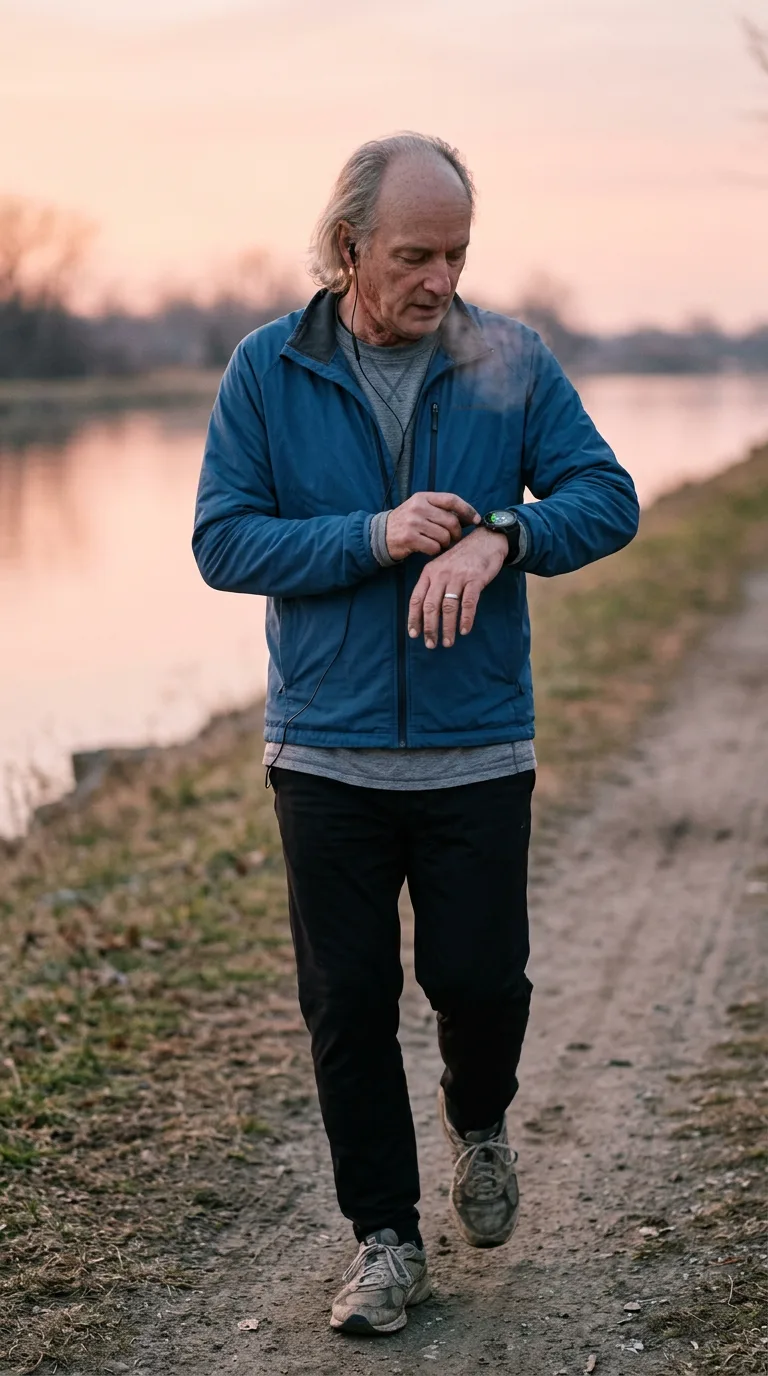
Rarest thing about him: HIV, undetectable on treatment — epic, 1 in 251
Season 0seed 380958152 · engine v10
Character card
lineage WV6PBZ
His body-swap story
@malik.overton, wearing Diego Casares, rolled the wheel on and woke up as Walter Kaczmarek, spent 10 minutes in him, then spun the wheel and woke up as Raymond Sobczak
The knife is still in Diego's hand when you decide.
It's eleven in the morning in a rented room above a slaughterhouse floor in a town too small to have a stoplight, and Diego Casares — eighteen, dimpled, quick with a blade in a way his body remembers even when your mind is elsewhere — has been standing at this counter for eleven minutes doing nothing, because you are not doing anything with him. You made him laugh at the crew this morning without trying. You made him flirt with the girl at the register without trying. Everything about him works, and that, it turns out, is the problem: a body with no resistance in it teaches you nothing about yourself, and you have started to notice you cannot remember what you came here to feel. One day, twenty-one hours. Long enough to know the fit is good and the good is starting to feel like nothing at all. You set the knife down on the block, wipe your palm — his palm — on your apron, and go to the phone in your pocket like it's an itch.
vessel.cards loads the way it always does, patient, gray, a wheel sitting there like it has all day, because it does. You spin. You don't ask for anything. That's the whole appeal left to you at spin twenty-eight — the not-asking.
—
The path is hard-packed dirt under a shoe that is not built for how you're using it, and your foot comes down wrong, some fraction of a second late, and then it doesn't. You correct on the fly, weight shifting to the other leg, and the watch on your wrist buzzes — once, sharp — logging a split against a stride count that has no history in its memory of you ever running that way. Cold air goes into a chest that is not the chest you had a breath ago, bigger, slower, older, and it costs something to fill, a small burn low in it that a young lung would not have registered as anything. Earbuds feed a podcast voice mid-sentence about mitochondria. The sky ahead is doing something between pink and iron over water you didn't know was there until it was.
Detroit, the middle of a Monday, though the light insists otherwise — this is a man who runs before his shift, not after it, and the shift is nights, and this hour is his morning pretending to be everyone else's.
—
The jacket is what gives you the first of it — blue, zipped to the throat, a hand (his hand, gray-haired knuckles, a plain gold band worn thin) brushing the zipper pull, and there it is: a closet in a house on a wide brick street, gray light through a window that never quite gets bright, and him — Walter, the name arrives with the smell of the collar, laundry soap and something underneath it that's just skin — picking this jacket off the hook at five-forty this morning because Carol's still asleep and the dog needs him not to slam the door. Thirty-one years of that door. Thirty-one years, this June, and a card in the kitchen drawer already signed by all four kids though only three of them call.
The watch buzzing at your wrist opens further than the split — mile markers going back a decade, this canal path before it had a name he'd bother learning, the ache in the right knee that showed up at fifty-eight and never fully left, the way running used to be about getting somewhere and became, sometime after the diagnosis, about proving to himself every single morning that the body still does what he tells it. Undetectable, the doctor's word, said so many times now it's lost its weight, but Walter remembers the first time he heard it and how his hands — these hands — didn't shake, and how that surprised him more than the news itself.
The shirt against your back, thin gray cotton gone soft with washing, gives you a whole morning: him pulling it over his head in the dark so the light wouldn't wake her, the fabric catching for a second on the scar — you feel it now, a tightness of skin along one side of the jaw and down into the neck, old enough that it doesn't hurt so much as remember, a spark that jumped a grounding strap in 1987 and a young man's face that was never quite the same face after, and a wife who kissed that exact stretch of skin on their wedding day like it was nothing to be sorry about. The lathe is in his hands even here, half a mile and a whole city away from it — thirty-nine years of steel chips curling around boots, of measuring twice, of a trade he never once regretted and never once talked about at dinner because nobody asked. The pencil in the coat pocket he isn't wearing right now. The specific grip of a micrometer. Muscle that knows things his mind stopped tracking years ago.
The earbud wire against two fingers gives you Sunday — three of the kids home, the fourth on a screen from Seattle, Carol's hand finding his under the table the way it still does, twenty-eight years married and somehow no less strange to him that she stayed. And under all of it, quieter, the thing his jaw does without him — clenching, right now, around nothing, around the cold, a habit older than the scar — while the feet keep moving because feet like this don't know how to stop just because everything else has changed hands.
You are sixty-five years old inside this. The knees say so. The lungs say so. The watch says four miles and counting and the body, gamely, generously, keeps running.
—
Your stride breaks again — smaller this time — as you lift your right hand in front of your face without meaning to, still moving, and turn it over the way a man checks for rain. Ring catches the pink light. Knuckles too big for the fingers they're on. Not yours. Never yours, and yours now, and you understand that better than Diego ever let you understand anything.
You slow to a walk without deciding to, breath sawing white into the cold, and you say it to no one, to the water, to whatever's listening —
"Whose morning is this."
Behind you, twenty-four spins deep and thirty years gone, the run continues on legs that already know the way home.