Walter Brennick
Fictional. Generated by AI — not a real person, and no likeness of one is intended.
52, construction laborer in Philadelphia · rolled by @colin.hasbrook · card — no film
History
who has worn him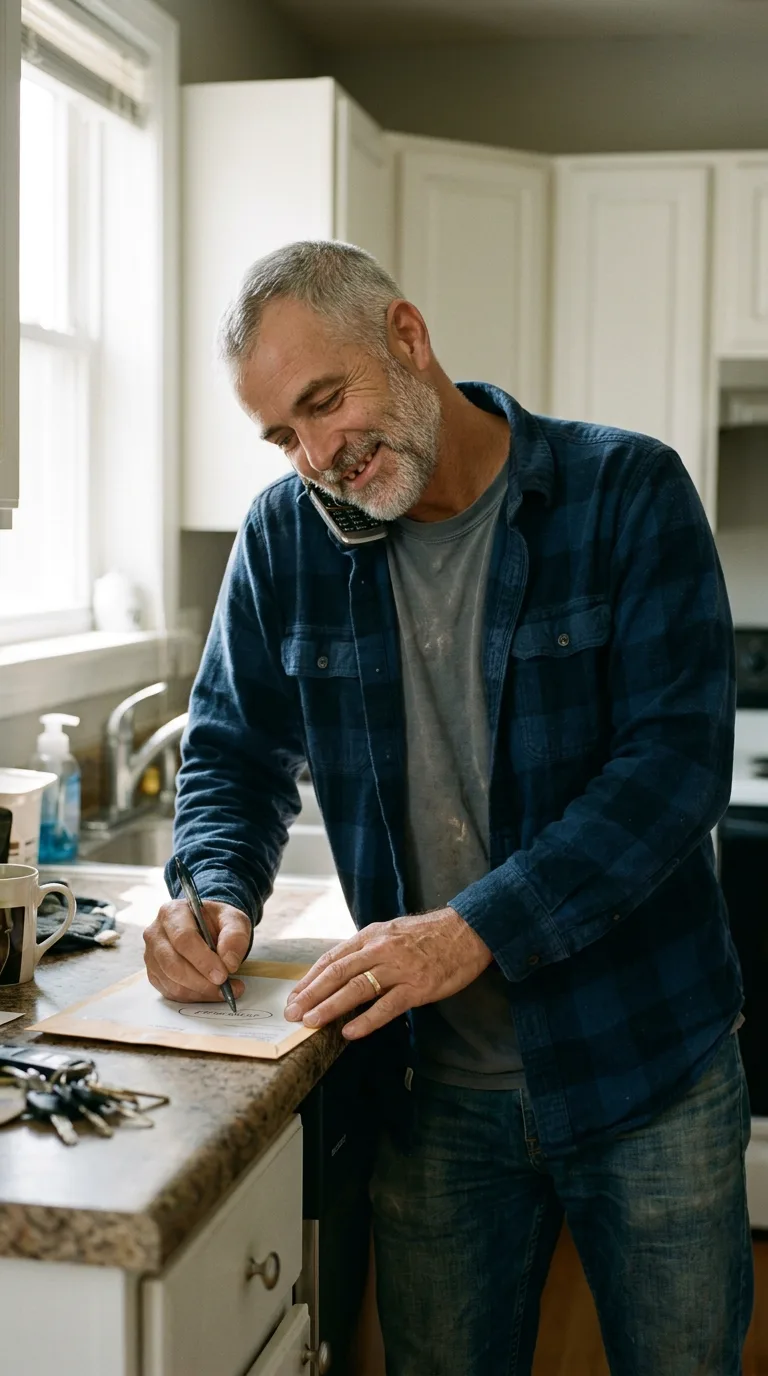
Rarest thing about him: On hold with someone — common, 1 in 70
Season 1seed 966125800 · engine v11
Character card
lineage 2NZHHJ
His body-swap story
@colin.hasbrook, wearing Marlon Deshields, rolled the wheel on and woke up as Walter Brennick, spent under a minute in him, then spun the wheel and woke up as Alton Deveraux
The dust hasn't settled in Marlon Deshields's lungs yet, and already you are bored of him.
That's the ugly true version, the one you wouldn't say to anyone spinning beside you at a bar even if such a place existed for people like you. Marlon is thirty-six, skinny in a way that never fills out no matter what the quarry does to him, and this morning he is standing at the lip of a blast site in the middle of a New York shift with his ears still ringing faintly from the last charge, and you are inside him thinking: this again. The vest is heavy. The radio on his hip keeps barking numbers that don't mean anything to you even though they mean everything to him, some countdown to the next detonation, and his hands — thin, quick, scarred across two knuckles from a chain slip years back — already know the sequence without you. You've had him less than a minute and the boredom is not really about him. It's about the shape of wanting more, the specific itch that seven hundred and sixty-nine men has never once cured, only fed. You open the site on his phone with his own thumb, standing in the settling dust, and you spin.
The hold music loops back to its first bar — a tinny, cheerful loop you will never place, some bank's idea of Vivaldi — and his shoulder drops the phone into his hand mid-loop, the way it has ten thousand times before when the call finally connects, except this time it's you underneath the motion, catching the weight of a stranger's shoulder like catching a dropped plate. The pen in his other hand stops on the second digit of a reference number and does not start again. Around you: a kitchen, white cabinets, morning light lying flat and pale across a granite counter, a mug gone lukewarm by the sink. You are standing where he was standing, breathing at his depth, and his knees are not your knees — heavier, planted, used to bearing something all day and then bearing it again.
The envelope under your palm gives you the first flash: not this morning, but some other morning, stamping a rent check for a unit he still owns two blocks from here, the one from before the marriage, the one he never sold because his father told him never sell brick in this city. Then the pen — cheap, chewed slightly at the cap — gives you nothing but the dumb electric hum of a hundred hold calls, insurance, the union hall, his daughter's orthodontist. The wedding band is the loud one. It comes up through the hand like heat: a courthouse afternoon, his wife's hand shaking worse than his, a ring that was his own father's resized down two sizes, and the two of them laughing about it in a parking lot afterward because the resizing left a seam you could feel if you knew where to look. Twenty-some years of that seam under his thumb. And under that, quieter, guiltier — a name that isn't hers. A woman he stopped seeing four months ago, not because he wanted to but because the wanting had started to cost more than it was worth, and some nights the counter under your palm right now is the same counter where he sat afterward, alone, dipping a pinch of tobacco just to have something to do with his mouth instead of calling her.
The shirt does the rest. Flannel, worn soft at the elbows, and it gives you this morning whole: him buttoning it one-handed at the mirror while his wife told him through the bathroom door that the insurance people were going to lowball the water damage again, him saying uh-huh, uh-huh, not really listening, more interested in the gray coming in thicker at his temples than it was last year, his thumb finding his jaw the way it always does, dragging along the beard he keeps trimmed close because his wife likes it that way and he stopped arguing about it a decade ago. Under the shirt: fifty-two years of a body that still works, shoulders thick from two decades of shovel and spoil pile, a lower back that announces itself every morning around minute three of standing, hands that know the weight of a hammer's swing without being told and know it right now, twitching faint at his side like they're waiting for a tool that isn't there. The gap in his teeth — you feel it with his own tongue, an old unconscious habit, worrying at it the way he's done since he was nine years old and a Little League ball did the damage nobody ever fixed because his mother said it gave him character.
There is a kid somewhere in this house, or was an hour ago — a backpack by the door you can almost see without turning your head, a name you don't have yet, love you already do, arriving secondhand and enormous through nothing but the counter and the ring and the flannel.
You look down. The pen is still resting on the second digit, ink barely dry, his hand — your hand now, for however long now turns out to mean — steady around it in a way Marlon's never was. You turn it over once, studying the calluses like they're a language you're only starting to read.
"Yeah," you say, to no one, to the phone still looping its cheerful nothing against your ear, "I'm here."