Walid Hanna
Fictional. Generated by AI — not a real person, and no likeness of one is intended.
52, machine operator in Houston · rolled by @walid.hanna · card — no film
History
who has worn him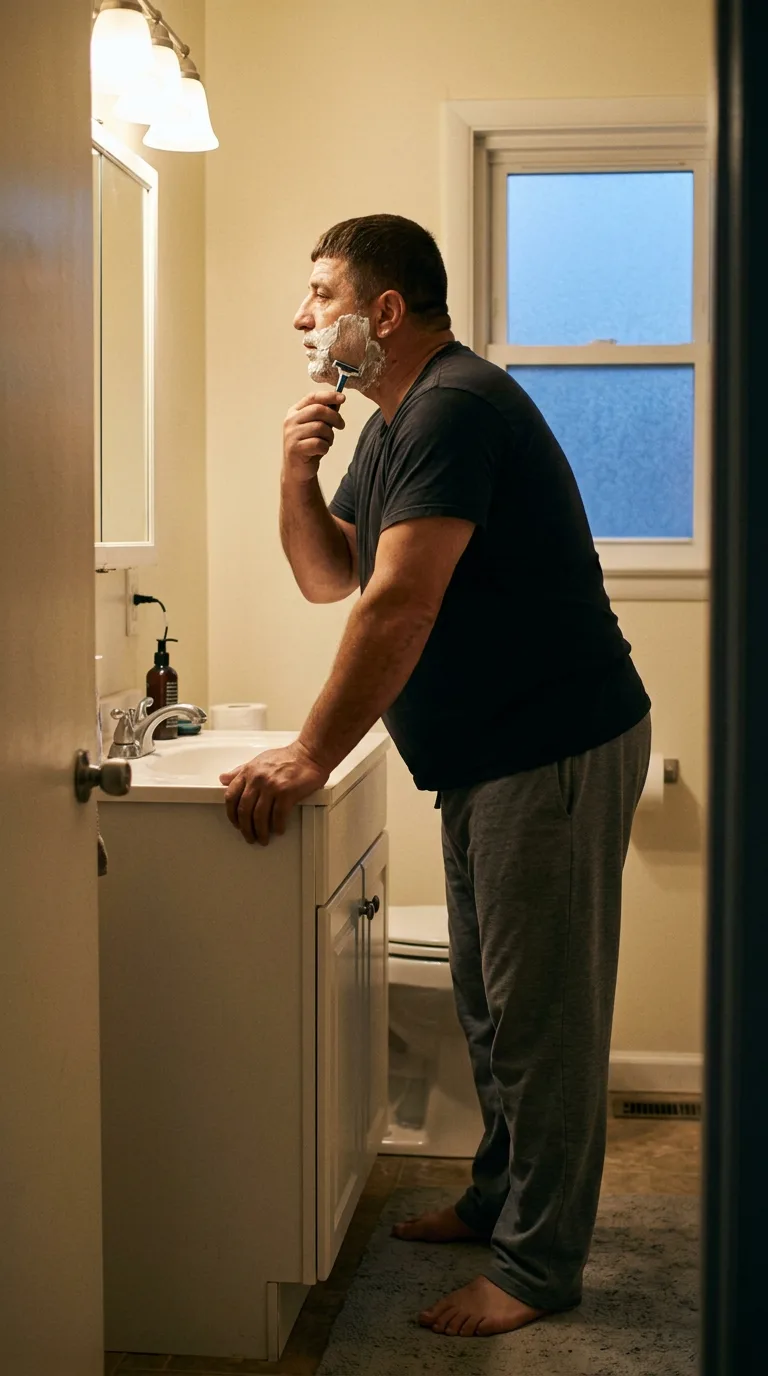
Rarest thing about him: Muslim — common, 1 in 42
Season 1seed 622571877 · engine v11
Character card
lineage 202897
His body-swap story
@walid.hanna rolled the wheel on and woke up as Walid Hanna — their first
---
Sunday ends the way most of them have lately, which is to say it doesn't end so much as get abandoned. The scrolling stops being about anything an hour ago. You've had the tab open for three days — vessel.cards, a wheel rendered in flat gold, a button that says SPIN that you have hovered over and not pressed, the way you've circled this whole idea for years without ever finding the door that actually opened. Forums at two in the morning. Stories you told yourself you were reading for the writing. A private, specific hunger that never had anywhere to spend itself until somebody built a wheel and put a price on it. It is not much money. That is almost the worst part — how little it costs to find out if it's real.
You press the button.
The wheel spins somewhere behind the screen, inside the machine, inside whatever this actually is, and you do not feel yourself leave anything because there is nothing of yours to leave.
You are leaning over a sink. Fluorescent light off a mirror, yellowed bulbs in a row above it. Foam on half a face that is not a face you have ever owned, and a razor stopped at the jaw, and before you can think anything at all your hand — his hand — finishes the stroke. Up, against the grain, no hesitation at the corner of the mouth, where apparently there is always hesitation and today there isn't. The second half of the shave goes faster than the first ever has. You didn't do that. It happened through you, like a reflex older than you are.
The window over the toilet is frosted and dark-bright at once, the particular gray-gold of a sky that hasn't decided about morning yet. Early. Too early for someone standing fully dressed in sweatpants and a dark t-shirt, razor in hand, like a man halfway into a day that hasn't started.
The razor is the first thing that gives him to you. Cheap, three-blade, replaced every few weeks because the drugstore near the apartment always has them on sale, and the flash comes with the specific satisfaction of a bargain well hunted — Walid liked finding things cheap, liked it more than the money saved, liked the small private victory of it. Behind that: years of this sink, this mirror, the bulb on the left flickering for months before he finally swapped it. Behind that: a different bathroom, a different city maybe, an apartment he shared once, a man's razor sitting next to his on the same shelf without either of them making a thing of it. Tarek. The name arrives soft and whole, not through anything you're touching but through the ritual itself, the leaning-over, the foam, the particular angle of his neck that some other man used to kiss while he was mid-shave and laugh when Walid told him to quit it, you'll make me cut myself. That ended four years ago and some part of this body still performs the shave a little like a man being watched.
Your feet are bare on tile that is cold in the particular way of Houston tile in whatever hour this is — too early for the AC to have caught up with outside yet, too early for the day's heat to have found its way in either. The shirt you're not wearing yet — the work shirt, blue, soft at the collar from a hundred washes — is hung on the back of the door, and even just the sight of it gives something up: his hand sliding into that sleeve every working morning before this one, the rolled cuffs, the two buttons left open at the collar because the top one never sat right against his throat. The gray work pants with a crease worn into them not from an iron but from being folded the same way over a chair for a decade. Steel-toe boots by the door, scuffed brown, the left one resoled once already. His body knows all of this without being asked — the weight he carries low and solid through the belly and chest, the stiffness already starting in both knees before he's done anything today, the ache along the right forearm that is just what forty years of reaching and pulling and feeding plastic through a die does to a forearm. Calluses along the pads of his fingers thick enough that he doesn't feel the hot casing on the line anymore, not really, not the way the new guys do.
Sunday. Not a day off — a different shift, nights that bleed into Sunday morning, the extrusion line never fully stops and someone has to be the one standing in front of it while the plastic spools out warm and endless under the lights. He goes in a few hours from now, or he went in a few hours ago and this is after, the body isn't telling you which and it doesn't matter yet. What matters, what the room gives up next, unprompted, is how much he hates leaving this apartment lately. Not the job — the job is fine, the job is just hours, he's good with his hands and the machine likes him for it. It's the apartment being quiet. Mother gone three years now, the last person who called him every Friday without being asked, who never once said anything about Tarek except to ask, carefully, years after, if he still thought about getting married — and Walid said no, Mama, not like that, and she nodded and never asked again and that was the whole conversation they ever managed to have about it. His hands, idle at his sides a second after the razor is set down, drift up toward his mouth. He bites the nails. Has since he was a boy. His mother used to swat his hand down at the dinner table.
You feel all of it the way you feel a held breath finally let go — not your grief, his, borrowed whole, sitting heavy and familiar in a chest that was a stranger's thirty seconds ago and is, for now, the only chest you have.
You look down. His hands. Blunt nails bitten close, a mole high on the left cheek catching the bathroom light when you turn your head, stubble rasping under fingers that go, out of habit that isn't yours yet but will be, to check the jaw for missed patches. There are none. He never misses a patch again.
You look up into the mirror, into a face arranged by fifty-two years that were never yours, and you say, to no one, in a voice that isn't the one you don't have:
"Okay. Okay — let's see."