Wade Fontenot
Fictional. Generated by AI — not a real person, and no likeness of one is intended.
37, trucker in New Orleans · rolled by @colby.marsh · card — no film
History
who has worn him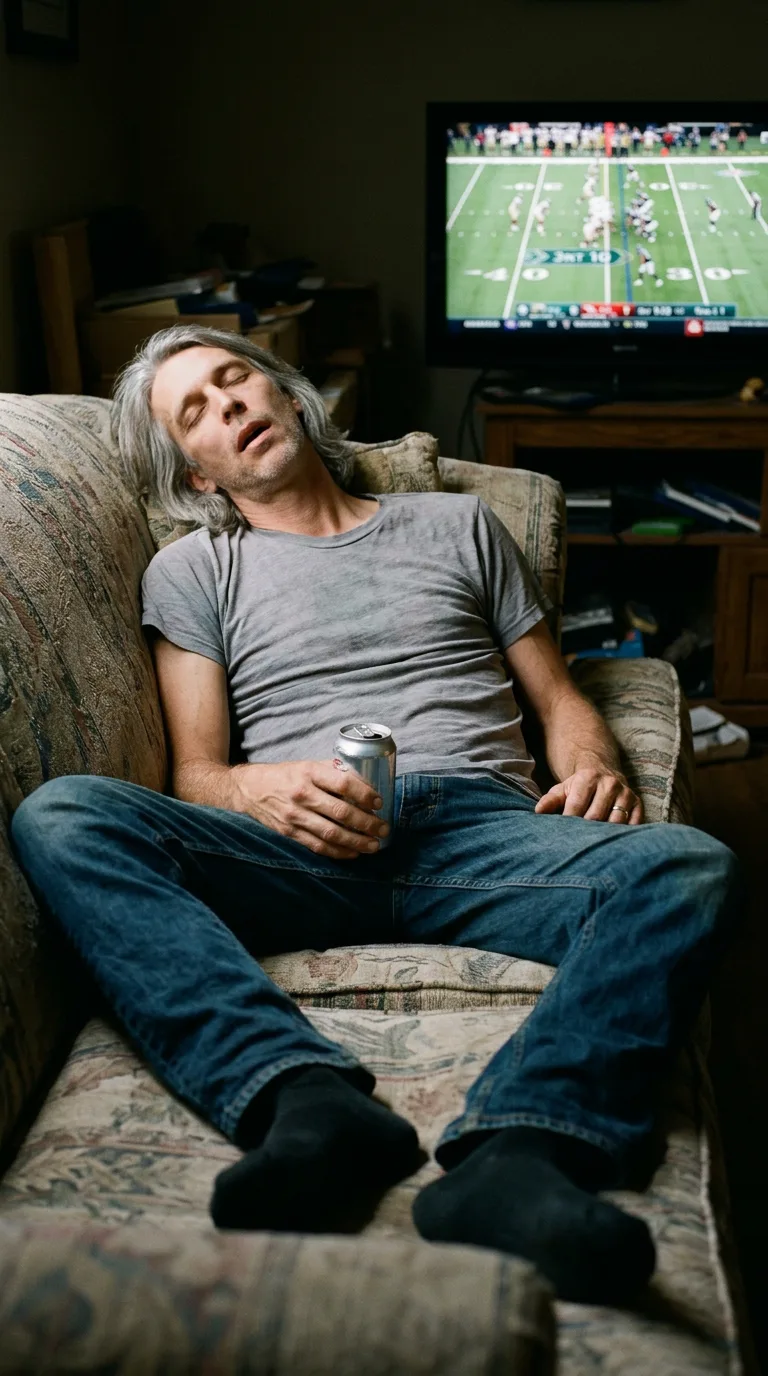
Rarest thing about him: Vapes socially — rare, 1 in 53
Season 0seed 488001852 · engine v10
Character card
lineage PYNCV3
His body-swap story
@colby.marsh (admin), wearing Martin Doughty, rolled the wheel on and woke up as Wade Fontenot, spent 36 hours in him, then spun the wheel and woke up as Brian Kowalik
Martin Doughty's apartment smells like microwave rice and carpet cleaner, and you have been him for seven minutes, and that is exactly long enough. Sales rep. Fifty-five. Bald by choice, not chance, and there's a relief in that you didn't expect — no vanity to manage, nothing to mourn in a mirror. But the room is small and the light is the flat yellow of a lamp that's had the same bulb for three years, and somewhere under the ribs of this stranger's chest is a low, familiar static you recognize from every one of the twenty-nine before him: not unhappiness exactly. Just the sense of a room you've already finished looking at. You open the laptop still logged into vessel.cards from last time, and your thumb — his thumb, fat and dry-knuckled — finds the wheel before you've decided anything at all. That's usually how it goes. The wanting arrives a half-second ahead of the reason.
The couch under you changes first — cheaper cushions, a different give — and then the can in your hand goes from cold to warm between one blink and the next, sweat gone tacky against your palm. There's a game on a television that wasn't there a second ago, and it's the second replay of a goal you didn't see the first time, and your body — his body, tall where you were average, all lean tendon where you were soft — is already leaning forward, thumb dropping onto the remote with a steadiness that doesn't belong to whatever's swimming in his blood. You watch the ball cross the line again in slow motion. You are not, for a moment, anybody.
Then the couch arrives — floral, threadbare at the arm — and with it his weight settling on it a hundred times, a thousand, a man who works nights and watches soccer at eleven in the morning because in New Orleans the trucking runs start before the sun and end when the rest of the world is only getting up. The can in your hand is a fact before it is a memory: Wade Fontenot, thirty-seven, going on his third beer of a Saturday that started for him in darkness and a truck stop off I-10 with frost on the windshield even though it's Louisiana, even though it never really gets cold. The cap. You reach up without meaning to and there's no cap now, but your fingers know the shape of the brim anyway, know the exact tilt that keeps sun off your neck on the flatbeds, know the small tear in the underside of the bill from a hook on the trailer door three winters back.
The shirt is next — red-black flannel, buttons undone over a gray tee gone soft with washing — and it gives you the morning whole: standing in a bathroom with a light that buzzes, working one arm in and then the other while behind you, in the mirror, a woman named Coralie brushes her teeth and doesn't look at you, not unkindly, just the un-looking of fourteen years married. You love her in the specific, worn way of someone who chose her twice — once at twenty-three and once, quietly, every day since, deciding not to leave, though there was a stretch, four years back, when leaving had a name and a laugh and worked at the credit union on Magazine Street, and you think of her still, some nights, the way you think of a road you didn't take that might have been shorter. Coralie knows. She never said she knows. Your son's height is marked in pencil on the kitchen doorframe, and you touch that too, in the memory, the same two fingers you're using right now to hold a can that isn't cold anymore.
Your jeans are worn soft at the thigh from the seat of the truck, and there it is — the wheel under these hands, huge and warm, the CB crackling, two hundred and forty miles of flat gray road and a thermos going cold in the cupholder, the particular ache low in your back that never fully leaves, that started around thirty-three and just moved in. Your hands know downshifting without asking your head. Your hands know a lot of things — checking straps, counting bills without looking, clicking a pen against a clipboard at a weigh station while you wait, click click click, a tic so old you don't feel it happen, you only ever notice the pen is warm. There's a bottle of something in a drawer at home with your name on the label, for the thing that sits behind your sternum some mornings for no reason at all, no cause, just weather that doesn't pass — and a doctor in Metairie who adjusted the dose once and made a joke about football you didn't laugh at because you don't really follow it, not the American kind, and yet here's a game on, someone else's habit, maybe your father's, old and looping on some channel you don't remember choosing.
The ring is the last thing, small and dumb and heavier than it should be for its size, and it doesn't give you a memory so much as a temperature — something warm and constant and slightly sad, fourteen years of it, still on.
You look down at the hand holding the can. Long fingers, a farmer's tan you didn't earn, the ring catching the television's blue light. You turn the hand over like it might have come with instructions on the other side.
"There you are," you say, to no one, to him, to the empty apartment in Maine seven minutes gone and forgotten already — and you lift your eyes to find whatever's in front of you, unbothered, for now, by how long you intend to stay.