Vikram Sethi
Fictional. Generated by AI — not a real person, and no likeness of one is intended.
64, lawyer in Las Vegas · rolled by @colin.hasbrook · card — no film
History
who has worn him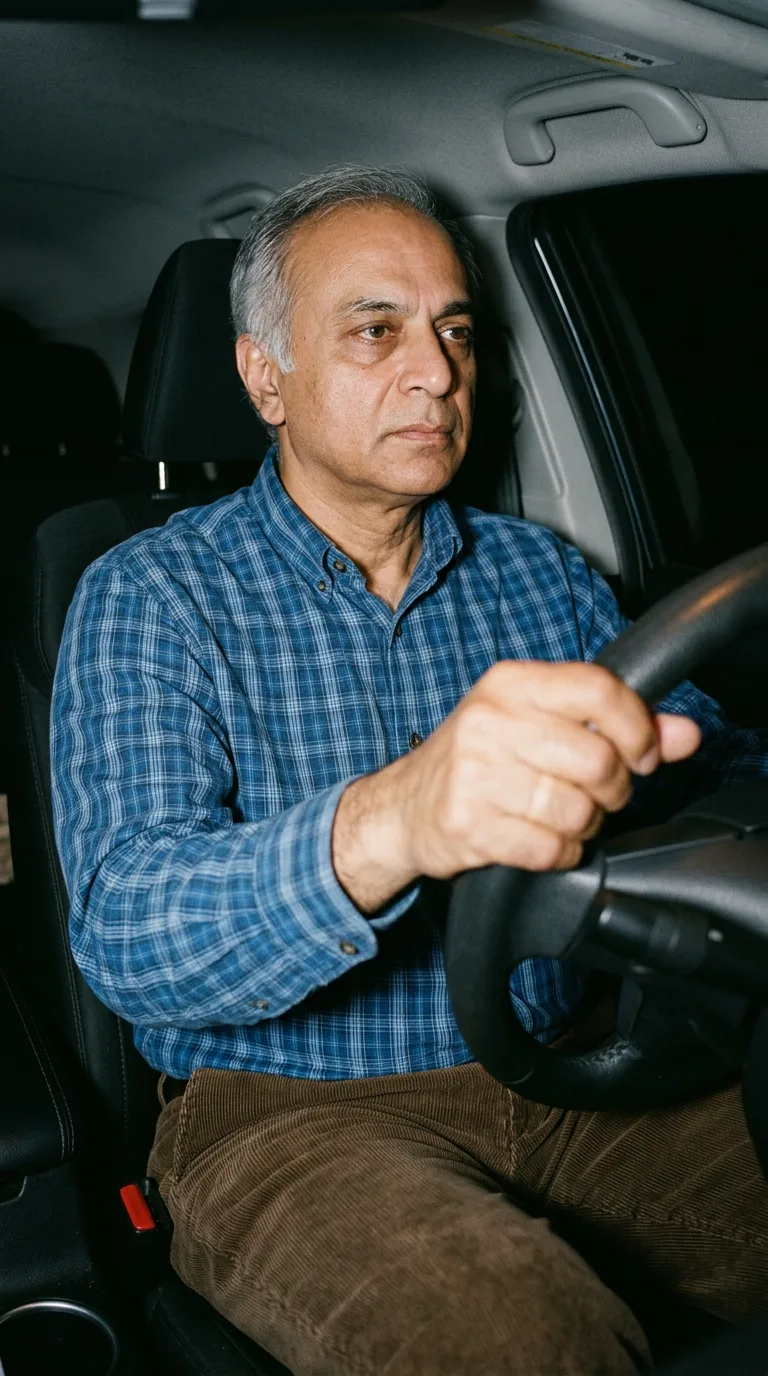
Rarest thing about him: Lawyer — rare, 1 in 76
Season 0seed 339081006 · engine v10
Character card
lineage 2NZHHJ
His body-swap story
@colin.hasbrook, wearing Reggie Two Bears, rolled the wheel on and woke up as Vikram Sethi, spent under a minute in him, then spun the wheel and woke up as Dale Kowalczyk
---
Reggie Two Bears has been you for less than a minute, and already the knees are wrong. You've had this body less than a minute and you already know its whole complaint: the left knee that clicks on stairs, the small ache riding low in the back like a tenant who never pays rent. You are standing in a garage smelling of two-cycle oil, a bald head under a ballcap you haven't earned the memory of yet, and somewhere behind your sternum there's a job bid due Wednesday that isn't yours to worry about. Sixty-five years old, less than a minute in, and already you understand why you paid for this again so fast: not because Reggie is bad. Because Reggie is fine. Because fine, after three hundred and thirty-eight men, is the worst thing a body can be. You want the click before the fine. You open the site on a phone that isn't yours either, thumb finding the wheel out of habit older than any of the men you've worn, and you spin without deciding to, the way a smoker lights the next one off the last.
The highway comes up underneath you like water closing over a stone.
Ten and two. Dash light green-gold on knuckles that are not Reggie's knuckles — thinner, older, a paleness banding the base of the ring finger where something used to sit. Three miles from a home you have never seen. The wheel comes off in both hands at once, low and wide, and somewhere in the chest a signal clicks on for a road that means nothing to you and everything, you will learn, to him.
The shirt is what opens first. Blue plaid, soft at the collar from a hundred washes, and it gives you a bathroom mirror at some hour with no daylight in it, brown eyes doing the thing they do every night before a shift — checking, not vanity, just checking, the way a man checks a gauge. Vikram Sethi buttons this shirt cuff to collar with the radio already on, low, a cricket score from a country he left so long ago the accent under his English is more Nevada now than Amritsar. He tucks it into corduroys gone soft at the knee. He does this every night at an hour when other men are having dinner, because his hours run backward: he is a lawyer for the casinos on the Strip, contracts and comps and the occasional labor grievance dressed up in a suit that photographs well on courthouse steps, but the work that actually eats his life happens at night, in windowless rooms behind a floor that never turns its lights off, and so he leaves for it while the sky still has color and comes home to it gray. The M of his hairline is a joke he's stopped making about himself. The gray-silver on top he combs the same three strokes every time, out of a habit that used to be for someone.
The wedding band is gone nine years but the tan line under it is not, and touching the wheel — his wheel, the true one, leather worn shiny where his palms have always gone — brings up Meena all at once, the smell of her in a kitchen he no longer stands in, the particular quiet of a house after a daughter moves out and a wife moves on and it turns out neither departure was really about him, they told him so, kindly, which was somehow worse. He built a whole second life out of not needing the house to be full. He goes to the casino at strange hours and sits across desks from men half his age and wins, mostly, the small grinding wins of contract law, and at home he keeps one photograph of his daughter at her graduation face-out on a shelf and does not look at it on purpose, only in passing, which is its own kind of devotion.
The pocket of the corduroys gives you the lighter before it gives you the cigar — a plain steel Zippo, dented on one corner from a drop he doesn't remember, and his hand already knows the flip, thumb and first two fingers, open shut open, a tic that has outlived two cars and one marriage. He doesn't smoke in the car. He just flips it, at red lights, at this moment, three miles out, the small dry click of it louder in memory than the road noise. Big nights are rare now, once or twice a month, bourbon with a man from opposing counsel who became, against both their intentions, a friend. Most nights are this: driving home alone at an hour with no name, blood pressure medication in the glovebox he forgets half the time, a body that has never once in sixty-four years given him a reason to think about it beyond the numbers a doctor reads off a cuff.
The signal ticks. Ticks. Wrong exit, right hands, and underneath your borrowed grip you feel how easy this has always been for him — not the driving, the arriving, the getting home to a quiet he built for himself on purpose and calls, when anyone asks, fine.
You lift both hands off the wheel and look at them in the dash light — foreign, thin-fingered, the ring-tan pale as a scar that isn't one — and you laugh once, short, before you catch it.
"Okay," you say, to no one, to the windshield, to the exit sign sliding past that isn't his. "Let's see what you've got, Vikram."