Vikram Nair Pillai
Fictional. Generated by AI — not a real person, and no likeness of one is intended.
46, cashier in New Orleans · rolled by @daniel.jiahao.wu · card — no film
History
who has worn him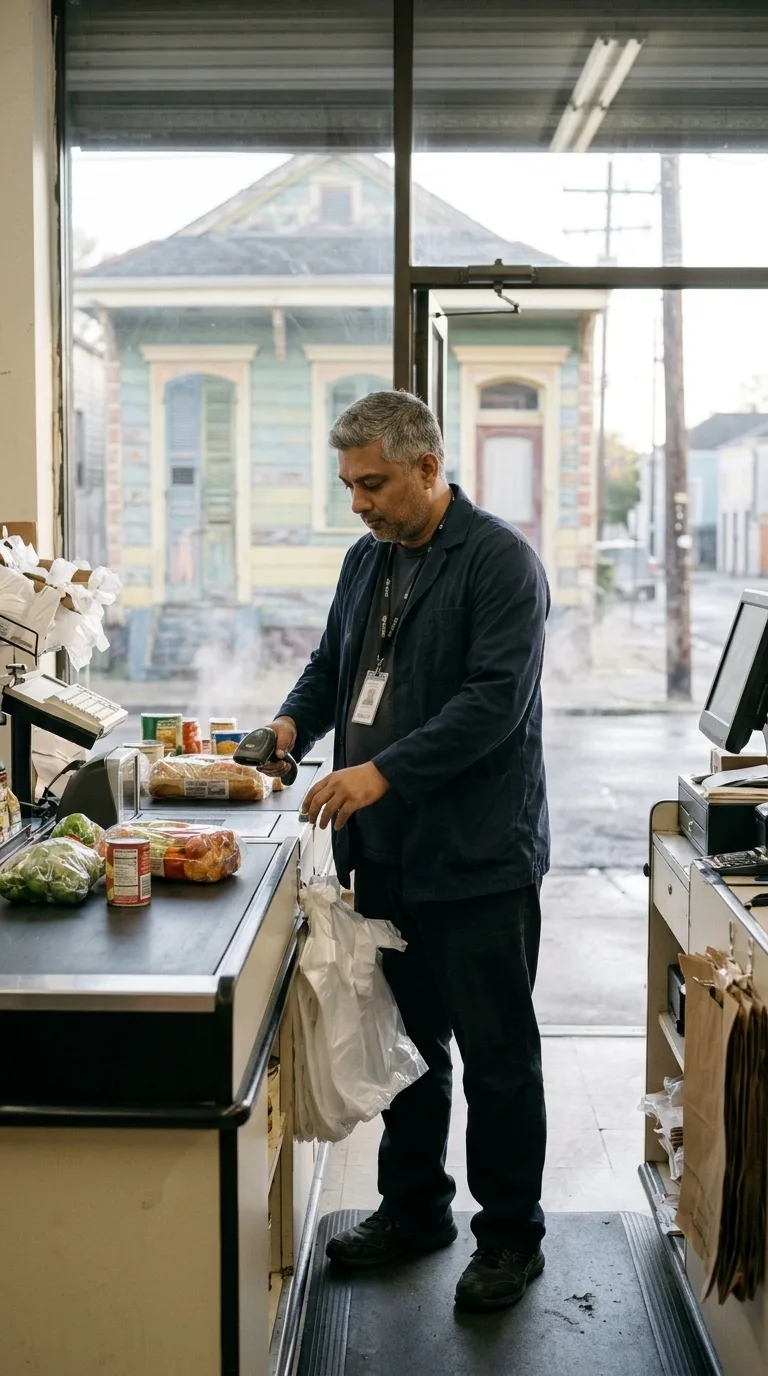
Rarest thing about him: It's a problem and it shows — common, 1 in 37
Season 1seed 615346104 · engine v11
Character card
lineage IXKM39
His body-swap story
@daniel.jiahao.wu, wearing Gordon Wei Lam, rolled the wheel on and woke up as Vikram Nair Pillai, spent under a minute in him, then spun the wheel and woke up as Nathan Cole Brenner
You are standing in Gordon's kitchen in Boston, and the coffee has gone cold in a mug you did not choose. He fixed things for a living, and he is good at it. His whole body is a quiet room. You have been in it less than a minute by your own count, though the clock on the stove says otherwise. It is the middle of the morning, and he has meetings, and a gap between his front teeth that your tongue keeps finding. Nothing is wrong with him. That is the trouble. You wanted a thing you could not get from a man so settled. You remember the last time the wheel gave you someone and how the world tilted into new, and you want the tilt again. The laptop is open. The wheel is already turning in the page.
Then you are standing up, and you are not standing at all.
Your right hand is lifting a scanner toward a can of tomatoes, and the red beam hits the label wrong. The motion stutters. You do it again, slowly, correctly, and the machine chirps. A bag hangs open against your leg, thin plastic whispering. The light through the glass is wet and bright, and across the street steam lifts off the asphalt in front of a pale blue house, one room wide. Your belly presses the edge of the counter. Your feet ache in the soles, a dull, familiar ache that is his and not yours.
The jacket's cuff is rough on your wrist, and the cloth gives you him. It is dark, soft with washing, and a thread hangs at the pocket. He put it on this morning in the dark, one arm and then the other, the way you might dress for a job you have stopped hoping about. His back hurt. The pouch under his lip was already gone flat. He stood in the hall of the shotgun house, each room opening into the next like a throat, and he thought about the bottle in the kitchen and did not go in. He did, a little later. You taste the memory of it, sour and warm, and your stomach turns on it.
The scanner is in your hand, its grip worn smooth. Through it comes a night years ago: a woman in a doorway, laughing, her bag over her shoulder, saying his name as if it were a small gift. He never called her back. He thinks of it still, every slow day, and the thinking has worn a groove in him. Your knuckles want to crack. You let them. The pop runs up your fingers, easy and old, and with it comes the register at ten thousand mornings, price after price, his eyes drifting off the work and out to the street where nothing arrives.
You check the next item. Then the next. Your hands do it carefully, each one a small proof, as if the job might have changed behind you.
You lift your right hand from the scanner and turn it over: broad palm, creased, a little dry, steady. The fingers curl when you ask. Then you look up at the glass, where a man with gray in his stubble looks back from the wet bright street.
"Hello," you say, in a voice with gravel in it, and wait to learn how long this one lasts.