Victor Amenta
Fictional. Generated by AI — not a real person, and no likeness of one is intended.
65, photographer in Miami · rolled by @colin.hasbrook · card — no film
History
who has worn him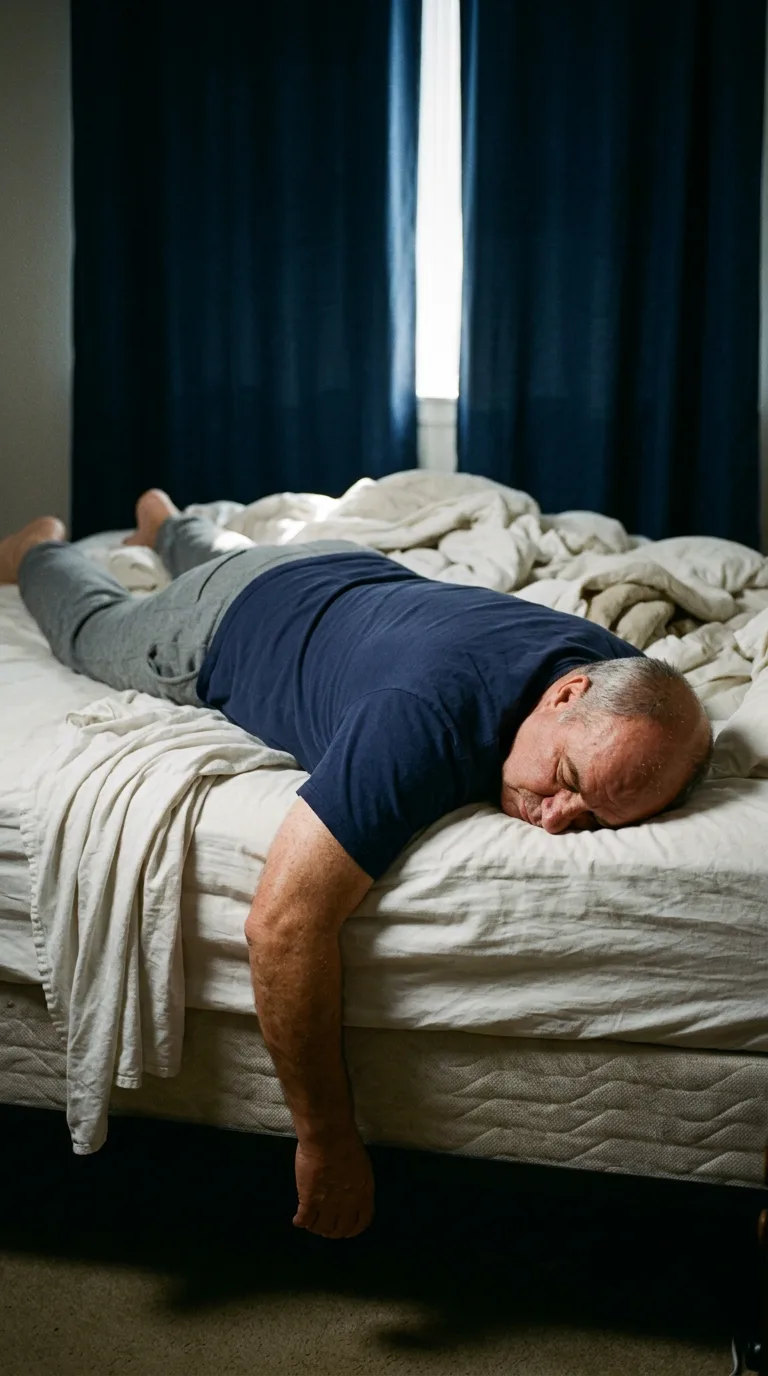
Rarest thing about him: Photographer — rare, 1 in 106
Season 0seed 1329156622 · engine v10
Character card
lineage 2NZHHJ
His body-swap story
@colin.hasbrook, wearing an unnamed body, rolled the wheel on and woke up as Victor Amenta, spent under a minute in him, then spun the wheel and woke up as Marlon Etheridge
You are twenty years old in a body that isn't yours either, standing in a gym that smells like rubber mats and old sweat, and the kid you've been coaching for two hours and twenty-five minutes just pinned his sparring partner clean, and everyone is cheering, and you feel nothing. That's the thing nobody warns you about the good ones. Blond hair, blue eyes, shoulders that do what you ask without complaint — a body built for exactly this moment, and the moment arrives and it's flat as a table. You did this to feel something and it worked for about ninety minutes and now it's Friday night in New York and you are standing in a stranger's whistle and a stranger's tracksuit and you already know you're leaving. You always know. The itch starts behind the sternum, which isn't even yours, and you go to the locker room, and you take out your phone, and you open the page with the wheel on it, and you spin.
The wheel does not care that it is evening in New York. It does not care that four states south and one hour of sky apart it is also evening, also Friday, also late enough that a man could be alone with whatever he's alone with. It gives you a body already asleep. That should feel like nothing. It feels like falling into a mattress from a height you didn't expect.
Your breath goes from ragged to even in a single pull. That's the first thing — not sight, not thought, just air deciding on its own to slow down. An arm that was hanging off the edge of something soft draws itself up, and you feel the weight of it, real weight, a whole arm with hair on the forearm and a slight stiffness in the elbow, folding onto a chest that rises and falls under it. You have never once in your life slept on your back with your hands folded like a man in a casket, and neither, you understand distantly, has he — this is you doing it, some old reflex of arrival, some tell that isn't sleep at all. Streetlight comes through a gap in curtains you didn't choose. The sheets under you are cheap cotton, twisted, still warm where a body just was.
You are sixty-five years old. You feel it before you know it — the give in the mattress under a heavier frame, a softness at the middle that wasn't in the kid, a knee that already aches faintly in its sleep. Your scalp against the pillow tells you before a mirror could: hair gone in a horseshoe, thin where a hand might smooth it back out of habit. You lie there another second, borrowed lungs working a borrowed chest, and nothing has happened yet that anyone could see.
Then your foot finds the seam of the fitted sheet, and it comes — not a memory exactly, just a fact with weight behind it: you've slept crooked for years because you kick the covers loose, because Marisol used to complain about it, God, Marisol, eleven years gone and her voice is still the first thing to show up. The pillow under your cheek smells like your own hair oil and something opens: a Tuesday morning, not important, just a Tuesday, coffee on the balcony, the haze off Biscayne Bay doing the thing it does at seven a.m. where the whole city looks underwater. You did that alone. You've done a lot of things alone since the divorce, and most of them were fine, better than fine, but not all of them.
Your hand, still on your chest, brushes the collar of the shirt you slept in and it comes harder: this morning — no, yesterday morning, the shirt hasn't been changed — sliding into the gray button-down over the white tee, the vest after, heavier than it looks, all those pockets already loaded with lens caps and a spare battery and a rubber lens hood you've replaced four times because you keep losing them. Your shoulders remember the strap crossing them, the weight of the Canon settling against your sternum like it belongs there, forty years of that particular weight, since you were twenty-five and shooting quinceañeras for eighty dollars a job. You feel your own gut where the shirt tucks — not ashamed of it, just aware, the way you're aware of your knees on a long day of standing, the way you're aware of your blood pressure pill sitting on the bathroom counter that you did not take yesterday because you never take it on schedule and your doctor has said things about that.
The shoot comes back through your hands even though your hands are empty now, just lying on your own chest: a reflector propped crooked against a stucco wall, a bride's cousin asking can you make my arms look thinner, the particular patience it takes to say gently that light doesn't work that way but you'll figure something out. You are good at this. Genuinely, unglamorously good, the kind of good that pays the mortgage and takes you to Cancún twice and put your daughter through two years of a college she didn't finish and you don't talk about that, not because it's a wound exactly, more like a door you keep shut out of respect for whoever's on the other side of it. She calls on Sundays. Not every Sunday.
Your leg, under the sheet, is already bouncing — has been bouncing this whole time, you realize, some motor in him that runs whether he's awake to steer it or not, ticking against the mattress like a man waiting for something that already happened. You let it run. It's his. Everything here is his and none of it fits you yet, the way a coat fits before you've worn it in the rain.
You open your eyes.
The ceiling is not your ceiling, in New York or anywhere else you've been. Streetlight through the curtain gap lies across it in one clean bar. You lift your right hand off your chest and hold it up against that light — thick fingers, a wedding ring that isn't there anymore though the skin remembers a groove that's mostly faded, knuckles a little swollen the way knuckles get. You turn it over slowly, palm up, palm down, watching it like it might not follow orders, and it does, every time, a stranger's obedient hand.
"Okay," you say, out loud, to the empty room, in a voice pitched lower and rougher than the one you left folded up in a gym locker two states north. "Okay, Victor."
You lie there a moment longer with your palm still turned toward the ceiling, the leg still going under the sheet, and somewhere down near the bottom of you, quiet, already, the wheel is still spinning.