Travis Lindqvist
Fictional. Generated by AI — not a real person, and no likeness of one is intended.
33, contractor in Dallas · rolled by @colin.hasbrook · card — no film
History
who has worn him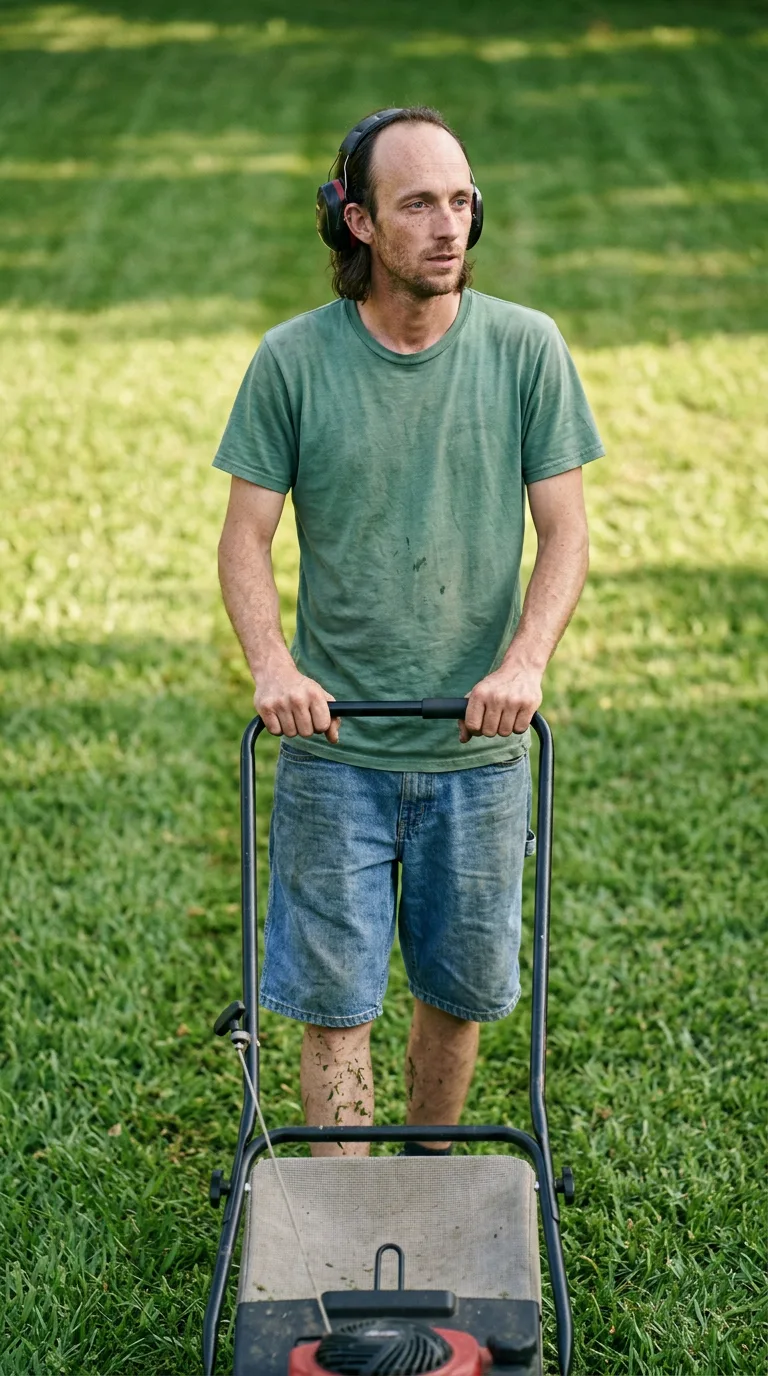
Rarest thing about him: Ear cartilage — epic, 1 in 46
Season 0seed 1285810129 · engine v10
Character card
lineage 2NZHHJ
His body-swap story
@colin.hasbrook, wearing Gary Denholm, rolled the wheel on and woke up as Travis Lindqvist, spent 1 minute in him, then spun the wheel and woke up as Frank Dellacroce
Gary Denholm's recliner smells like a man who has sat in the same recliner for eleven years, and you have been him for less than a minute, and you are already doing math you have no business doing. Sales numbers. Territory. The wife who is not your wife, upstairs running water, talking to nobody about her sister's colonoscopy through the door. The silver in the mirror across the room, the gut, the knees. Sixty-three years of somebody else's disappointments arriving in you sleeve by sleeve, the way they always do, fast and total and none of it yours to keep. You spun for a body and the body came with a life attached and the life is a Monday evening in a house with drop ceilings and a coupon drawer, and you have had it in your hands for the length of one commercial break. That is enough. That is always enough, eventually — the flatness under the taking, the sense that this is just where you're waiting until the wheel is warm again. You get up off the recliner in a knee that isn't yours and go to the laptop on the kitchen table, and you pay, and you spin, already gone before Gary's wife comes down the stairs to a husband who is about to not be there.
The mower catches on its dropped note and then evens out, and you are the one holding the bar when it does.
Grass, real grass, wet-green and cut, up through your nose before anything else — before you even have hands to notice, you have that smell, and shins slicked with clippings, and heat coming up off the yard in a wave that has nowhere near Ohio's dying light in it. The earmuff is against your ear, crooked, and your own hand — his hand — lifts it back into place without being told to, an old motion, a body correcting itself out of habit while whoever's driving it works out which way is forward. You are shorter. Lighter. Thirty years peeled off in a blink, wrists thin, forearms corded and freckled, and under your shirt a leanness that has never once had a spare thirty pounds to lose. The mower vibrates up through your palms in a way that feels almost companionable, machine and hand agreeing on something, and the next pass runs dead straight, the crooked rows falling in behind it like they're embarrassed to have been crooked at all.
The push bar is rubber-taped where the grip wore through, and that's the first thing that comes — not a scene, just a fact with weight on it, that he re-taped this handle himself in March because a new one cost forty bucks he didn't have to spend, not with the number that lives behind his eyes every time he opens the banking app and doesn't say anything about it to anyone. Deep in a hole. Not spoken-of deep — Catholic deep, the kind you drag to confession and edit down to something smaller before it leaves your mouth. A truck payment stacked on a card stacked on a loan from a supplier he still has to work with, still has to smile at on job sites, and he does smile, because that's the job as much as the framing is.
The shirt is the next door. Green, thin from washing, and it opens the morning like a hand turning a page: him pulling it over his head in a bedroom with the blinds already bright, her — the girlfriend, Danielle, a leg still under the sheet, saying something about picking up her dry cleaning on his way home like it's a favor and not a habit they've both stopped noticing. Good, easy, unspectacular. Not the other one. The other one arrives anyway, uninvited, the way exes always do through cloth that has nothing to do with them — a denim jacket she left in his truck two years ago that he still hasn't thrown out, folded in the back seat under a tarp, and the particular shame of knowing exactly where it is at all times without ever admitting he checks. Rosa. The one who left for Austin and a man with a salary and didn't ask him to follow, and some nights, not many, not even most, he still runs the numbers on what would have had to be different.
Your feet find the boots, or they would, except he's barefoot in the grass today, mowing before dinner in shorts and no earmuffs on one ear, and the ground comes up through bare soles instead — dry patches, a sprinkler head he keeps meaning to fix, the give of a lawn he laid himself the same year he bought this house on a budget that only worked because he did the labor. He's good at this. Better than good — hands that know a stud bay by feel in the dark, that can eyeball a header without a tape, that have built other men's whole houses around other men's whole lives while his own bank balance sat somewhere in the red he doesn't mention at the bar. Two big nights a month, no more, because more costs money he's already spent twice. No cigarettes, ever — his father's lungs at the end put him off it for good before he ever started. The tool belt he's not wearing right now is hanging inside on a hook, worn soft in the exact shape of his hip, and even from across the yard, remembered rather than touched, it gives up years: the piercing in his ear he got on a dare at twenty-two and never took out; the freckles his mother called angel-kissed and he called nothing, just lived with; the receding hairline he's decided to let go long in back rather than fight, the vanity of a man who has otherwise stopped being vain about anything he can't afford to be.
His knuckles want cracking. That's just true of him, always, whether he's thinking about it or not, some old tic from job sites and nerves both, and your hand — his hand — does it now, unbidden, one two three, a small percussion under the bigger stillness of the yard.
You look down at that hand like it belongs to someone you're about to be introduced to.
Freckles, thin wrist, a groove where a ring would go if there were a ring, grass stains ground into the heel of the palm. You turn it over once, slow, the mower idling under your other hand, engine patient, waiting on you the way it waited on him for thirty-three years without either of you asking.
You lift your eyes off the hand and into the low sun and say, to no one, to whoever's watching from the kitchen window if anyone is, "Almost done."
You are not thinking about the wheel. Not yet. But it is there, the way it is always there, a low hum under every borrowed pulse — how long is this one, when does the wanting come back, whether tomorrow you are still the man standing in this grass with his debts and his freckles and his ex's jacket folded under a tarp. Nobody knows. Least of all him, and he was never going to be the one asked.