Travis Hensley
Fictional. Generated by AI — not a real person, and no likeness of one is intended.
33, stay-at-home dad in Small-town Ohio · rolled by @owen.prescott · card — no film
History
who has worn him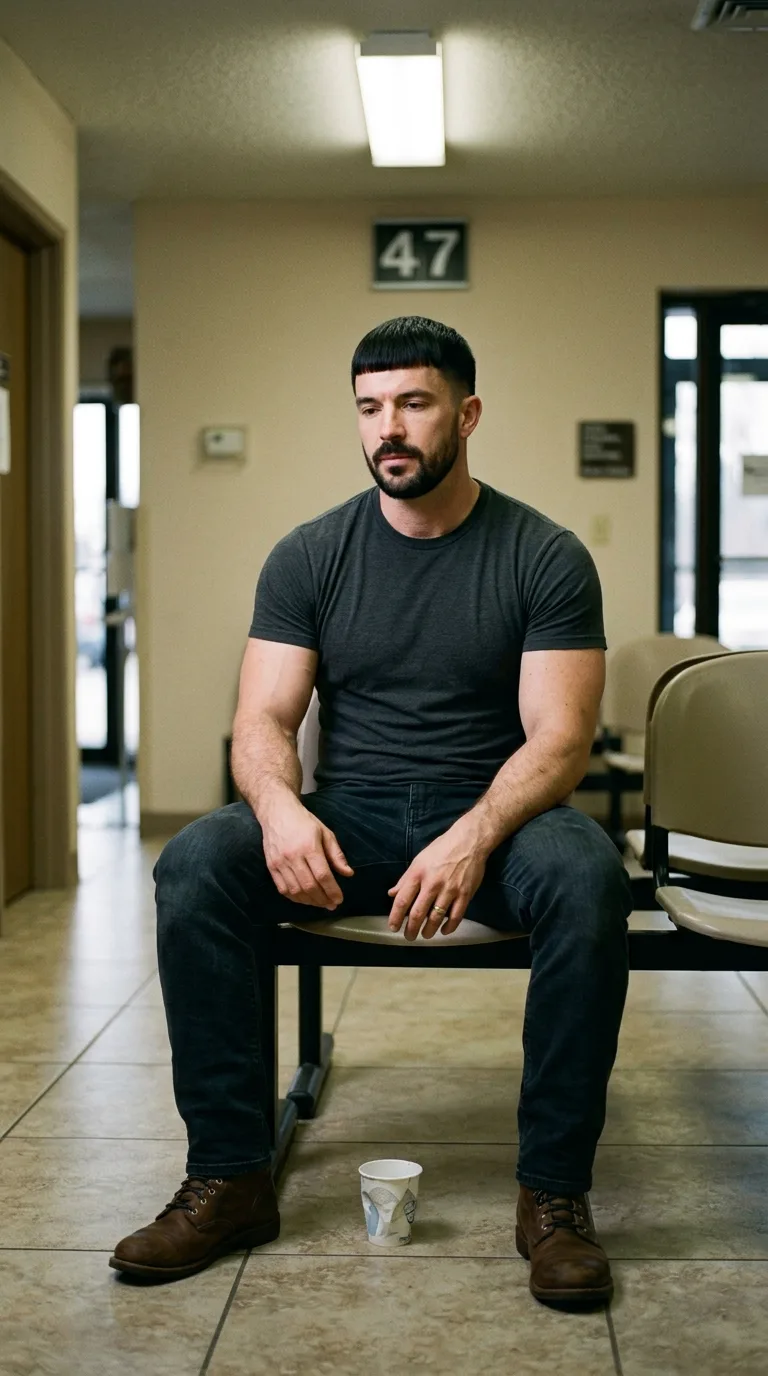
Rarest thing about him: In a waiting room — common, 1 in 77
Season 1seed 1760934065 · engine v11
Character card
lineage 5OR92V
His body-swap story
@owen.prescott, wearing Colby Landry, rolled the wheel on and woke up as Travis Hensley, spent 2 minutes in him, then spun the wheel and woke up as Glenn Overholt
You are leaving Colby Landry because of the mud. It is the middle of a Tuesday morning in New Orleans, and you are standing in a row of sweet potatoes with a hoe he has never once complained about, and the sun is already on the back of his neck like a flat iron. His shoulders are fine. His knees are fine. He has been a good body for less than a minute and a whole lot of work. But a boy came down the row with a thermos and said "Landry, you good?" and you said "Yeah" in a voice that was not a voice you had practiced, and the boy laughed at the accent and kept laughing, and you understood that you would spend the day being somebody's friend. You do not want a friend. You want to see what the wheel does next. You set down the hoe. You open the page. The wheel is already turning.
Then it is quiet, and cold, and there is a hum overhead.
A strip light. A paper cup of water in your hand, gone warm. Your knee has been bouncing and now it stops, because the board on the wall clicks from 47 to 48 and something in you stops with it. You set the cup down on the tile, square, like it matters. You fold your hands. Someone says a name from a doorway, his name, and you do not look up. You do not know why. His body knows. His body is a man who does not answer the first time.
The chair is hard plastic, cold through the jeans. Your back finds the seat's curve. The jeans first: dark, stiff at the knee, and the memory comes up through the denim. He stood in a hallway this morning with one boot on, a small hand pulling at the cuff of his jeans, and a girl's voice said "Daddy, you're doing it wrong," about nothing, about the laces, and he laughed, and the laugh is in your chest now, warm and unearned. The boots are brown, resoled once, a gift. The shirt is soft from washing. He pulled it over his head in the dark while his wife slept with her arm flung out, and he put it on carefully so the sleeve wouldn't tug the blanket. You know the exact weight of her wrist because he moved it.
You touch your face. You didn't mean to. Your palm goes over the beard, along the jaw, and the habit opens like a door: he does it when he is afraid. He is afraid. The cup, the board, the name, the appointment he told no one about but her. The fear arrives in you whole and borrowed, a stone under the ribs. Money is in it too: a drawer of envelopes, a number he keeps doing in his head, a church casserole left on the porch that he was grateful for and ashamed of in the same breath. He prays in the car sometimes with the engine off. He prays plainly, like asking a neighbor. It comes up in you as a sentence you didn't choose, and you almost finish it.
He is strong, you notice. The shoulders are broad and dense, the forearms thick, and the thighs press hard against the denim. He is short, and he has made peace with it, mostly. Thirty-three years sit low in the lower back, a dull ache from lifting a toddler out of a crib that is now a bed. The ring is a thin band, slightly loose in the cold, and your thumb finds it and turns it, and he turns it every time he waits. That is all it is. A man turning a ring.
The doorway says his name again, gentler.
You look down at your hands. They are broad, the knuckles scuffed, the ring catching the strip light. You turn one over. It does not feel like yours. Everything else does, now.
You lift your eyes and say, quietly, "Okay. I'm here."
Somewhere behind the words the question is already waiting, patient as the board: how long, this time, before you want to leave him.