Travis Boehner
Fictional. Generated by AI — not a real person, and no likeness of one is intended.
36, film projectionist in Atlanta · rolled by @colby.marchetti · card — no film
History
who has worn him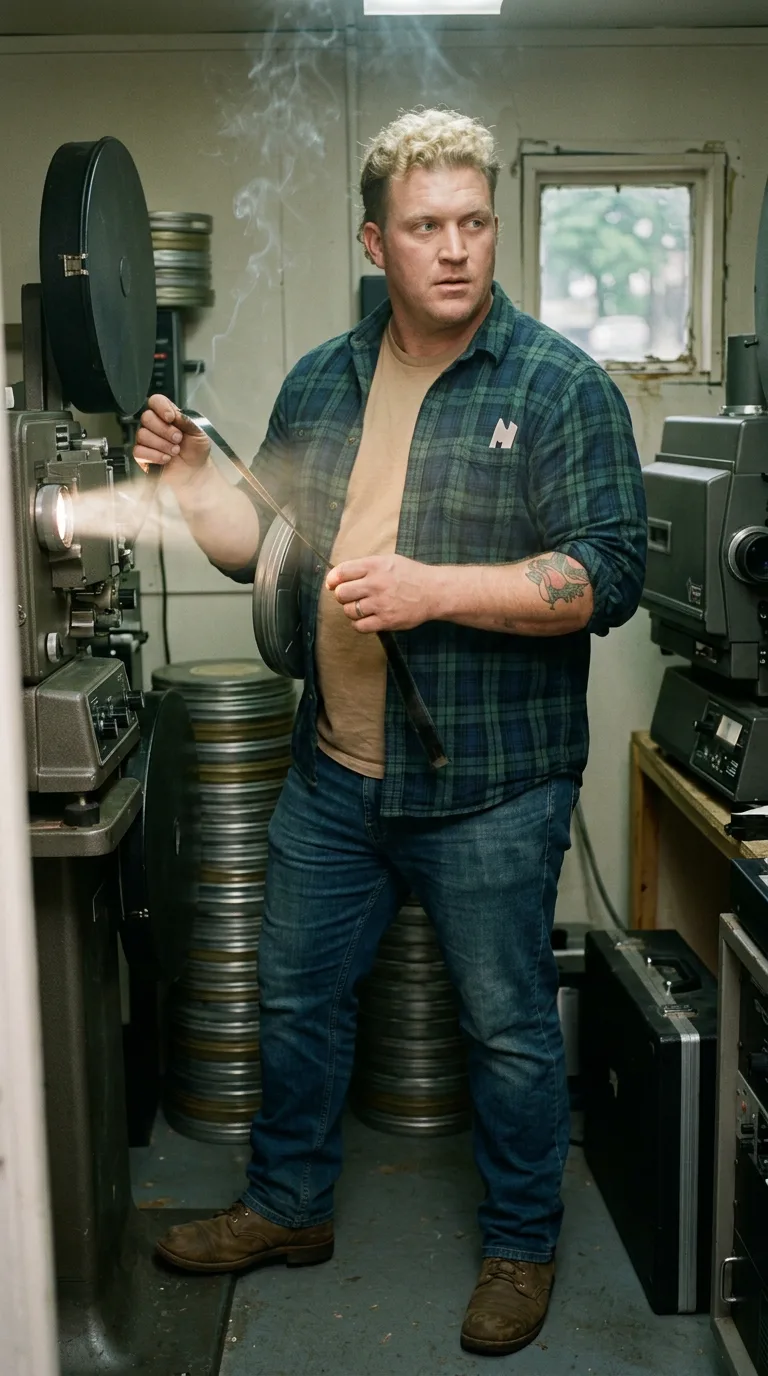
Rarest thing about him: Deep in the hole — $25k to $100k under — rare, 1 in 34
Season 0seed 1449869807 · engine v10
Character card
lineage OZ80W3
His body-swap story
@colby.marchetti, wearing Neil Gorecki, rolled the wheel on and woke up as Travis Boehner, spent 1 minute in him, then spun the wheel and woke up as Kevin Struzik
You are Neil Gorecki for forty seconds and it is already wrong on you. The bald head, the nose that healed a half-degree off center, the soft accountant gut sitting where a chair puts it — you barely got him warm before you knew. Twenty-three men and none of them stuck like a promise, but this one didn't even stick like a rental. It's Sunday, early, dark still pressing on the windows of a house you don't recognize as home because it isn't, and somewhere down the hall a wife who isn't yours is asleep believing her husband is in the bed with her. He is. You're the part of him that's already gone, standing in his study in his underwear with his laptop open to a wheel on a screen, and the only thought in the whole skull is *not this one, not today, something else.* No reason you'd say out loud. Just the itch. You click the mouse the way you imagine he'd click a pen, and you spin.
The projector booth arrives around you like a held breath let go. Heat first — bulb heat, old-building heat, a window unit somewhere losing the argument against a Georgia summer that hasn't checked what time it is. Splicer under two hands that are not the hands you had ninety seconds ago: thick fingers, a wedding band catching light, a forearm with a tattoo half-swallowed by a rolled sleeve. The film is already threaded wrong under the blade — the motion he's done ten thousand times comes out backwards, and you feel the correction happen almost on its own, the hands undoing it slow and careful, like a man checking his own work for the first time in years. You make the next cut. Then the next. You check every one of them, because you don't know yet that they don't need checking.
The shirt is what opens him first — flannel, soft at the elbows from years of leaning on this exact bench, and it gives you a morning: him buttoning it in a bedroom with the blinds still down, quiet so he wouldn't wake her, because his shift starts absurd, this booth running Sunday matinees that begin before some men's alarms go off. He clicked a pen against his teeth while he thought about the popcorn machine being low on oil and whether he'd told anyone. The tan T-shirt underneath — worn thin at the collar, hers once, "N" pin still stuck through the plaid pocket from some manager years back who liked hardware more than raises. He never took it off the shirt. Didn't matter to him either way.
The reel case under his palm gives you the whole job: fourteen years of it, the smell of hot celluloid and machine oil, the strange peace of a room where the only person who has to be right is you, alone, behind glass, sending light out into a dark he never sits in. He loves it in the unbothered way you love a thing you never had to explain to anyone. His back against the frame of the second projector gives you standing there at twenty-two, learning the threading path from a man twice his age who's dead now. The tattoo on his arm — anchor and a banner, faded already when he got it, done cheap and done twenty years ago at a shop that's a nail salon now — gives you the friend who dragged him in, gone from his life the way people go.
The ring gives you her. Not the wedding — the fight before it, and the one after, small ones, the kind that come from money never being quite enough, from a business loan that went bad years back and still sits on him like a coat he can't take off, decades from clean. Twenty-five, maybe closer to a hundred thousand, under water and swimming anyway. He doesn't drink to numb it — quit that on purpose, same as the cigarettes, same as most things he decided to stop wanting. He carries it in his stomach instead, a low burn that's not quite the reflux, though the reflux is real too, is there now, a familiar heat behind the sternum that you feel arrive like an old tenant.
And under the ring, quieter, a woman who isn't his wife — no name yet, just a doorway of feeling, a girl from before, the one who left before the debt did, and some nights when he can't sleep he runs the tape of what if backward through his head the way he'd never run actual film. It isn't your business. It comes anyway, the way all of it comes, sleeve by sleeve.
The last splice sits finished under his — your — fingers. You look down at them: blunt, capable, faintly scarred along one knuckle from a blade that slipped in some other decade. Not your hands. Not Neil's either, not anymore, not ever again. You turn them over once in the projector's spill of light, the beam still going out steady through the port into a theater you can't see, showing something to people you will never meet.
"Okay," you say, to the empty booth, to nobody, to him. "Okay."
You don't know how long you keep the flannel on. Nobody does yet — not you, not the wheel, not the woman down some other hallway who will call this man's name into a kitchen tomorrow morning and get an answer from whoever happens to be wearing him.