Terrence Oglesby
Fictional. Generated by AI — not a real person, and no likeness of one is intended.
55, line cook in San Francisco · rolled by @colin.hasbrook · card — no film
History
who has worn him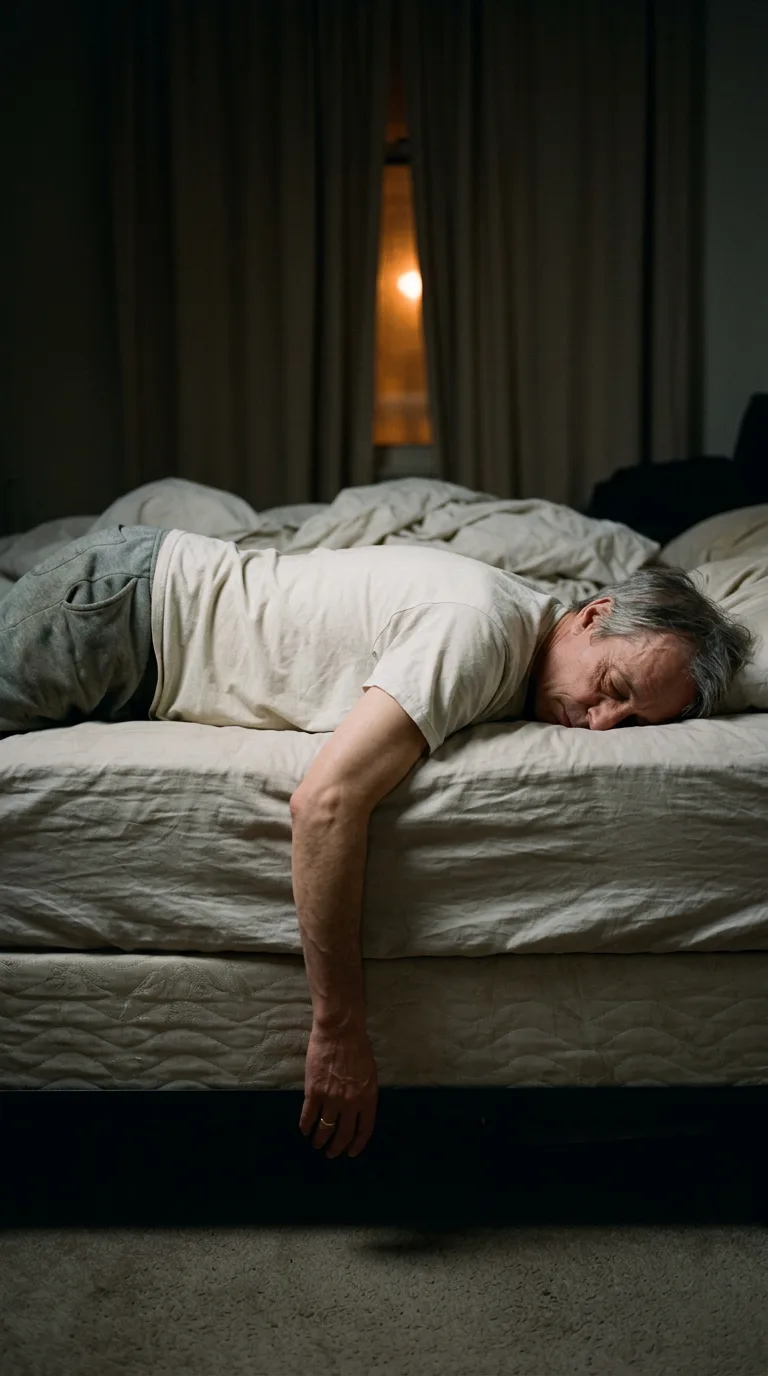
Rarest thing about him: Flips a lighter — rare, 1 in 52
Season 0seed 1168912038 · engine v10
Character card
lineage 2NZHHJ
His body-swap story
@colin.hasbrook, wearing Colin Braswell, rolled the wheel on and woke up as Terrence Oglesby, spent under a minute in him, then spun the wheel and woke up as Patrick Selwyn
The bar smells like lemon oil and old beer no matter how many times you wipe it down, and at eleven in the morning it is yours alone, which is the problem. Colin Braswell's problem, technically — his knees ache from a floor mat that never sits flat, his gut strains the buttons of a golf shirt he did not choose, and there is a woman named Denise who keeps almost-texting him, who you can feel in the phone on the counter like a held breath. You have had this body less than a minute of its own life and already you know its whole shape: small town, small debts, blond hair he is proud of and shouldn't be. It is fine. It was always going to be fine. But you have spun five hundred and eighty-nine times and the wanting comes back the way hunger does, not from unhappiness exactly, just from the fact of having a mouth. You take out your phone, the real one, the one that isn't his, and you open the page with the wheel on it, because Colin Braswell is thirty-four and will still be thirty-four in an hour, and you would rather not be here for that.
You spin. You are already gone before it finishes turning.
The breath changes first — ragged, then even, one motion, like a held door easing shut — and the arm that was hanging off the mattress lifts itself, folds against a chest that is not the chest you just left, thinner in some ways and heavier in others, a softness over the ribs, a stiffness low in the back that announces itself immediately, an old ache settling into a new stillness like a dog finding its spot on the floor. Streetlight comes through a gap in curtains that don't belong to Maine. It is dark here. It should not be — the day was already half spent where you came from — but this room is a slab of quiet a story below street level, a bay window's shadow, a garage smell of concrete and old oil underneath the cotton smell of sheets.
You lie there a moment inside a stranger's stillness, and then the memories start coming the way they always do — not given, taken, pulled out of the body's own contact with the world.
The sheet against your back is the first key. It opens into a bed too big for one person, the memory of a weight that used to be on the other side of it, gone eleven years now, cancer, quick and then not quick at all, and a grief that has gone quiet the way a smoke alarm goes quiet when you finally take the battery out — not resolved, just silenced. Terrence. The name comes up out of the pillow like it was written on the underside of it. Terrence Oglesby, fifty-five, and this apartment under somebody else's house because after Renata the big place didn't make sense anymore, and there is a daughter, grown, in Oakland, who calls on Sundays and worries about the drinking without ever using that word.
Your feet find the cold concrete floor through worn carpet and that's another key: work boots by the door, steel in the toe going soft with age, and through them a whole life on your feet — sauté pans, the heat coming off a six-burner range at a place in the Mission that's had three names since he started there, back before it was fashionable, when it was just Tommy's and now it's something with a lowercase menu. Your back seizes a little standing up, the old line-cook back, disc worn down from thirty years of leaning into the same twelve inches of counter, and your hands — his hands — already know things you don't: the particular grip for a sauté handle, the muscle memory of a knife rocking through onions without looking, and under all that, restless even now, a phantom motion at the fingers, wanting a lighter to flip, click open, click shut, though there hasn't been a cigarette in decades.
The wedding band is the deepest key of all. It's still on the hand, worn thin at the band's underside, and it opens Renata whole and entire — meeting her at her cousin's wedding, the sound of her laughing at something he said that wasn't even that funny, church on Sundays that he stopped going to after and hasn't gone back to though he still believes, still prays sometimes over the flat-top when nobody's looking, the particular exhausted joy of raising their daughter on a line cook's hours, home at midnight smelling like fry oil, her waiting up anyway. Then the hospital room. Then not waiting up for anyone.
You remember, through the shirt that isn't on you yet but that hangs pressed on the closet door, the morning routine that comes before every shift: the whites going on sleeve by sleeve, stiff with starch, the apron tied twice around a waist that's thicker than it used to be, the beanie pulled low because the hairline gave up its argument years ago and there's no sense pretending otherwise. A body that hurts in specific, familiar ways — knees, low back, a shoulder that clicks — and still gets up, still goes in, still stands twelve hours at a range that doesn't care what year his wife died. There's a comfort saved up, more than anyone at the restaurant would guess, money he doesn't spend on anything except drink, and drink he does, most nights, alone, the good kind of bourbon out of a bad kind of glass, until sleep comes and looks like this — face-down, one arm off the edge, not caring how.
You sit up. The room hangs dark around you and somewhere above, through a floor, a house that isn't his creaks with someone else's morning.
You look at your hands — his hands, thick-knuckled, the ring catching what little light there is — turning them over like you could read the last fifty-five years off the palms. Then you look up, into whatever is watching, and your voice comes out lower than Colin's, rougher, a stranger's instrument you are already learning to play.
"Denise who?"