Terrence Oduya
Fictional. Generated by AI — not a real person, and no likeness of one is intended.
61, help desk technician in Atlanta · rolled by @terrence.oduya · card — no film
History
who has worn him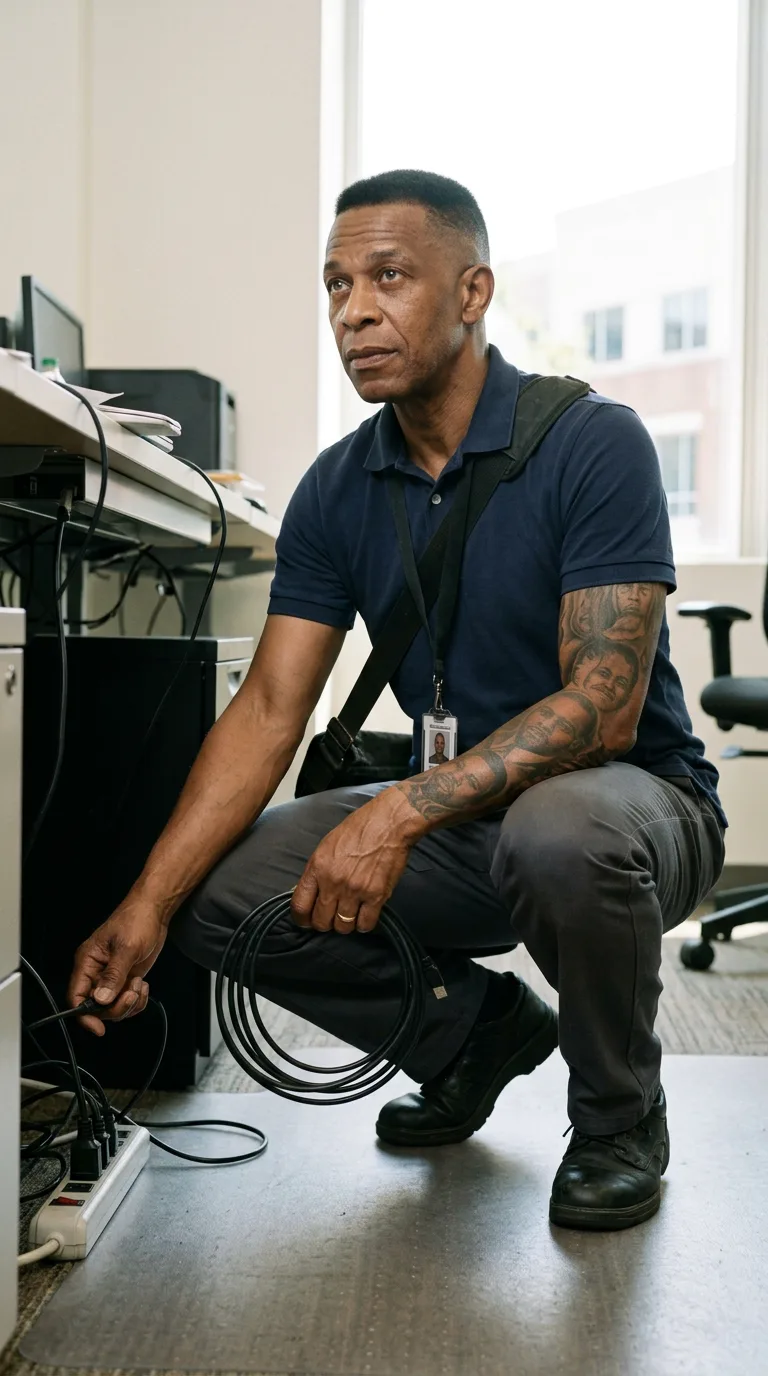
Rarest thing about him: Full sleeve — common, 1 in 53
Season 1seed 760174822 · engine v11
Character card
lineage CVYKM3
His body-swap story
@terrence.oduya rolled the wheel on and woke up as Terrence Oduya — their first
The apartment is quiet in the particular way it gets after eleven, the kind of quiet that has a blue light in it. You have scrolled through everything there is to scroll through. You have read the comments under the comments. The tab has been open for an hour — vessel.cards, a wheel rendered in careless 3D, spinning lazily even when nobody touches it — and you have told yourself three separate times that you are not going to be the kind of person who actually pays for this.
You have wanted this since before you could have said why. Every story where someone wakes up behind a stranger's eyes, every thread at two in the morning about what it would feel like, every bad movie with the body-swap premise you watched twice. A private thing, never spoken of, never satisfied, because there was never anything to spend on it. Now there is a card number field and a button that says SPIN and absolutely nothing stopping you.
You spin it.
—
The cable is cold and a little greasy with age, looped three times around your — his — hand, and your knee is against carpet tile that smells like a hundred thousand office afternoons. You are crouched under a desk. Sunlight is coming through a window somewhere behind you, too bright, too complete, the wrong hour entirely for how tired this body feels.
The hand holding the cable does something wrong — feeds the connector in at the wrong angle, a motion that has not needed thinking about in eleven years — and then corrects, slow, deliberate, like a man relearning his own name. The next ten plugs go in checked. Every one. A job his hands could do asleep, and for a few seconds his hands do not trust themselves at all.
Nobody notices. Nobody is even looking at the man under the desk.
—
The polo shirt is damp at the small of the back already, and that arrives first, before anything else — a tiredness that isn't yours, old and specific, the kind that lives in a lower back and both knees. Fifty-some years of bending under desks exactly like this one. A whole life folded into the posture of crouching.
Then the shirt itself, navy, a little thin at the collar from washing — and with it, a morning. His morning, hours ago by his clock, though his clock insists it is the middle of a workday and something in the body disagrees, something leaden and wrung-out that says this is not his normal hour to be awake at all. He picked this shirt off the same hook he always picks it off, in a bedroom with the blinds still down because his wife sleeps days too now, ever since she went to nights at the hospital eight years back, and there's a kind of marriage built entirely out of the hour they overlap in the kitchen, her coming off a double, him going on. He remembers — you remember, wearing him — her hand flat on his chest for two seconds at the door, not even a kiss, just that, and it meant more than the kiss would have.
The lanyard is next, plastic edge worn soft, and with it: the job. Seventeen years of help desk tickets, of other people's forgotten passwords, of being the man who kneels under desks while twenty-six-year-olds in blazers talk over his head about quarterly numbers like he isn't there. He stopped minding that a long time ago. The money is fine — better than fine, the kind of fine that bought the house outright and still pads out quietly every month — because he never spent on anything but his son's tuition and a cigar once a week on the back porch, and both of those still feel like winning.
The tattoo sleeve is warm from the sun through the window, and touching it — his own arm against his own ribs as he shifts his crouch — gives you the portraits inked there, black and gray, faces built up session by session over four years: his mother, his father, his boy at nineteen. Under the youngest face, a blank patch of skin he has been saving, not yet decided what goes there, maybe nothing, maybe just more time.
The wedding band is the quietest thing and gives the most. Eighteen years to a woman named Denise. Before her — and this comes up out of nowhere, the way these things do, unbidden — a woman named Angela, half a lifetime ago, who left for Charlotte and a different kind of life and who he still, on certain nights with a second drink in him, wonders about without ever once wishing he'd gone. That's the strange arithmetic of it: he loved her enough that it never fully closes, and he loves Denise enough that it never has to.
His knuckles ache faintly, a familiar want, and without deciding to you feel them crack, one hand then the other, the oldest habit his body owns, older than the marriage, older than the job, older than the ink.
—
You look down at the hand still holding the cable. Turn it over. The callus along the first two fingers, the band catching a little light from the window, the knuckles gone quiet now that they've been cracked.
You lift your eyes toward the monitor's blank reflection like it's a mirror, like it's the only lens in the room, and hold there.
"Who the hell taught me to do this wrong," you say, to nobody, in his voice, about the last ten minutes of careful, stranger's hands.