Terrence Obi-Hayes
Fictional. Generated by AI — not a real person, and no likeness of one is intended.
36, mechanical engineer in Philadelphia · rolled by @connor.waskiewicz · card — no film
History
who has worn him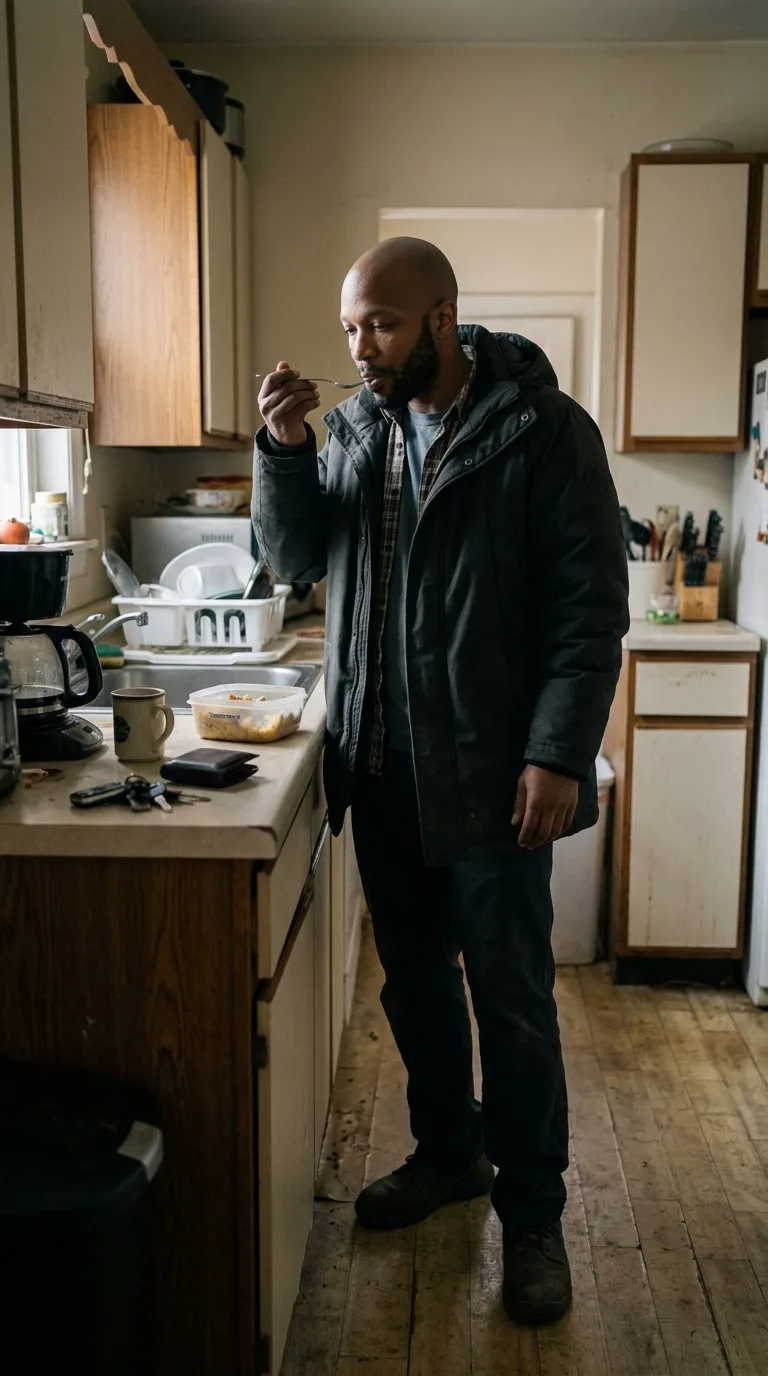
Rarest thing about him: Leg — common, 1 in 54
Season 1seed 1219239034 · engine v11
Character card
lineage 2NZHHJ
His body-swap story
@connor.waskiewicz, wearing Mateo Salazar, rolled the wheel on and woke up as Terrence Obi-Hayes, spent under a minute in him, then spun the wheel and woke up as Daniel Ferris
Mateo's knuckles are split again, and the mortar dust has gotten into the creases of them and will not come out. It is early here, the dark still pressed flat against the window of the kitchen in Anchorage. The kettle ticks as it cools. I have been this man for one minute, and already I know what his shoulders do when he lifts a hod, how his back wants to be told the truth about the hour. I stand at his sink with his brown hand on the cold tap and I can't say what I wanted from him. He was fine. He is a good body. It was something small, a thing he did with his mouth when he swallowed, a hum he did not know he hummed, and it was in me like a splinter. I don't say it out loud, even to myself. I open the page. The wheel is already turning under my thumb.
It stops.
The fork halts an inch from my mouth. There is a coat on me, heavy, zipped to the breastbone, and the container is in my left hand, warm through the plastic, rice and something with ginger in it. The kitchen is dim and the light at the window is thin and gray. I am standing. I have been standing a long time. My calves know it. The fork is steel and a little bent at the tines, and I lower it, and set it on the counter without deciding to.
The coat comes off my shoulders. The lining is slick and it carries the smell of cold air and machine oil, and the smell opens something. A lab, the floor of it swept, a half-built thing on a bench, aluminum in the vise. His pleasure in a tolerance held to a few thousandths. His hands remember the calipers before I do. They want to measure the container.
I sit. The chair is hard, and the wood is worn smooth where he has sat a thousand mornings. The table gives me a girl, perhaps seven, drawing at this very place with her tongue between her teeth, and a boy beside her kicking the chair leg. Both of them are his. The feeling that comes with them is so large and so plain that I almost put my hand down flat on the table to hold it. Beneath it, a thinner ache, a woman's name he does not say, a doorway in a rain, the one who went. He kept the name and let the rest go.
I eat. Even mouthfuls. The ginger bites. His tongue knows this recipe, he made it Sunday, standing right here. The flannel at my back is soft from washing, and sleeve by sleeve I am given the morning he put it on: the cuff buttoned with his thumb, the vest over it, the safety glasses pushed up on his scalp because his scalp is bare and smooth and he likes the feel of the frames there. He ran his palm over his jaw to check the line of the beard. The mole on his cheek he never thinks about except when someone looks at it too long, and then he thinks about it a great deal.
The window is black with a few lights in it. My calf itches under the cloth, where the cross and the praying hands sit in the skin. He got them at twenty-two, not for any church. Something in him is spiritual and has no building. He has never touched a drink. He is doing well, and he knows it, and it has not made the kitchen any less quiet.
I put the fork down in the empty container. I lift my hands from the table and look at them, long, dark, the nails clean, a thin pale line across the right thumb where a tool once slipped. I turn them over. They are warm. They are mine now.
I look up into the window, at his face laid over the dark.
"Well," I say, in a voice lower than I expected. "Hello."
Nobody answers. How long, I wonder, before I want the wheel again.