Terrence Holloway
Fictional. Generated by AI — not a real person, and no likeness of one is intended.
34, construction foreman in Denver · rolled by @connor.waskiewicz · card — no film
History
who has worn him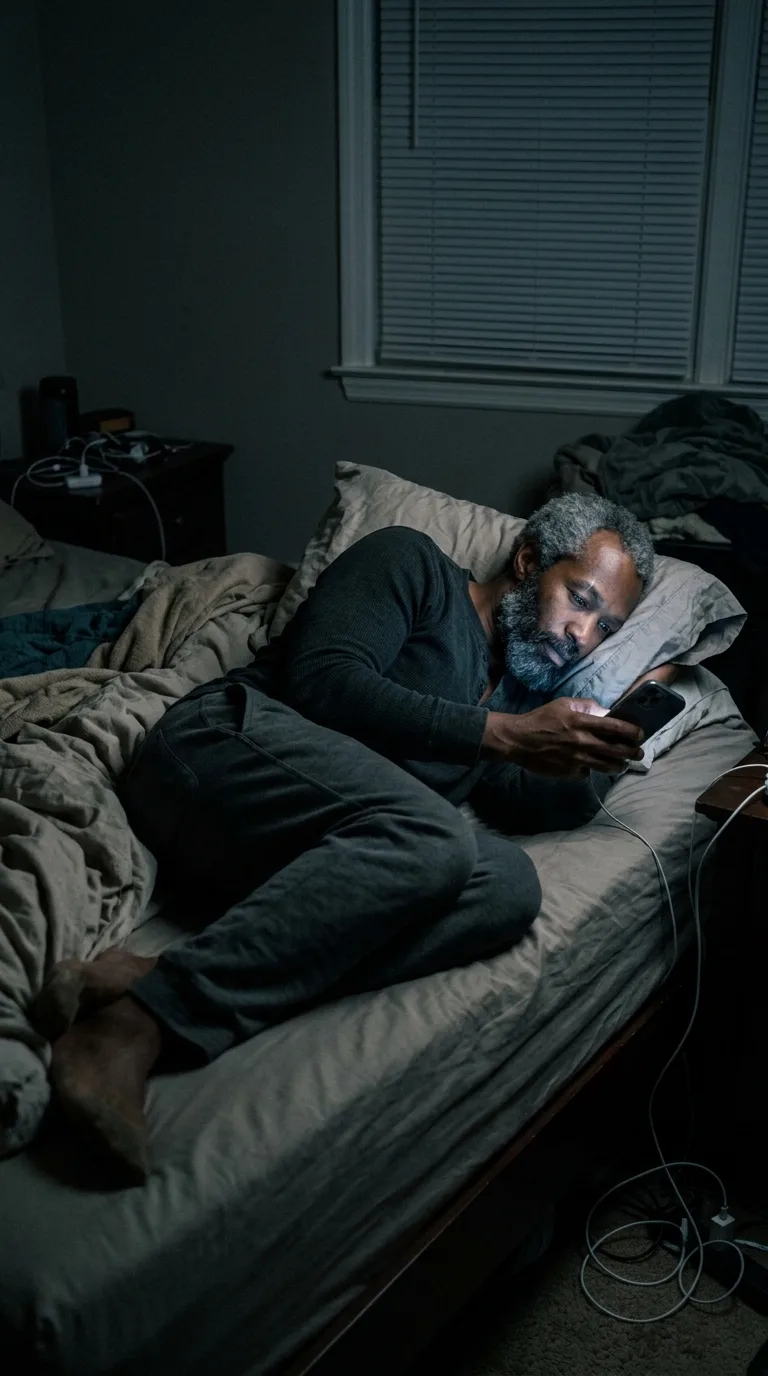
Rarest thing about him: An ancestral tradition — rare, 1 in 169
Season 1seed 1122421103 · engine v11
Character card
lineage 2NZHHJ
His body-swap story
@connor.waskiewicz, wearing Gilbert Tsang, rolled the wheel on and woke up as Terrence Holloway, spent under a minute in him, then spun the wheel and woke up as Nikhil Parekh
You are in Gilbert Tsang's life for less than a minute and it is already too small. His cab smells of old coffee, and a belly sits against the wheel like a second passenger. His back aches the way sixty-one years ache. You came back to the wheel because of the trucks: he is licensed for nothing you want, and he has nowhere to go that you have not already been. So you sit in the dark of his kitchen in Los Angeles, thumb on a page with a wheel on it, and you pay. It turns.
Then the dark in front of you is a bedroom, and the light is blue, six inches from your face. Your thumb is mid-scroll. It moves again, faster and steadier than his did, past everything he had stopped on. You are lying on your left side, one cheek on a pillow gone warm and flat, and your eyes have forgotten to blink. You blink.
The sheet under your arm is rough, washed too many times. Something comes: a Saturday, a cold hand on a steel beam, a kid on his crew named Dario laughing because Terrence has sworn at a level that will not sit true. The laugh is warm. It is his feeling, not yours. You are the foreman, and they like you.
The henley is on your chest, soft at the cuffs. The morning arrives through it, sleeve by sleeve: the right arm first because the right shoulder is stiffer, buttons undone, a hard-hat sticker on the dresser he never peeled. Then the other sleeve, and a thought of the bank letter folded in a truck door. Underwater, it says in his head, a word like a stone in a boot. The mortgage is bigger than the house. There is a bottle behind the cereal. You taste it before you see it, a low brown want that is not yours, and under it, older, the memory of cigarettes, quit and still wanted. His grandmother's voice comes, naming the ancestors at the porch rail in a language he only half has, and he pours a little out on the step, every Sunday, ashamed and faithful.
Your knuckles crack. You did not do it. The fingers did, one by one, like a habit with its own wages. Your body is long, strong, thirty-four, and the knees are good. The hairline sits back at your temples; your thumb finds the scar through the eyebrow and a flash goes white: a form board swinging loose, a boy's shout, the ground coming up.
You look at your hands. They are broad and callused, not yours, yours now. You turn them over.
You lift your eyes to the dark window and say, quietly, "All right, Terrence. Show me."
Somewhere under the room, the wheel is already waiting, and you do not know how long this one lasts.