Terrence Abara
Fictional. Generated by AI — not a real person, and no likeness of one is intended.
33, mechanic in San Francisco · rolled by @terrence.abara · card — no film
History
who has worn him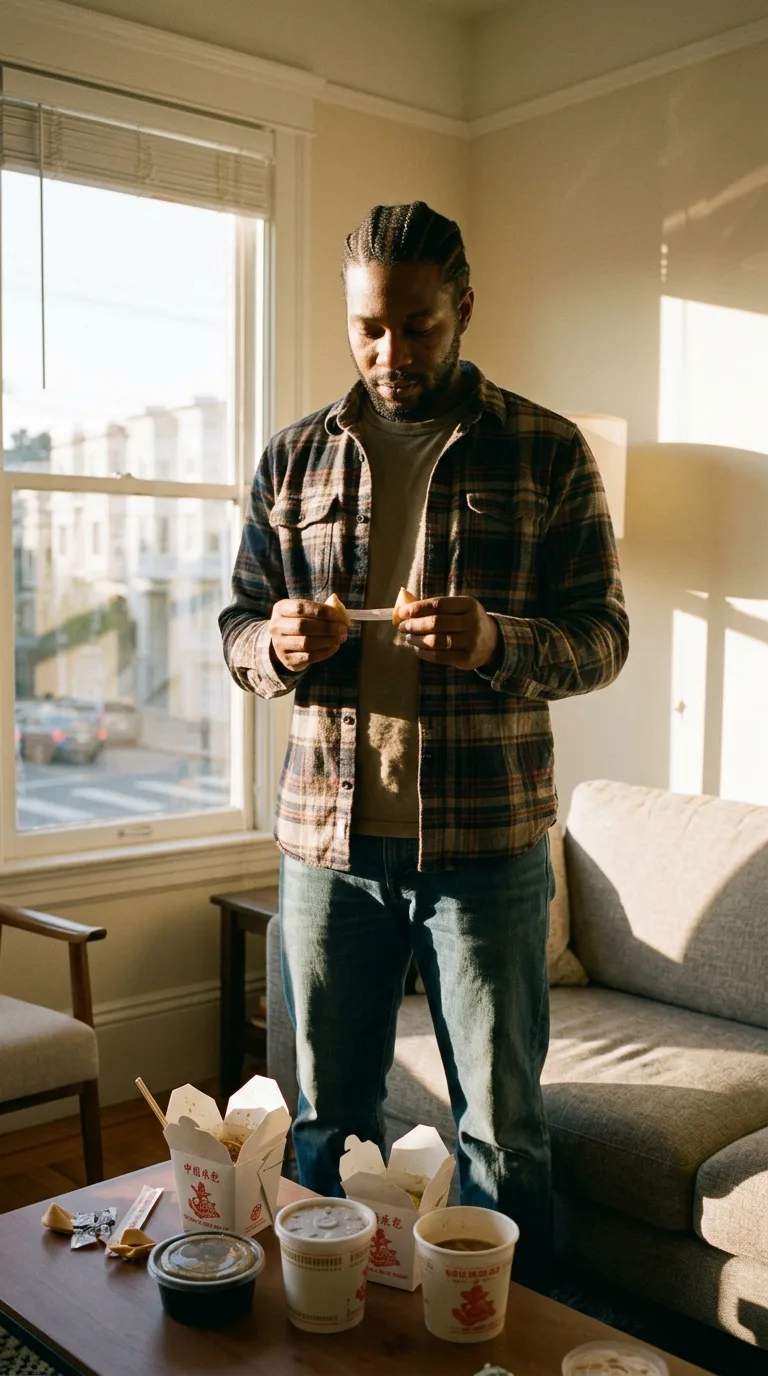
Rarest thing about him: Cornrows — uncommon, 1 in 285
Season 1seed 818009167 · engine v11
Character card
lineage STAC7J
His body-swap story
@terrence.abara rolled the wheel on and woke up as Terrence Abara — their first
The screen is the only light on. It is early, too early, the kind of blue-black hour before the day has decided to start, and nothing good is on and nothing bad is on and that is the whole problem with tonight. You have had this thing in you for years — the itch of it, the question of what it would be to be someone else entirely, not read about, not watched, but worn — and you have scrolled past it in a hundred forms: forums at two in the morning, old movies, that one thread nobody else in your life would understand. You did not think it would ever be a real thing you could buy. Then it is. A plain page. A wheel on it. You put in the card number like it is nothing, like it is a pizza, and some part of you is already embarrassed at how much you want the wheel to be real.
It spins. It stops on a man you have never seen, in a city you are not in, in the middle of an evening that is not yours.
There is no sense of traveling to him. There is only suddenly being him — his weight dropping onto you like a coat you did not know you'd put on, his breath already mid-exhale, a cracked fortune cookie in his right hand, a thin paper slip pinched between two fingers of his left, half pulled from the shell. The room swims into a kind of cold gold light, low sun through a window with the blinds half up, a couch, a coffee table crowded with white cartons steaming faintly in the chill. You are reading the slip before you know you can read. Your mouth — his mouth — keeps moving a half-beat after the sentence ends, like it's chasing the last word down the page. Then your fingers fold the slip into quarters, on reflex, on muscle memory that isn't yours yet, and tuck it into a shirt pocket that already has a crease worn into it from doing exactly this before.
The shirt is flannel, old, soft at the collar, and touching it gives you the first flash: a closet this morning, grey light through a different window, the smell of coffee already going from the kitchen down the hall. His hands — his, you are borrowing the word already — pulling this exact shirt off a hook, shrugging it on over a plain grey tee, working the buttons up with the particular quickness of a man who has done this ten thousand mornings and thinks about it zero of them. Under the shirt, muscle remembers more muscle: the lean solidity of him, thirty-three years in a body that spends its days bent under cars, forearms that know the drag of a ratchet before the mind issues the order, a lower back that complains a little by the end of a shift and doesn't tonight because the shift is over. His knees ache faintly, companionably, the way knees do on a man who kneels on concrete for a living.
The jeans — worn soft at the thigh, a little stiff at the knee where something once spilled and dried — give you a different year, flash-quick: a woman laughing at something he said in a kitchen that isn't this one, an apartment before this apartment, before the ring. The ring. You feel it now, a plain band on the left hand that is currently also holding half a fortune cookie, and it opens like a door: a wedding, not lavish, people he loved sweating politely in June light, a woman in pale yellow he could not stop looking at even while the pastor was talking. Terrence. Somewhere under the memory his name arrives attached to it, the way she said it that day, amused, like she already knew she'd be saying it for the rest of her life.
There is someone else in the memories too, uninvited, the way exes are — a woman before the wife, recent enough that touching his own chest where a different shirt once sat gives you her name half-formed and then gone, replaced fast by guilt that isn't yours, by the practiced discipline of a man who has decided a door is closed and keeps checking that it's still closed. And under that, quieter, a small shape — a child, his, a weight he has carried on one hip a thousand times, a short scream of laughter in a hallway, a tiny hand gripping one of his fingers at a stoplight. It comes through the ring finger too, somehow, that hand doing two jobs at once in his history, husband and father, and both of them sit in you heavy and real and entirely someone else's.
The takeout cartons under your eyes bring the smell up — sesame oil, cooling rice — and with it a whole unremarkable Monday: the garage, the raised car, the rag he keeps in his back pocket without thinking, the two-bay quiet after the last customer's taillights went up the steep driveway and out. He makes decent money now, better than he used to, the kind that let him stop flinching at the dentist and start flinching about other things instead. He does not drink much — once or twice a month, when there's a reason — and never smoked, never saw the appeal, and his hands, free for a second with nothing to hold, drift on instinct to his own cuticles and start picking at the edge of one, an old unconscious habit that has outlived every reason he ever had for being anxious. Sunday, church, his mother's voice somewhere behind every version of faith he has ever held loosely and kept anyway.
None of it is urgent. All of it arrived in less time than it takes to fold a slip of paper into quarters.
Your eyes — his eyes — drop to your hands. The right still holds the broken shell. The left still holds nothing now but the ring, catching the window light. You turn the hand over slowly, like you are checking it is attached, and in a way you are.
"Huh," you say, out loud, to the empty room, and your voice surprises you — his voice, low, a little rough at the edge like he hasn't used it in an hour — "guess I got my wish."
You do not know yet how long this one is for. Nobody does. Not even the wheel.