Terrell Gaddy
Fictional. Generated by AI — not a real person, and no likeness of one is intended.
39, locksmith in Philadelphia · rolled by @colby.marsh · card — no film
History
who has worn him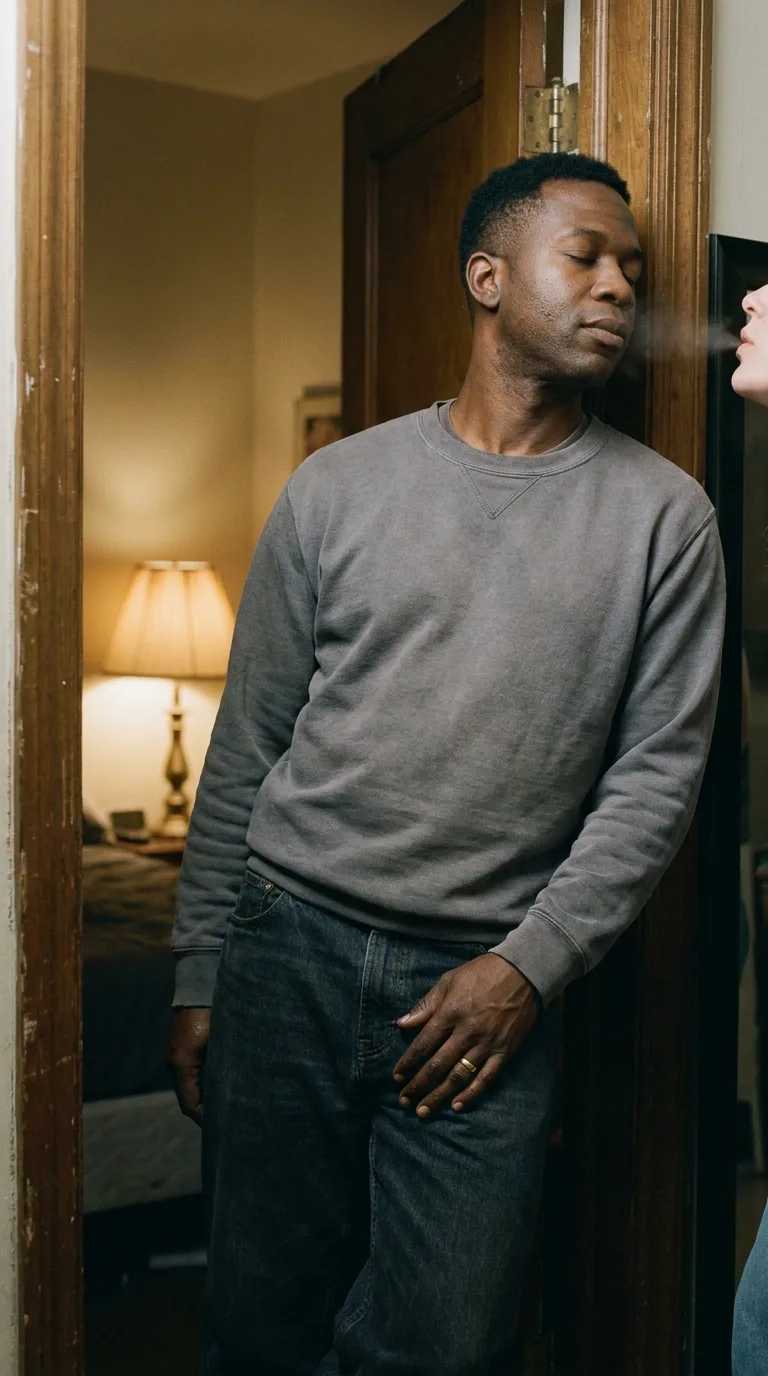
Rarest thing about him: Dip or chew — rare, 1 in 40
Legacyseed 328183891 · engine v8
Character card
His body-swap story
---
You have watched him for eleven days and you do not know why him.
That's the truth of it, and you may as well put it down first, because everything else is going to sound like it had a reason. You came up the block on a Tuesday morning behind the first sun — the row of white marble steps going down the street like a row of bad teeth, every one of them worn hollow in the middle from a hundred years of people sitting on them — and he was three houses up, kneeling at a storefront door with a lock cylinder in his hand. Turning it over. Not fighting it. Listening to it, almost, the way a man listens to an engine.
That was all. That was the whole of the reason.
You had no name for him then. You learned it off the van: GADDY LOCK & KEY, and a number with a 215 in front of it, and under that, smaller, hand-painted years ago and touched up since, *SERVING S. PHILLY SINCE '04.* Terrell Gaddy. Thirty-nine years old, six feet, a body that does not go to a gym and does not need to, the kind of average build that comes from carrying a bag of tools up and down stoops for twenty years. Black hair cut short and tapered at the sides, a little length left on top, no part. Brown eyes that do not hurry.
You noticed nothing remarkable about him. That's not a slight. You went looking — you always go looking, there's always a thing, a chipped tooth, a limp, a laugh that carries a block — and with him there was nothing. No mark on him but the wedding band. He is a man you would not describe to a police officer. And you found, over eleven days, that this was the most beautiful thing about him, and the thing that made you want him: that he could walk the length of Passyunk and be seen by two hundred people and remembered by none of them, and that in a body like that a person could go anywhere and be anyone and no one would look twice.
Here is what you learned, standing where he couldn't see you.
He is doing well. Better than the van suggests. Three commercial accounts, a nephew he pays under the table on Saturdays, and money in the bank that has more zeroes in it than his neighbors would guess — somewhere north of two hundred thousand, in accounts he checks on his phone on the steps at seven in the morning with his thumb, unimpressed, like he's checking the weather. He does not spend it. He replaced the van's transmission and not the van.
He carries type 2 diabetes. It's in the little zippered case in the truck console and in the way he says *no, I'm good* to the cannoli. He got the diagnosis at thirty-four and he did not make a religion of it, but he made a discipline. He tests. He walks. He has a can of dip in his back pocket and a bottle of water in the cupholder and once or twice a month he goes out and has a big night, a real one, and comes home at one-thirty and sits on those marble steps in the dark before he goes in, because he does not like to bring the noise of the bar into the house where his kid is asleep.
One kid. A girl, eight, who comes out on the steps in the morning with her hair done and her sneakers untied and sits with him for four minutes while he ties them. He talks to her the whole time and you have never once been able to hear what he says. She laughs at the end of it. Every time. Eleven days, eleven laughs.
The wife's name is Deneen. She works Jefferson, three-elevens, and when she's on nights he keeps the porch light off so she can come in without waking the block. When she's on days they sit out there together and don't say much. He is not a demonstrative man. He puts a hand on the back of her neck when he passes behind her chair, and takes it off, and that is his entire vocabulary and she seems to have learned the whole language from it.
And there is the ex.
Her name is Yvette and she still matters, and the reason you know that is not because he sees her — he doesn't, not in eleven days, not once — but because on the fourth night he sat on those steps at eleven-forty with his phone in his hand and a thread open on it that he did not answer and did not close. He read up. Scrolled to the top. Read the whole thing down again. Something from years ago. Then he put the phone face-down on the marble beside him and looked up the block at the streetlight and put his tongue in his cheek where the dip was, and he sat there for nine minutes doing nothing at all, and I want to tell you what his face was doing but the honest answer is *nothing*, again, nothing in particular, and that was somehow worse. Then he picked the phone up, put it in his pocket, and went inside.
He believes in something. Not a church — he does not go, there's no cross on the wall, and when the man on the corner tries to hand him a pamphlet he takes it politely and doesn't read it. But on the second Sunday he stood in his own doorway at six in the morning with a cup of coffee and watched the light come down the block and hit the marble one step at a time, and he didn't move for a long minute, and whatever was happening on his face then was the closest thing to prayer you've seen out of anybody in a while.
You want to be clear that you did not hate him. You never hate them. You want to be clear that you didn't envy him either — envy is wanting what he has, and you didn't want the daughter or the accounts or the woman coming off shift. You wanted *him*. The unremarkable machine of him. The way his hands knew what a pin stack was doing without his eyes. The way he could be nobody in particular for thirty-nine years and have that be a kind of skill, a kind of lock nobody had ever thought to pick.
Eleven days, and on the eleventh you went in.
Not through the lock. That would be funny and you're not here to be funny. You came in the way a draft comes in — you came in on the second floor at the end of the night, when the hall light was off and the bedroom lamp was on low behind him, that yellow shade throwing everything the color of old paper, the bed unmade, her keys and her phone on the nightstand where she'd dropped them coming off three-eleven. He was standing in the doorway with his shoulder against the frame. Old dark woodwork, a hundred years of paint on it, a hinge somebody had painted right over. Grey sweatshirt gone soft at the cuffs. Jeans. His left hand hanging at his side and the plain band on it catching the lamp.
She came to him. He closed his eyes before she got there — that's the thing you'll keep, out of all of it, that he closed his eyes *first*, on the assumption of her, in the certainty of her, the way you close your eyes going into water you already know is warm. Her jaw at the edge of everything. Her breath arriving before her mouth did.
And you were in the breath.
That's all it takes. Bodily contact. A kiss is nothing but a door with the pins already lifted.
You'll say this for him: he didn't fight, because he never knew there was anything to fight. There was no struggle in that doorway. There was a man leaning on his own doorframe with his eyes shut, waiting to be kissed by his wife of eleven years, and then there was a jaw withdrawing out of the frame, and then there was you.
You open his eyes slowly. That is not tact. That is because it takes a second to find the switches.
The lamp is too bright and then it isn't. The hall is longer than you thought. Everything in his mouth is not yours: the mint of the toothpaste, the ghost of tobacco under it in the pocket of his cheek, the sweet-metal thing his blood does at the end of a long day. You lift the left hand — heavy, the ring heavier than a ring should be — and put two fingers against your own mouth, and you press, and you taste her there, on him, on you, on this, and you understand for the first time in a very long time that you have taken something that was in the middle of being given.
He is not coming back. There is no term on this and no door behind you. Somewhere down that hall a woman is running water and going to say something to him in a minute, and an eight-year-old is asleep behind a door with a paper star on it, and at seven-forty tomorrow morning there will be shoelaces, and you have absolutely no idea what he says to her that makes her laugh.
You are going to have to learn. You have his hands. You do not have his four minutes.
You look down. Left hand, palm, band, the fine grain of the knuckles, a callus at the base of the index finger where the pick sits. You turn it over. It obeys.
Nothing in particular about him. You'd notice nothing about him at all.
That is the whole of the reason. You wanted to be nobody, in a house where somebody was loved.