Terrance Whitfield
Fictional. Generated by AI — not a real person, and no likeness of one is intended.
30, undertaker in High-desert Nevada · rolled by @terrance.whitfield · card — no film
History
who has worn him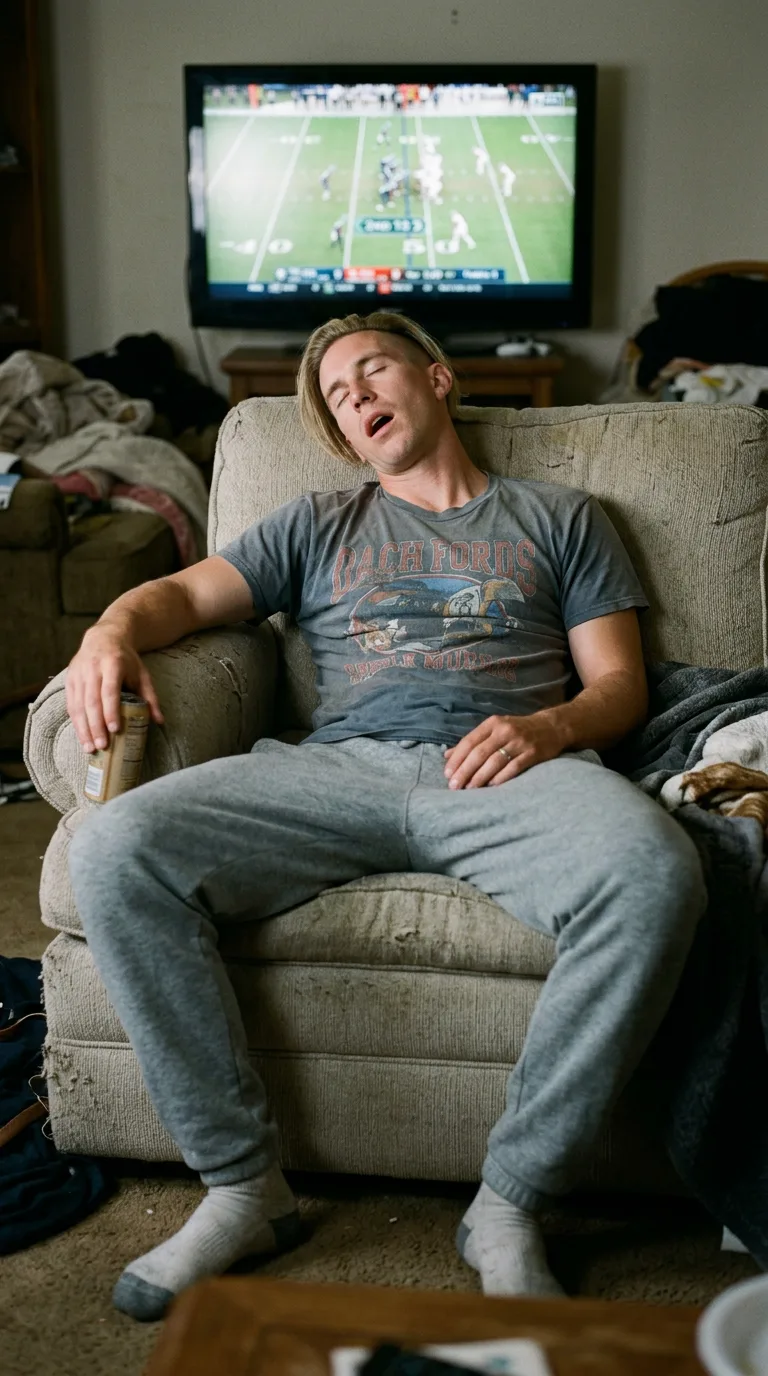
Rarest thing about him: A tic — a hard blink, a throat clear — epic, 1 in 145
Season 0seed 1021185183 · engine v10
Character card
lineage NGZVWP
His body-swap story
@terrance.whitfield rolled the wheel on and woke up as Terrance Whitfield — their first
The tab has been open for three days. You keep closing it and opening it again like it might have changed, like the wheel might have gotten smaller or the price might make more sense the fourth time you read it. It never does. It's just a plain page, vessel.cards, a circle divided into wedges with nothing written on them, and a button that says SPIN in a font too polite for what it's promising. You have wanted this since before you had words for wanting it — every movie where someone wakes up wrong, every thread you read at two in the morning about waking up in someone else's life, that specific hunger that never had anywhere to go because it was never actually for sale. Tonight is nothing. Work, the scroll, the particular flatness of a Friday that isn't going to become anything else. You pay. Your thumb finds the button the way a tongue finds a sore tooth. You spin.
There is no in-between. There is a couch that is not a couch you have ever sat on, and a television too loud, and a can in a hand that is heavier and rougher than any hand you have ever called your own, and a mouth open around a breath that was already leaving before you got here. Terrance Whitfield's body takes the goal on the screen and does nothing with it — sleeps through it, the roar of the crowd folding into the room without waking him, without waking you, because for one more second you are only arriving and not yet here. Then the second replay comes, the announcer's voice climbing again over the same six seconds of grass and men, and something in the body sits forward on its own, before you've caught up to it, and a thumb — his thumb, yours now, it will take a while to know which word to use — finds the volume button with a precision that has nothing to do with the four beers already gone through him this morning. You are watching a ball land in the same net twice. You do not yet know why that's strange, that it's the wrong hour for a man to be doing this at all.
The shirt tells you first. It's soft in a way that isn't fabric so much as history — washed so many times the graphic on the front has gone the color of a bruise healing, BACHFORD'S TRAIL RUNNERS in letters cracking off it — and the second your attention lands on the collar of it, on the stretched neckline against a throat that clears itself without asking you, you get the morning. Not this morning. A morning, years back, pulling this exact shirt over his head in a bedroom with the blinds down because he'd worked the overnight shift at the mortuary and needed the room dark to sleep in it during daylight. That's the answer to the wrongness — he is not a man idle at eleven a.m., he is a man who buried someone at 2 a.m. and is unwinding on the far end of his day, the desert sun outside meaning nothing to a body running on a clock nobody else in the trailer keeps. The shirt remembers his wife laughing at him for owning it, some race his cousin ran once in Bachford, Nevada, a shirt that was never his and became his the way a lot of things did.
The sweatpants against your legs bring the cold of the viewing room — the actual job, not the joke of it. Rows of folding chairs. The particular quiet that isn't peace, just absence of noise, and his hands — steady hands, hands that learned early not to shake, because grief does not need help from you shaking — settling a jacket lapel, combing a part into hair that was never his to comb but that he combed anyway, every single time, like it mattered because it was the last thing anyone would ever do to that hair. He is good at this. He did not expect to be good at this. He fell into it the way people in that town fall into things, and found out he had a gift for stillness that nobody in his family had ever called a gift before, they just called it Terrance being Terrance, quiet since he was a boy, the kind of quiet that people mistake for cold until they need him and find out it isn't.
The ring is the one that opens the widest door. Plain band, left hand, and through it comes a whole marriage at once, too much to hold — a wedding in a backyard with folding chairs that weren't so different from the ones at work, his wife's laugh cutting through heat that shimmered off the dirt, two kids after that, a boy's fever at 3 a.m. that scared him more than any body he'd ever dressed for a casket, an argument eight months ago about money that still hasn't fully closed, just gone quiet the way most of his arguments go quiet, absorbed rather than resolved. And under that, smaller, guiltier, a name he doesn't say out loud anymore — an old girlfriend, a version of his life that forked away from this one back before the trailer, before the blocks it sits on, before sagebrush and hard blue shadows were just what a front step looked like. He does not think about her often. He thinks about her now, for exactly as long as your hand stays curled around the can, and then it passes, the way it always does for him, like weather.
The couch under you holds the shape of every night he's fallen asleep in front of a game he wasn't watching, which is most nights, and you feel how tired this specific body is in its bones — not sick-tired, just thirty-and-worked-nights tired, a low hum in the shoulders and the lower back, a body that carries the dead gently for a living and comes home and can't quite put itself down the same way. The nose gets there last, a small ache along the crooked bridge of it when you breathe in too fast through your nose out of habit, an old break from something he never brings up, a story that isn't in his hands, isn't in anything you're touching, and so it stays a closed door. Not everything comes back. That's fine. You have what you have.
You look down. The can is still loose in his grip, sweating onto his palm, and beyond it the hand — blunt fingers, a thin white scar you didn't put there catching light from the screen, the ring sitting exactly where thirty years of nobody-taking-it-off has worn a groove into the skin beneath it. You turn the hand over like it might answer something. Onscreen, the game plays on, indifferent, the volume exactly where his thumb left it.
"Whose house is this," you say, out loud, to no one, in a voice that isn't yours and is now the only one you have.