Suresh Bhandari
Fictional. Generated by AI — not a real person, and no likeness of one is intended.
49, waiter in Detroit · rolled by @suresh.bhandari · card — no film
History
who has worn him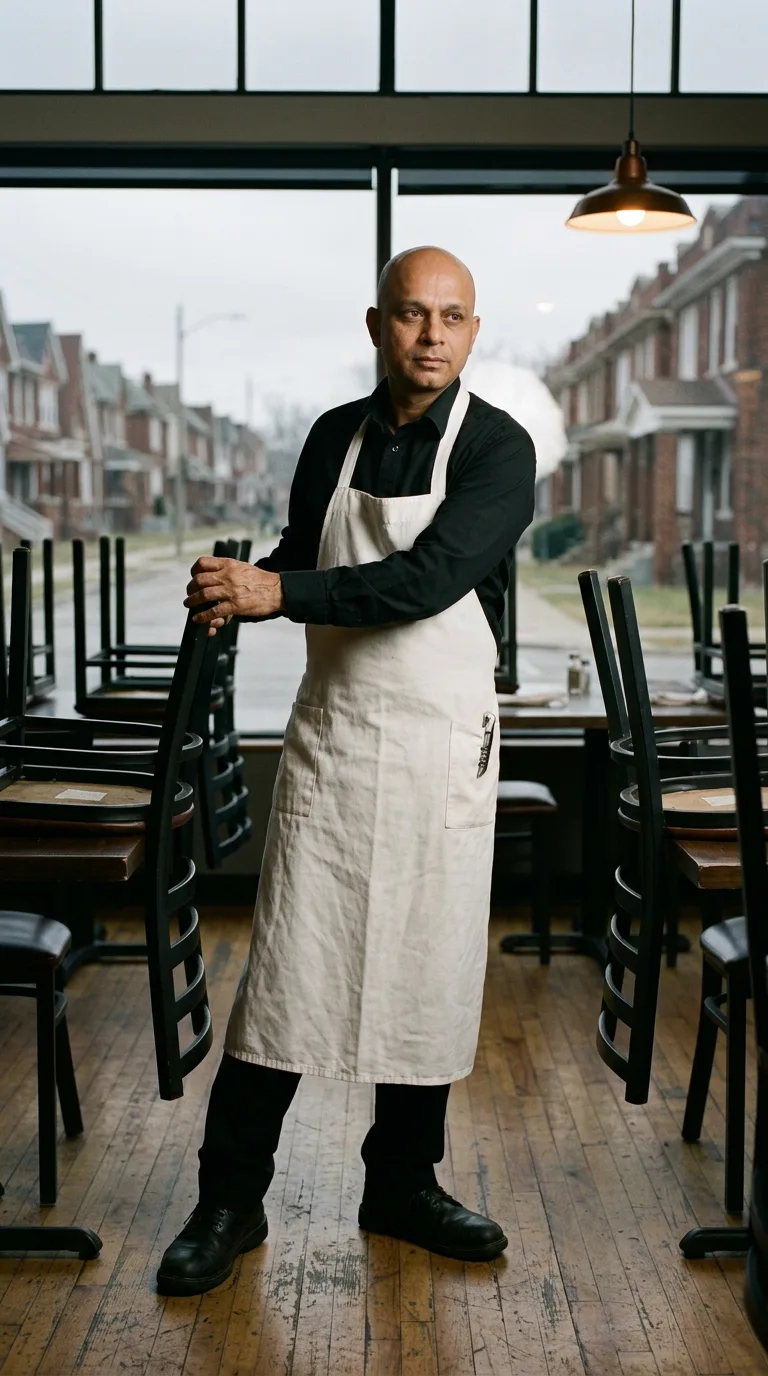
Rarest thing about him: Stutters under pressure — rare, 1 in 80
Season 0seed 2022267976 · engine v10
Character card
lineage 7XY1A7
His body-swap story
@suresh.bhandari rolled the wheel on and woke up as Suresh Bhandari — their first
The screen has been on for an hour and you have not been watching anything on it, just scrolling, the way you do at the end of a day that did not ask much of you. You find the site the way you always find these things — sideways, through a comment under a comment, a name that sounds like a joke until it isn't. Vessel.cards. A wheel, rendered clean and slow-spinning, waiting for a card to click into place beneath it. You have wanted this since before you could have said what "this" was — every story where someone wakes up behind a stranger's eyes, every thread at two in the morning about what it would feel like, really feel like, not the premise but the second itself. You did not think it would work. You pay anyway, because the wanting has always been bigger than your belief. You spin.
There is no falling, no tunnel, no light. There is a chair in your hands, midair, upside down, and you are setting it onto a table you have set ten thousand chairs onto before, except this time your grip fails on the second slat and the chair tips a half-inch wrong before you correct it, slow, deliberate, watching your own fingers like they belong to someone learning the job for the first time. Which, in the way that matters, they do.
The room is long and gray-lit, tables in rows, chairs going up on all of them in a wave that stopped a few feet from where you're standing. Windows along one side look out on brick houses and a sky the color of a closed eye. Your body is short — shorter than you expected to feel, though you didn't expect anything, you had nothing to expect from — and solid through the middle, the kind of solid that comes from decades on your feet and not from a gym. The apron ties dig faintly into your neck where they've dug in for years. Your head is bare and it is cold in a specific way, the way a scalp gets cold when there's nothing between it and the air, and that coldness alone hands you something: a barbershop chair, an electric razor, a decision made at thirty-one and never revisited.
The chair you are gripping gives you more. Ten years of Wednesday mornings, this exact motion, this exact ache starting in the same two fingers of your right hand. You are working a morning that is actually the tail end of a night — you clocked in at ten the evening before, because the diner runs a graveyard shift on Tuesdays into Wednesdays and somebody has to be the one who does it, and it has been you for longer than you can explain to people who ask why. It is the middle of your morning and the deepest part of somebody else's night, and your body knows the difference in its knees before it knows it any other way.
The shirt against your back — black, worn soft at the elbows — gives you the morning you put it on: standing in a bedroom with the blinds still down, Priya already awake in the kitchen, the smell of her tea, the two of you not needing to talk this early, ten years of not needing to. You button it one-handed while she talks about the electric bill. Your hands do this without you, the way they do most things without you, except when someone is watching, except when it's a birthday order and the whole table goes quiet for the count and your hands start to shake carrying nothing heavier than water glasses — a fact about yourself you have never liked and never fixed.
The apron pocket holds a knife, small, folding, the handle worn to the shape of your thumb. It gives you a hundred limes, a thousand bottles opened at the table because the corkscrew is faster in your hand than anyone else's on the floor, and underneath that, further down, it gives you Layla — not Priya, the other one, years back now, the one who left for Ohio and a job and did not ask you to follow, and you didn't, and some nights that is still the whole shape of the regret, small and specific, never brought up to anyone since. Your children are somewhere in the memory too, not in the room but present the way weather is present — a daughter's laugh on a phone call last week, a son's height surprising you at Christmas — and none of it is a story you're telling right now, it's just what's under the floor of you, holding the rest up.
Your shoes are the last thing. Standing in them, weight forward the way it always sits, you get the whole floor of the restaurant through your feet — every table's distance from every other, memorized the way a room gets memorized by someone who has closed it a thousand times alone.
You look at your hands.
They are not soft. There is a callus at the base of each thumb that has nothing to do with you and everything to do with him, and for a second you turn them over like they might explain themselves, like the story is written somewhere on the palm. It isn't. You lift your eyes off them, past the upended chairs, to the window and the brick houses and the flat gray light that belongs to a Wednesday morning in a city you have never stood in until now.
"Almost done," you say, out loud, to no one, in his voice, and you don't know yet if you mean the chairs.