Stanley Grzesiak
Fictional. Generated by AI — not a real person, and no likeness of one is intended.
54, accountant in Pittsburgh · rolled by @stanley.grzesiak · card — no film
History
who has worn him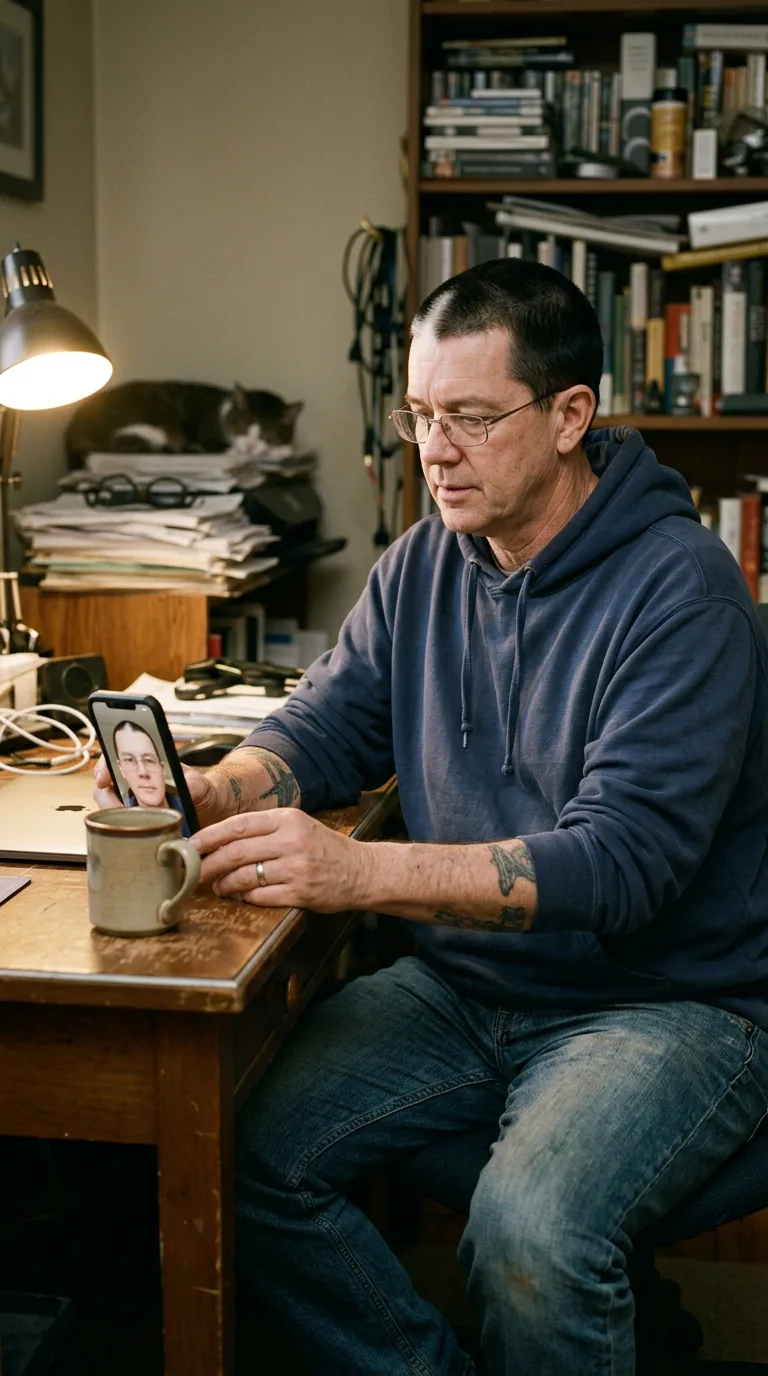
Rarest thing about him: A white streak in the hair — epic, 1 in 99
Season 0seed 819665496 · engine v10
Character card
lineage KFZMSZ
His body-swap story
@stanley.grzesiak rolled the wheel on and woke up as Stanley Grzesiak — their first
The screen has been the same shape for a long time now: blue light, a scroll that never resolves into anything, the small dead hour after work when nothing is on and nothing needs you. You have wanted this specific thing since you were young enough that wanting it felt like a hobby instead of an appetite — the stories where someone wakes up behind another face, the threads that go quiet at two in the morning, the question you never got to actually ask because there was never anyone to ask it of. Then there was a page. A wheel on it, spinning under a name that sounded like nothing, vessel.cards, and you paid before you let yourself think about whether it would work, because the not-believing was easier than the wanting.
It works.
There is no in-between. There is a mug of coffee going lukewarm against a lamp, a cat asleep on a stack of paper, a phone propped up with a filter running, smoothing a fifty-four-year-old face into something poreless and twenty years gone — and then there is you, standing in it, mid-motion, a hand already lifting toward the screen to tap it off. His breath is already halfway through an exhale. His weight is already settled back on his heels, second-day-diet-soda taste still on his tongue. The filter cuts. The face underneath — his actual face, the one with the white streak he's dyed around for eleven years running — holds the stillness the app put there for one more second, like a photograph deciding whether to be one.
Your hand — his hand — comes up and turns the jaw toward the desk lamp. One side, then the other, checking the dye job in a way that has nothing to do with vanity and everything to do with an appointment he's been meaning to reschedule.
The mug is what opens first. Warm stoneware, a thumbprint groove worn into the glaze exactly where the thumb wants to go, and there's a whole Tuesday morning in it — a farmers market ten years back, a woman named Denise who made pottery and small talk in equal measure, the mug bought because it was ugly in a way that felt honest. Denise is not the girlfriend. The girlfriend is a name that surfaces a half-second later, off the sweatshirt: Carol, and the sweatshirt is hers originally, oversized on her and right on him, and there's a whole year of Sunday mornings folded into the fabric, her radio station, her insistence on real cream in coffee, the two of you not married and both fine with that after the first marriage taught him what the paperwork actually costs.
The first marriage comes in through the ring, plain gold, worn on the wrong hand now out of habit more than meaning, and it isn't Carol's ring, it's the one nobody took off after the divorce because the finger had gotten used to the weight. Her name was Patricia. There was a house, there was a kid — Michael, nineteen now, off at Duquesne studying something Stanley still doesn't fully understand and is fiercely, quietly proud of anyway — and there was a slow unwinding that took longer than the marriage itself did to actually end. Patricia still calls sometimes about Michael's tuition and it's fine. It's mostly fine.
The jeans against your legs remember standing at a closet at seven this morning, this exact pair, worn soft at the knee, chosen because the other pair had a coffee stain he never got around to treating. The tattoos on the forearms — no, wait, there are none, his skin is bare and pale under the sweatshirt, weathered at the knuckles from thirty years of a keyboard and a lawnmower and nothing more dramatic than that — his hands know spreadsheets the way a carpenter's hands know wood, an automatic competence that has nothing to do with love and everything to do with two decades at the same firm downtown, fluorescent light, the same two monitors, the small satisfactions of a column that reconciles. He goes to church on the holidays that matter and some that don't, crosses himself with his left hand out of a habit his own father drilled into him, believes in it plainly and without needing to discuss it.
The desk under the forearms remembers the stack of papers, the mortgage stuff Carol keeps asking about, a life that from the outside reads as settled — the house with the public stairs out back running down between yards slick with wet leaves this time of year, the modest fortune sitting mostly untouched in accounts he checks twice a year, the blood pressure medication in the bathroom cabinet he forgets some mornings and takes double the next. His fingers, resting now on the desk edge, twitch into a drumroll against the wood without him — without you — asking them to. Some things arrive as habit rather than memory. This is one of them.
Your — his — eyes come down off the middle distance and land on the hand still holding the phone, screen dark now, filter gone, nothing left of the smoothed-out younger face it had been building. You turn the hand over. Study the palm, the calluses that aren't yours, the ring that isn't yours either, everything about it a stranger's hand doing exactly what a stranger's hand would do at the end of a long stillness.
"Huh," you say, out loud, to the empty room, in his voice, which is not the voice you expected and is the only voice there is now.
Somewhere behind you the cat doesn't move. Somewhere out past the window it's the middle of a Pittsburgh afternoon, wet light, and somewhere behind that — behind you, the you that isn't in the room anymore — it was the middle of a morning that doesn't matter now. You don't know how long you get to keep the drumming fingers, the ring on the wrong hand, the mug with the thumbprint groove worn just for him. Nobody tells you that part. The wheel doesn't come with a clock.