Stanley Aoki
Fictional. Generated by AI — not a real person, and no likeness of one is intended.
52, waiter in Philadelphia · rolled by @stanley.aoki · card — no film
History
who has worn him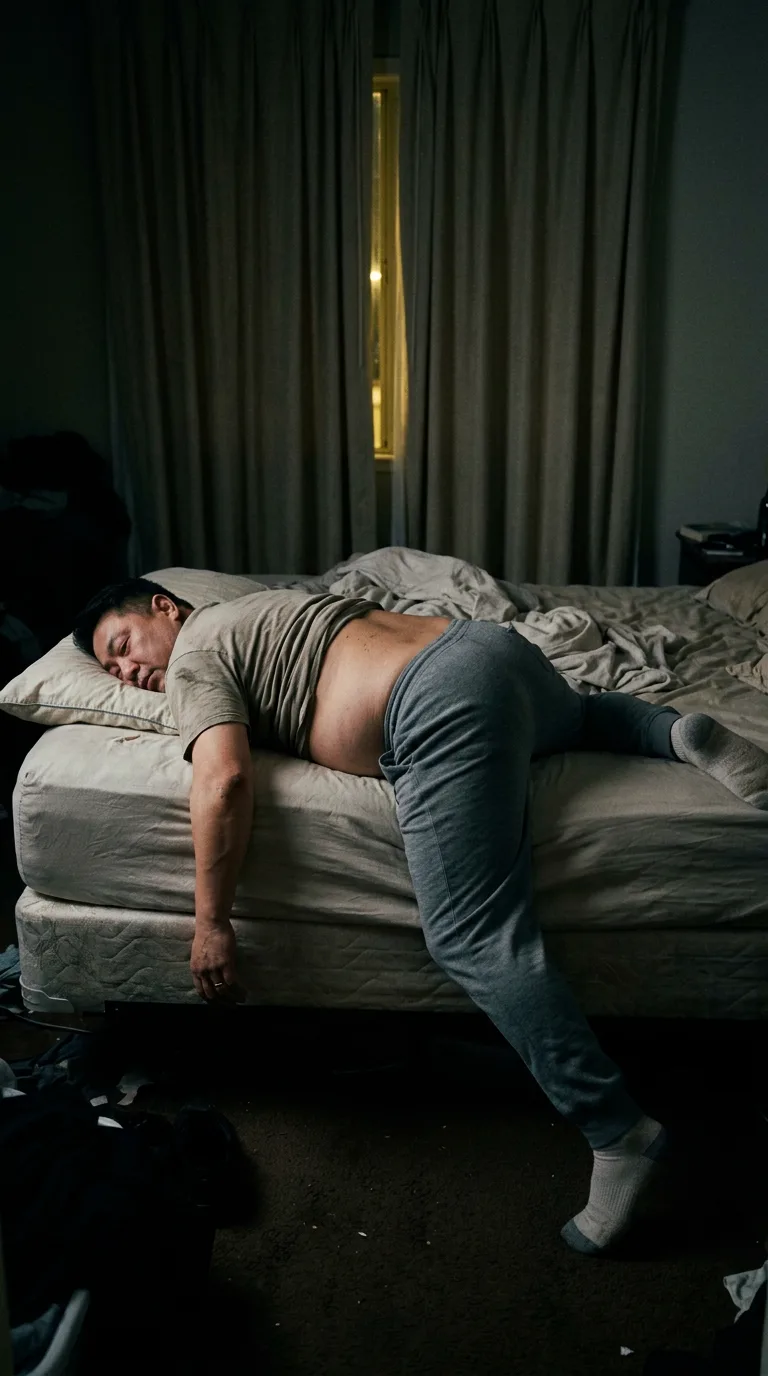
Rarest thing about him: A tremor in the hands — rare, 1 in 102
Season 0seed 749968742 · engine v10
Character card
lineage VZDJQ7
His body-swap story
@stanley.aoki rolled the wheel on and woke up as Stanley Aoki — their first
You have been scrolling for an hour with nothing to show for it, the way you always end up scrolling, and the site loads slow on purpose, like it wants you to sit with the idea before it lets you have it. A wheel. A name at the bottom nobody's heard of, vessel.cards, and a card that fills in with a photograph as you watch: a man in an apron, gut against the strings, black hair combed for no one. You have wanted this since before you could say why — every story where someone wakes up wrong, every thread at two in the morning about waking up as someone else, and never once, not one single time, has it been something you could actually buy. It is the middle of the morning where you are. Nothing is happening. You have the money and the boredom and the years of wanting stacked up behind it, and you spin because the only thing stopping you was that it wasn't real yet, and now apparently it is.
There is no sensation of going anywhere. There is a bed under you that was not under you a second ago, and a body that already knows how to lie in it — face down, one arm hanging into the dark past the mattress edge, breath ragged with sleep that is not your sleep. Then it isn't ragged. It evens out in a single breath like a held note resolving, and the arm draws itself up without you deciding to draw it, and you are rolling onto your back, hands folding over the chest, a posture this body has apparently never once made on its own. Streetlight comes through a gap in the curtain in one thin gold bar. You are fifty-two years old and five foot seven and there is a soft weight over the stomach that was never yours, and a wedding band pressing cool on the third finger of a hand you did not lift.
It comes in through the mattress first — worn cotton sheets, the particular give of a bed slept on by one specific weight for a long time — and it is not a picture so much as a mood: tired, always tired, a tiredness with a shape to it, work-shaped. Then the T-shirt gathered up under the arms gives you a smell, fryer oil gone into the fabric no matter how many times it's washed, and with it a name arrives without asking to: Stanley. Not Stan. His mother called him Stanley and so does Dana, his wife, when she's annoyed, which softens quicker than she means it to.
The apron comes next, though it isn't on him now — it's hanging behind a door three blocks away, at the restaurant where he pulls doubles because the owner likes him and pays him a little under the table on top of what's on the books, which is not much, has never been much, twenty-six years of carrying plates and it comes to under five thousand dollars in the world if you counted everything he owns tonight. The apron gives you his hands anyway, because hands remember jobs better than minds do — how to carry three plates up one arm, how to open a bottle one-handed with the corkscrew that lives in the front pocket, the specific twist. And underneath that skill, always, underneath everything: a tremor, fine and constant, that he has learned to still by pressing his palm flat against his hip between orders. Nobody's noticed. He's gotten good at looking steady.
The mattress dips at his side and gives you Dana — eleven years married, a daughter, seventeen now, who plays violin badly and beautifully and he cries at every recital and tells no one. Dana's side of the bed is cool; she works mornings at a dental office and has been asleep since ten, and he came in past two smelling like the bar he stopped at on the way home, the way he does most nights, three drinks becoming five becoming whatever gets him quiet enough to sleep. He quit cigarettes eleven years ago, the year they got married, cold, out of love for her, and still puts his fingers to his lips sometimes at the end of a bad shift, reaching for something that isn't there anymore.
The old injury lives in the left knee — a barstool, a wet floor, twenty years ago, never set right because there was no time to let it heal, and it aches now against the sheet whenever the leg is bent too long. And under his ribs on the right, faint, is the memory of the last time he stood at the fridge at 2 a.m. eating cold rice out of the container so Dana wouldn't wake up and see how much he'd had. And under that, quieter, older: his father's voice, in Japanese, telling him restaurant work was not a life, and Stanley twenty-two years into proving him both right and wrong at once.
This morning — his morning, hours from now in his own count of the day, though for you it is already sliding past — he put on the black shirt because the white one was still damp on the line, buttoned it with fingers that shook worse before the first drink than after, and stood in front of the mirror telling himself tonight he'd stop after two.
You lift your left hand off your chest into the thin gold light and look at it: the tremor is there, small, patient, and the ring catches what little light there is. You turn the hand over once, like checking it's real, then you look up, toward wherever the ceiling is, and you say, out loud, in his voice, thick with sleep that was never yours to wake from —
"Dana?"
No one answers. You don't know yet how long you get to ask again.