Sanjay Mehra
Fictional. Generated by AI — not a real person, and no likeness of one is intended.
37, mail carrier in San Francisco · rolled by @sanjay.mehra · card — no film
History
who has worn him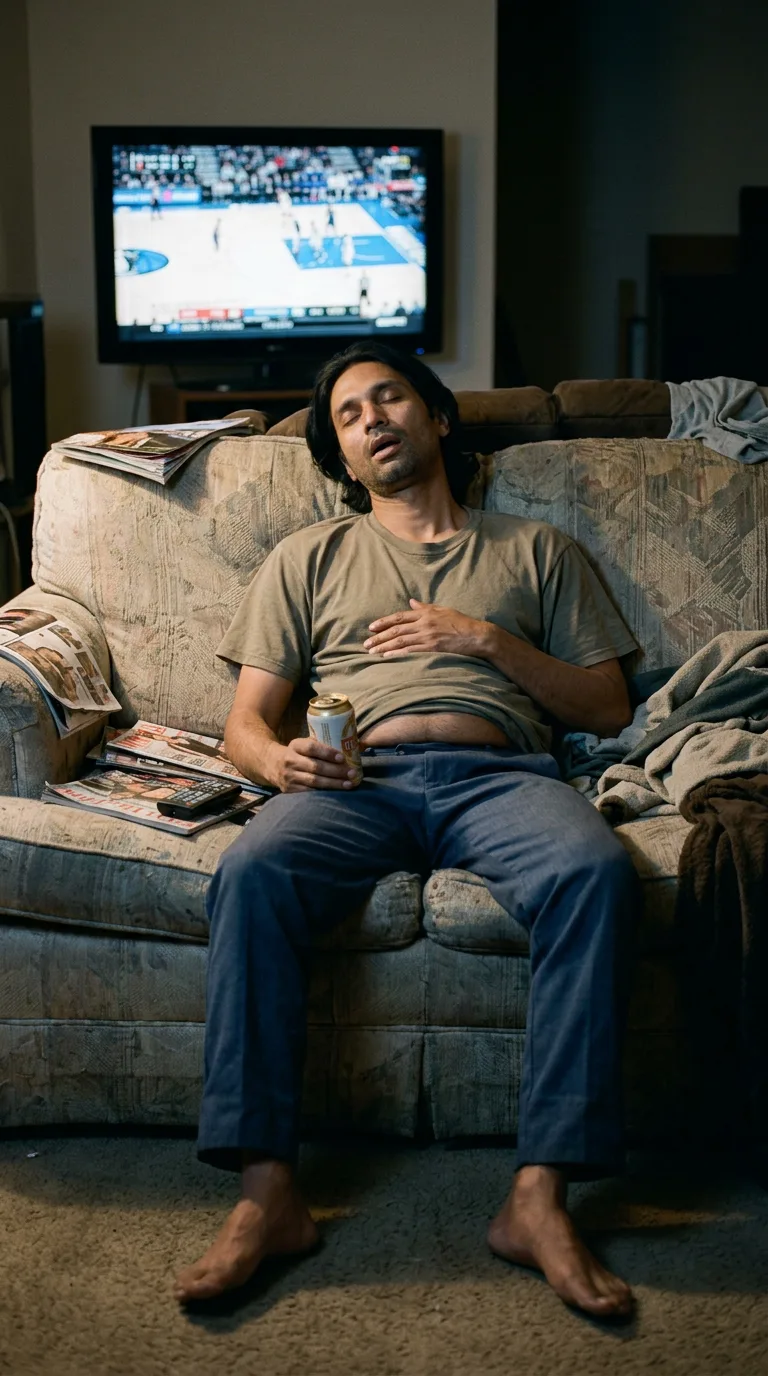
Rarest thing about him: South Asian — rare, 1 in 26
Season 0seed 1522533838 · engine v10
Character card
lineage 6424KB
His body-swap story
@sanjay.mehra rolled the wheel on and woke up as Sanjay Mehra — their first
The site loads slow on a screen that has seen better mornings, before the day has even decided what it is. It is early, too early, the kind of hour that belongs to nobody, and you have been circling this particular door for years — every film where someone wakes up wrong, every thread at 2 a.m. asking *would you, though, if you could* — and always the answer was you would, and never a way to. Now there is a wheel. Now there is a price. You do not think about it as long as you thought you would.
You spin.
There is a couch under you that was not under you a second ago, and a can in a hand that is not the hand you were expecting, warm where a beer should be cold, and a game going on a screen you did not turn on. The ball is mid-arc. A crowd roars somewhere behind glass. Your mouth is open and dry and somebody else's, your head tipped back at an angle that has nothing to do with you, and the second replay is already rolling by the time the eyes blink open and are, unmistakably, no longer only his.
The room settles around you before you do. Low light, a blanket half-fallen off the arm of the couch, magazines fanned out like they've been picked through a hundred nights the same way. The thumb finds the volume knob before you've told it to — quick, sure, a motion worn smooth by repetition — and you watch the ball drop through the net a beat after everyone else already knows it will.
Then the shirt. It's against your back, damp at the collar from a day that is not over even though you slept through the end of it, and touching it is like putting a hand on a doorknob that gives before you turn it. You feel him get dressed this morning — not you, him, the memory arriving in his hands, not yours — the jacket zipper catching halfway, always catching, a small violence he no longer notices doing. The bag strap over the shoulder, worn soft on one side from years of the same shoulder taking it. Sixty pounds some days, less on Sundays there's no mail, more around the holidays when everyone in this city seems to remember they have people to send things to.
The walking comes back in his knees before it comes back in words — three miles a day, easy, then not easy, then just what the day is. A woman's voice on a porch two years ago, laughing at something he said about a dog that bit the last guy, and how he thought about her for a week after and never went back to that route on purpose to see her again, and did anyway. Priya. Not his — someone else's now, married to someone else's Wednesday, and the ache of that sits old and familiar in his chest like a piece of furniture you learn to walk around.
Three kids come back through his hands too — a photograph he keeps in the truck, not on him, a booster seat smell that clings to the inside of the jacket even when the kids haven't been in this car in a month, custody weekends bracketed like parentheses around the rest of his life. He drums his fingers on the steering wheel waiting outside a school. He drums them now, without knowing it, against the warm can, a rhythm that belongs to nobody watching.
The couch remembers him too — how many nights he's fallen asleep right here, mouth open, snoring loud enough that if anyone were still living with him they'd have said something. Nobody says anything. The apnea catches his breath sometimes and lets it go, and his body has stopped being afraid of the gap. Thirty-seven and skinny in the shoulders, going soft everywhere else, a low ache behind the sternum some mornings that he blames on the bag and not on anything else. Feet flat and tired on the carpet in this underground room with its cold light coming through the one high window, a garage that was never meant to be a home and became one anyway.
You feel all of it land at once and then settle, the way a held breath finally goes out.
You lift the hand with the can in it and look at it — the calluses along two fingers where the bag strap sits, the nail beds a little worn, a stranger's hand doing something your attention has never once been inside of.
"Whose house is this," you say out loud, to no one, and your voice comes out low and rough with someone else's sleep still in it, and somewhere under the question is the other one, unasked, about how long the wheel means to let you keep asking it.