Sanjay Kapoor
Fictional. Generated by AI — not a real person, and no likeness of one is intended.
43, store manager in Philadelphia · rolled by @colin.hasbrook · card — no film
History
who has worn him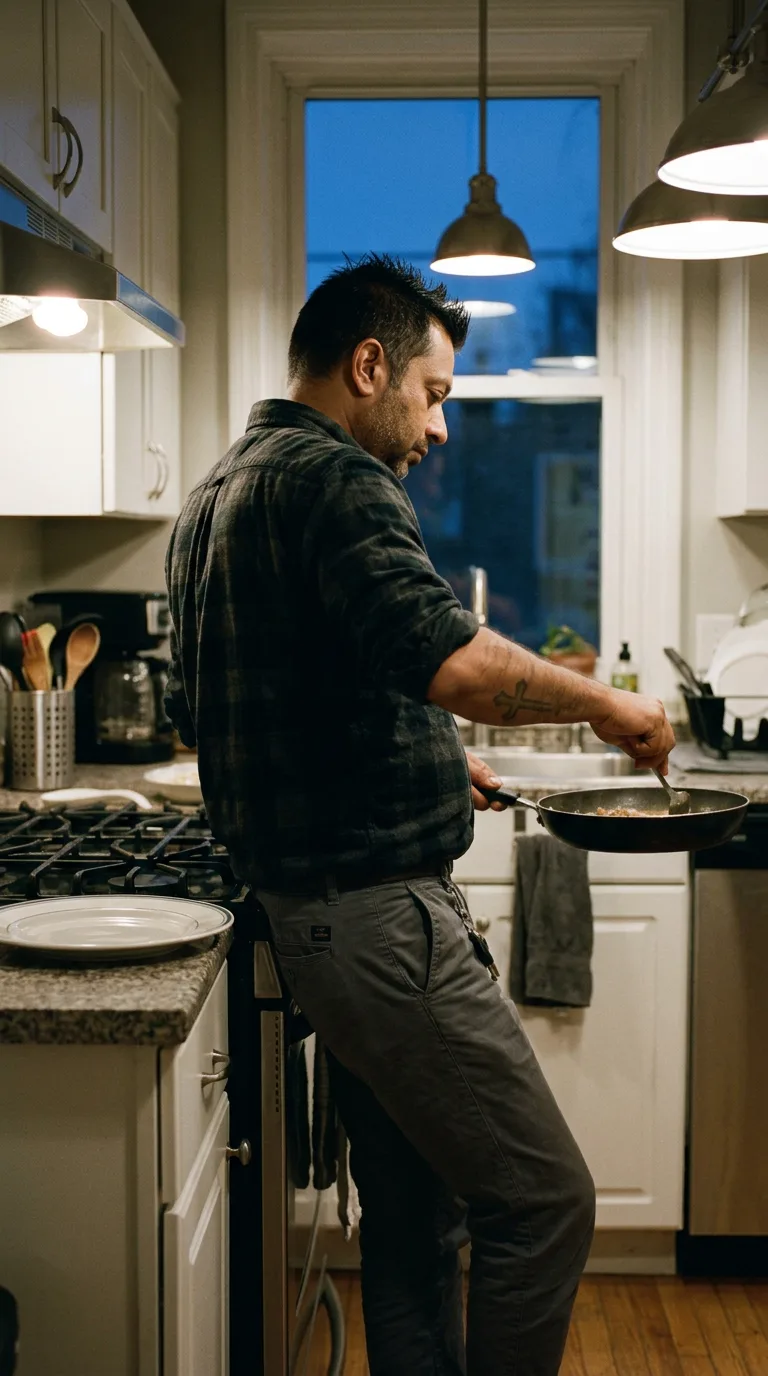
Rarest thing about him: Gay — common, 1 in 32
Season 1seed 1159767495 · engine v11
Character card
lineage 2NZHHJ
His body-swap story
@colin.hasbrook, wearing Desmond Fairweather, rolled the wheel on and woke up as Sanjay Kapoor, spent under a minute in him, then spun the wheel and woke up as Terrance Boyd
You are Desmond Fairweather for forty-one seconds, standing in his kitchen in Seattle with the afternoon coming flat and gray through a window that needs washing, and it is the missing tooth that does it — your tongue keeps finding the gap out of habit, checking it like you check a wound to see if it still hurts, and you realize you have spent your entire lunch break doing this instead of eating. Desmond has a good life, a life you picked for good reasons: an engineer, a mind that works, a body that at least gets out of bed on its own. But there's a meeting in twenty minutes about a bracket tolerance that has already eaten three weeks of his life, and you are so bored you could scream, and boredom, it turns out, is its own kind of hunger. You don't decide so much as notice that you are already reaching for your phone, already typing the address into the browser like a tongue finding a gap.
The wheel spins somewhere behind your eyes and the kitchen changes without moving.
The spoon is already in your hand, mid-circle, and you stop it and — some reflex older than you — turn it the other way, stirring against the grain like correcting a mistake nobody made. Steam off the pan smells like garlic gone one shade past golden. Your back is warm from a stove that's a different height than any stove you've stood at, and there's a window in front of you gone the deep blue of a Philadelphia evening in early spring, first light already down the block from streetlamps you cannot see. You salt the pan without tasting it — his hand, not yours, knows the measure already — and you reach up into a cabinet and take down a second plate and set it beside the first one, and you don't know why you did that until the shirt against your shoulder blades tells you.
It's flannel, soft from washing, and the memory comes up through the fabric like heat off a burner: this morning, pulling it on over a white undershirt in a bedroom with the shades still down, sitting on the edge of the bed because bending all the way over to sock feet takes something out of a man's knees at forty-three that it didn't used to. Rolling the sleeves to the forearm without thinking, the same two folds every day, a habit from some job before this one, before the store, when rolled sleeves meant something about being ready to work. The keys in the pocket — you feel their weight drag at the seam and get the store with them: fluorescent light at 5:45 a.m., pallets stacked to the ceiling in the back aisle waiting to be broken down, the particular ache of a lower back that has bent over box cutters for nineteen years, a walkie-talkie voice calling him by a name that isn't Sanjay but sounds like it — Sanj, Sanj, register two needs you. He is good at this job in the unglamorous way of a man who has simply been doing it long enough that his hands do it without him.
The toothpick isn't in your mouth right now, but your jaw already misses it, already wants the small work of a thing between the teeth, a leftover of quitting a pack-a-day habit six years ago that a man he used to be married to made him promise to try.
Ahmed. The name comes up through the ring finger, through the pale strip of skin there that the world can still see even though the metal's gone — four years gone, sold or lost or just put away, you don't know and neither, anymore, does he. Ahmed used to stand exactly where the second plate is now, elbows on this counter, telling him about his day in a voice that filled the whole kitchen, and there were three kids' worth of noise upstairs some nights and it was too much and it was everything, and then it wasn't, and the divorce took the noise out of the house one weekend custody swap at a time. The tattoo on the arm — a cross, badly inked, blue-black and blurred at the edges, done at nineteen for a boyfriend whose name Sanjay can no longer be bothered to remember, an embarrassment he covers with a sleeve out of habit more than shame anymore. He set the second plate down tonight the way he's set it down more nights than he'd say out loud, cooking for one and plating for two, some old current still running to a place that isn't there.
The pan handle is warm and slightly greasy where his hand has held a hundred pans this same way, wrist loose, elbow low — his body knows this motion in its shoulder the way it knows the particular give of the third stair at the store that always groans, the way it knows dad-bod thickness settling comfortable and unhurried at the waistband of pants that fit fine two years ago and fine enough now. Nothing hurts exactly. Everything is a little tired in the reliable way of forty-three, of standing all day, of a body that has been divorced and still cooks like someone might come home to it.
You look down. The hand around the spoon is broader than yours ever was, olive-brown, a ring's ghost pale across one finger, and it is not shaking, and it is not yours, and it has just salted a pan for a man who isn't coming.
You look up, into the blue window going dark, and you say, to no one, in his voice climbing your throat like it was always yours to use:
"Guess I'll eat both, then."