Samir Ghannam
Fictional. Generated by AI — not a real person, and no likeness of one is intended.
37, cattle rancher in Los Angeles · rolled by @samir.ghannam · card — no film
History
who has worn him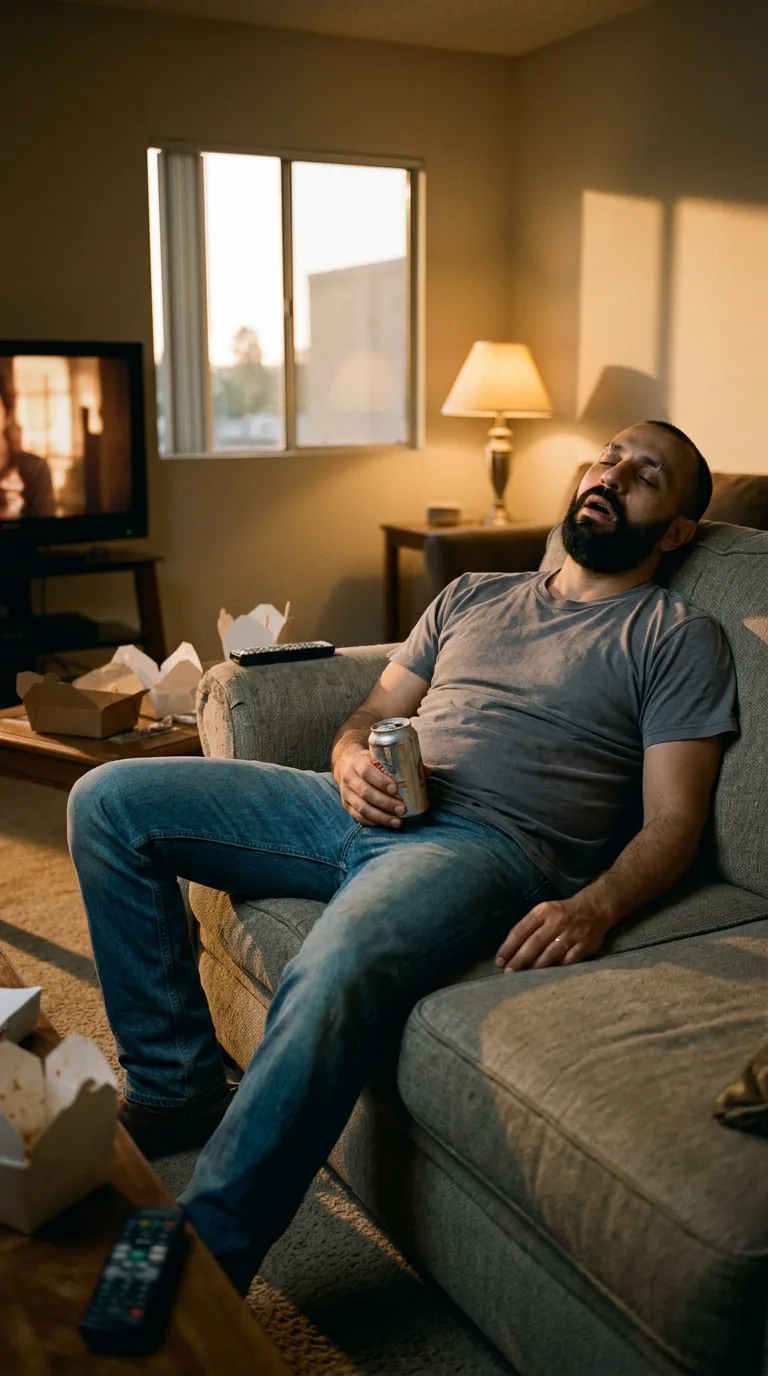
Rarest thing about him: Cattle rancher — common, 1 in 346
Season 1seed 472759313 · engine v11
Character card
lineage BC2JN1
His body-swap story
@samir.ghannam rolled the wheel on and woke up as Samir Ghannam — their first
---
It is early, before the day has earned its name, and the only light in the room is the screen's. You have had this want for longer than you can date — some nights it was movies, some nights it was forum threads at an hour nobody admits to being awake for, people theorizing about what it would be like, really be like, to open your eyes and have them not be yours. Tonight it is a site. Vessel.cards. A wheel rendered in careful 3D, spinning lazily on the landing page like it has all the time in the world, like it isn't going to do anything. You have read the small print twice. You still don't believe it. You pay anyway, because not believing it has never once stopped you from wanting it, and you set your thumb on the wheel, and it spins, and —
— a can, warm against your palm, nearly empty, tipping.
You are sitting. The room is gold with late sun through a slatted blind, and a television is loud in a way that belongs to a house with nobody in it to turn it down, and your mouth was open and is open still, and a goal has just happened on the screen that you did not see happen, because you were not watching, because a half-second ago you were not anybody. The weight of a body settles onto you all at once the way a dropped coat settles onto a chair — thighs, gut, the particular ache low in the back that you understand, dimly, has been there so long it isn't registered as pain anymore, just as him. Your head is tipped against the couch cushion. There's a beard against your own collarbone, warm with your breath. You wake on the second replay. Your thumb finds the volume button before you've decided to move it, dialing the announcer down with a small, exact motion, and you watch the ball cross the line again, not the number in the corner, like the score was never the point.
The can is the first thing. Cold aluminum gone warm, a little dent where a thumbnail has worried at it without him knowing, over and over, during the first half, during the second — and with it comes a flash: a bar in Bakersfield, years back, a different hand around a different can, a ring on the finger that held it. Gone now. You feel the tan line before you see it — a paleness on the fourth finger of the left hand, a groove worn into skin by years of a band that isn't there anymore, and it comes with her face, not clearly, just a feeling-shaped absence where a name used to sit at the center of every plan. Selene. Not even her real name arriving first — just the word *ex*, and the specific grief of a man who still, nine years on, keeps her number in his phone under a different name so he won't call it at two in the morning.
The shirt. Denim, soft from a hundred washings, snapped at the cuffs though you don't remember snapping it — he does, this morning, early, dark still outside, pulling it on over a undershirt gone grey, one arm then the other, the fabric smelling of dust and the particular sweetness of hay that never fully washes out no matter the detergent. The memory arrives in the shoulders first: how many mornings, how early, how the body knows to reach for this shirt before the mind is even awake enough to choose it. Three kids get mentioned at breakfast in snatches you can't quite hold — a school drop-off he missed, a custody schedule taped to a fridge he doesn't live at anymore, a voice on the phone saying *Dad* in that specific tired way that teenagers have.
The chaps aren't on him now — those are for daylight, for the gate, for cattle moving slow and stupid through dust — but your legs remember them anyway, the particular stiffness of worn leather against denim, the weight of them at the hip. A pale scar through one eyebrow throbs faintly with a memory that isn't pain, just history: a gate swinging wrong, fifteen years old, his father laughing about it after the blood stopped because that was the kind of father he had. The ranch itself comes in pieces — a bank letter he didn't open for four days, a number that keeps getting worse, cattle prices that never quite forgive you, a kind of love for the work that has nothing to do with whether it is working. He is, by any measure that matters to banks, deep in a hole nobody is pulling him out of. He doesn't drink to cope with it — a few times a year, at most, a wedding, somebody's funeral. He quit the cigarettes four years ago and still, in his jacket pocket, folded flat, there is a lighter he has never thrown away.
The remote sits forgotten by his loose hand. A pen that isn't there is still, somehow, present in the muscle memory of his fingers — a click-click-click he does without noticing, at the vet's office, in the bank's lobby, in rooms where waiting is the whole job. His faith isn't a church he goes to; it's something quieter, carried like the lighter, folded flat, rarely taken out and looked at, but his.
You look down. The hand around the can is broad, sun-browned at the knuckles, pale at the one finger where something used to sit. You turn it over once, slow, the way a man checks a tool he's about to trust his weight to.
"Whose hand is this," you say, out loud, to a room that isn't yours yet, to a television that doesn't care, and you lift your eyes off it into whatever is watching, and you hold there, because you don't know yet how long you get to be the one asking.