Sami Haddad
Fictional. Generated by AI — not a real person, and no likeness of one is intended.
22, pro athlete in Phoenix · rolled by @colin.hasbrook · card — no film
History
who has worn him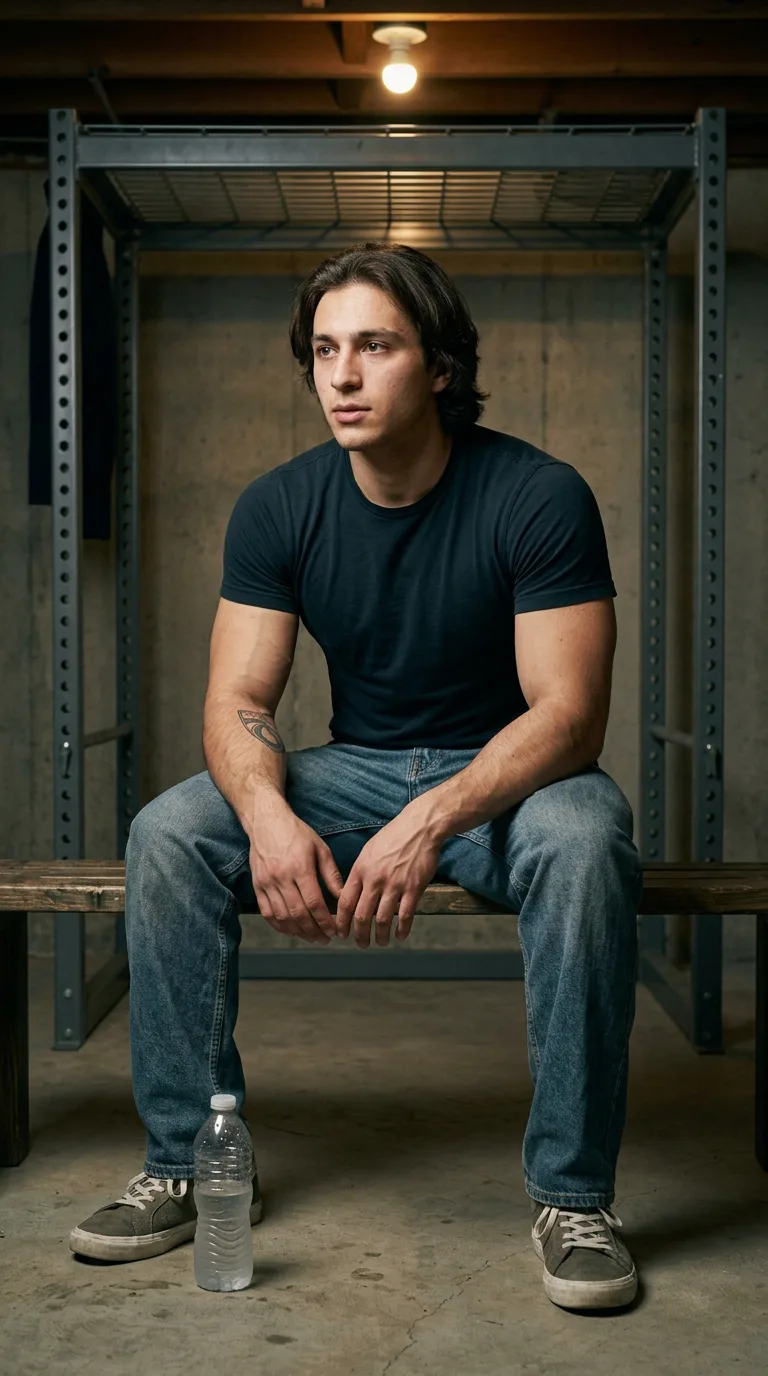
Rarest thing about him: Middle Eastern — rare, 1 in 34
Season 0seed 88114675 · engine v10
Character card
lineage 2NZHHJ
His body-swap story
@colin.hasbrook, wearing Dominique Fairweather, rolled the wheel on and woke up as Sami Haddad, spent 1 minute in him, then spun the wheel and woke up as Deven Sethi
You are standing behind Dominique Fairweather's lazy eye, in his cape and his shears still warm from the last head of the night, and the shop is empty except for the hair on the floor and the radio playing something you stopped hearing an hour ago. Three minutes in him. Three minutes, and already the itch is back — that specific hollow feeling, not boredom exactly, more like the way a good meal stops being interesting the second you're full. His knees ache in a way you didn't choose. His feet hurt in shoes you didn't lace. There is a wife somewhere in this man's day, a mortgage, a sermon he half-listened to on Sunday, and none of it is yours and none of it ever will be, and that is the whole point of Fairweather and every man before him: they are furniture you sit in until you don't want to anymore. You lock the register. You don't clean the shears. You are already gone before your thumb finds the site on a phone that isn't going to be yours in a second either.
The wheel spins the way it always spins, indifferent, and it does not ask you why fifty-one wasn't enough, and you do not answer it, because the answer is boring even to you: you just want to know what the next one feels like.
The bar is cold and then it is not cold, it is gripped, and your hands — his hands — are two inches wider on the knurling than muscle memory says they should be, and the breath you were about to let out through your teeth stops halfway and turns into something slower, something that has no business being this controlled on a last rep. The rack above you smells like chalk and rubber matting. A body under you that is not the one you had thirty feet and one universe away — shorter through the torso, denser, a soreness in the shoulders that isn't pain so much as evidence, proof of hours put in that you did not put in. You grind the rep out anyway, because his shoulders know how, even now, even with someone else behind the eyes.
Then the bar's back in the rack and you're sitting, and it starts arriving the way it always does — not given, taken, pulled up through whatever you're touching. The bench is warm where his own weight sat five seconds ago and it comes with an echo of a hundred other benches, other gyms, high school ones with peeling paint, a college weight room with a coach's voice in it you can't place a face to yet. The water bottle sweats against your palm when you pick it up and there's a whole practice in that — this morning's, wind sock limp against a fence, a route run four times before someone was happy with it, a joke somebody made in the huddle that made him laugh so hard he had to jog it off.
His shirt is against your back and it gives you the morning entire: standing in front of a mirror in an apartment with too much light and not enough furniture, pulling this same navy jacket off a hook because the black one was still damp from yesterday's wash, the zipper catching once at the collar the way it always catches, a habit of tugging it twice to seat it right. Boxers, then joggers, socks rolled instead of balled because his mother taught him that and it stuck even after everything else about living alone came unstuck. He'd checked his phone on the counter — a text from her, his mother, are you eating — and one from a name he didn't open because opening it never once made the day better, a name that used to text him good luck before games and now doesn't, and the missing of it sits in the sternum like something swallowed wrong. He vaped once on the balcony before locking up, out of habit more than need, and the taste of it is still faintly on this tongue, watermelon going stale.
The tattoo on the upper arm, half under the sleeve, gives up its own small history when the fabric shifts against it — a rookie-year afternoon, needle buzzing, a teammate laughing at him for wincing, the crest going in symmetrical and permanent as a promise he intends to keep for exactly as long as the contract does. Underneath the ache of practice there is an older ache, low-grade, a Tuesday-morning kind of heaviness that a small orange bottle in his bathroom cabinet keeps mostly quiet, mostly, not always — and a therapist's number saved under a first name only, because some habits from being twenty-two and watched are hard to unlearn.
Twenty-two years in this body and every one of them is written into what it can already do without asking permission — how the hips load before the legs know they're loading, how the shoulders find the bar without the eyes checking, how the whole machine of him is tuned to a game you have never played and will not be asked to. It is a good body. It is, for this exact handful of seconds, entirely yours.
You look down. The forearms are darker than Fairweather's, thicker through the wrist, and there's chalk dust in the creases of a palm that isn't the palm you had a minute ago. You turn the hand over once, slow, watching it not quite belong to you yet, the tattoo catching light where the sleeve's ridden up.
"Okay," you say, out loud, to no one, in a voice that isn't yours and is the only one you've got now. "One more set."